In his pre-outlaw days, Willie Nelson found success writing hit songs for other artists, even as he struggled to break through with his own voice. And his frustration with Nashville’s country music establishment finally reached its peak in the 1970s when Nelson helped pioneer the outlaw country movement with Johnny Cash, Waylon Jennings, Kris Kristofferson, and others.
His best-known writing credit is Patsy Cline’s eternal ballad “Crazy”. But I wanted to highlight three other classics written by Nelson during his pre-outlaw days in the early 1960s.
Videos by American Songwriter
“Pretty Paper” by Roy Orbison (1963)
Roy Orbison, in his lonesome croon, sings about the blues many feel during the holiday season. Written by Willie Nelson, the song follows a street vendor who sells paper and pencils that others use to send gifts to their loved ones. The vendor is surrounded by laughter on the busy street, but most pass him by. And if you’re like me, “Pretty Paper” is the perfect choice when you’re in the mood for a sad—and my favorite kind of—Christmas song.
Pretty paper, pretty ribbons of blue,
Wrap your presents to your darling from you,
Pretty pencils to write I love you,
Pretty paper, pretty ribbons of blue.
“Hello Walls” by Faron Young (1961)
The title track to Faron Young’s fifth LP is a lighthearted song about heartbreak. The narrator talks to his walls, windows, and ceiling following a breakup. You can imagine the inanimate objects of his home coming to life as The Wilburn Brothers animate his sadness with tight harmonies. The Nelson-penned tune spent nine weeks at No. 1 on the country chart while also crossing over into the pop charts.
She went away and left us all alone, the way she planned,
Guess we’ll have to learn to get along without her if we can.
“Night Life” by Ray Price (1963)
Nelson first recorded “Night Life” in 1960. After selling the song rights, he’d pressed his own copy under the title “Nite Life”, credited to Paul Buskirk and His Little Men featuring Hugh Nelson. It later became the title track to Ray Price’s 1963 album, with a woozy pedal steel echoing Nelson’s early years as a gigging musician. If you’ve ever tried to pay your rent by playing gigs, then you’ll understand how Nelson probably felt like an outlaw long before he transformed country music.
When the evening sun goes down,
You will find me hanging round,
Oh, the nightlife, ain’t no good life,
But it’s my life.
Photo by Michael Ochs Archives/Getty Images
More The List
-
Alice Cooper posing in his hotel room, Amsterdam -
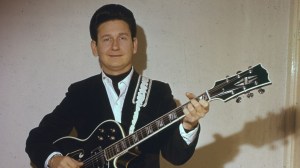
April 1964: Legendary American rock'n'roll singer Roy Orbison (1936 – 1988) at Dolphin Square in London. (Photo by Moore/Fox Photos/Getty Images) -
HOLLYWOOD – DECEMBER 13, 1975: Disco singer Gloria Gaynor performs a song on December 13, 1975, in Hollywood, California. (Photo by Michael Ochs Archives/Getty Images) -
Circa 1965, American country singer and songwriter Loretta Lynn performs on stage at the Grand Ole Opry, Nashville, Tennessee, 1960s. (Photo by Getty Images/Getty Images) -
Photo by Michael Ochs Archives/Getty Images -
American country music singer Earl Thomas Conley (1941 – 2019) performs at the Poplar Creek Music Theater in Hoffman Estates, Illinois, May 26, 1985 in Hoffman Estates, Illinois (Photo by Paul Natkin/Getty Images) -
UNITED KINGDOM – JANUARY 01: Photo of Pete SEEGER; Pete Seeger performing on stage at a Paul Robeson benefit concert (Photo by Brian Shuel/Redferns)