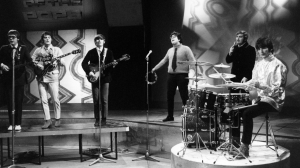
Ready to have your mind blown? Fans of 1960s tunes probably know all about the following three 1966 songs, but did you know just how mind-blowing their lyrics are? Some tidbits about these songs might just surprise you, or prompt you to give them a thorough listen this time around.
“Tomorrow Never Knows” by The Beatles
“Turn off your mind, relax and float downstream / It is not dying, it is not dying.”
Videos by American Songwriter
Alright, I’m going to be biased here. This is my favorite Beatles song. It’s delightfully psychedelic. And the lyrics within this song might be a bit more profound than you thought.
“Tomorrow Never Knows” is very much an LSD tune from John Lennon, but it’s also a very spiritual song. In fact, much of this song’s lyrics are based on the Tibetan Book of the Dead (also known as the Bardo Thodol), namely via Timothy Leary’s 1964 book The Psychedelic Experience: A Manual Based On The Tibetan Book Of The Dead.
“Paint It Black” by The Rolling Stones
“I see a line of cars and they’re all painted black / With flowers and my love, both never to come back / I see people turn their heads and quickly look away / Like a newborn baby, it just happens every day.”
I feel like a lot of the more profound moments found in Rolling Stones tunes tend to get overlooked simply because of the band’s infamy as huge rock stars. “Paint It Black” is a jam, and most people just see it as a very famous jam. However, this song holds a lot of heavy emotional weight. “Paint It Black” touches on a lot of touchy subjects, from loss and grief to depression and dissociation. It’s very of its time, but underrated, I think, when it comes to its poetic lyricism.
“Sunny Afternoon” by The Kinks
“And I can’t sail my yacht / He’s taken everything I’ve got / All I’ve got’s this sunny afternoon.”
This pop hit is so uplifting, poppy, and fun, you might have missed just how complex the lyrics actually are. “Sunny Afternoon” by The Kinks might feel like sunshine on the surface, but this 1966 song with mind-blowing lyrics is actually all about class decline and taxes. Yep, you read that right. This track was a pretty stark criticism of progressive tax in Great Britain at the time. Ray Davies injected himself into the song, as he was dealing with taxation woes himself.
Photo by Express Newspapers/Getty Images
More The List
-

American singer-songwriter Carole King poses in record producer Lou Adler's office in March 1971 in Los Angeles, California, United States. (Photo by Jim McCrary/Redferns) -
UNSPECIFIED – JANUARY 01: Photo of Jessi COLTER; posed, (Photo by Charlie Gillett Collection/Redferns) -
Photo by Gus Stewart/Redferns -
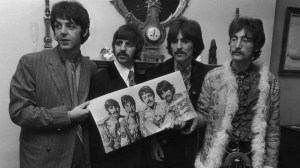
19th May 1967: The Beatles (left to right) Paul McCartney, Ringo Starr, George Harrison (1943 – 2001) and John Lennon (1940 – 1980) at a photocall for the launch of their new album 'Sergeant Pepper's Lonely Hearts Club Band', held at Brian Epstein's house at 24 Chapel Street, London. Lennon is wearing an afghan jacket and a sporran. (Photo by John Downing/Getty Images) -

Dolores O'Riordan of The Cranberries performs onstage in San Francisco, California, USA in December 1993. (Photo by Anthony Pidgeon/Redferns) -

Toto, f.l.t.r: Mike Porcaro, Steve Lukather, David Paich, Jeff Porcaro & Steve Porcaro, Amsterdam, 27-9-1982, Foto Rob Verhorst -
UNITED KINGDOM – NOVEMBER 16: WEMBLEY ARENA Photo of RADIOHEAD and Thom YORKE, Thom Yorke performing live onstage (Photo by Patrick Ford/Redferns)