
Even the most dazzling creative minds will inevitably release a dud from time to time (looking at you, Bob Dylan’s Knocked And Loaded). Sometimes, though, a song’s sheer awfulness is the entire point. Whether these questionable releases sprang from heated label disputes or bruised egos, even their creators will tell you they’re certainly… not good. Here are four 1980s songs born of self-sabotage.
“Cum On Feel The Noize” by Quiet Riot (1983)
Surprisingly, this hedonistic 1980s glam-metal smash that immortalized Quiet Riot in arena-rock history was not an original song. Initially recorded by English glam-rock outfit Slade in 1973, “Cum On Feel the Noize” topped the UK Singles chart in its first week.
Videos by American Songwriter
A decade later, producer Spencer Proffer approached Quiet Riot about covering the song. Lead vocalist Kevin DuBrow hated the idea, per Quiet Riot drummer Frankie Banali. Determined to write all the band’s songs himself, DuBrow had no interest in borrowing from their predecessors.
So the band lied to Proffer about working on the song, hoping he would eventually forget. He didn’t — so guitarist Carlos Cavazo, bass player Rudy Sarzo and drummer Frankie Banali came to an agreement. They would botch the studio recording beyond the point of salvaging.
“I just started playing what became the intro,” Banali told Songfacts. “Rudy joined in, and then Carlos joined in. Kevin was sitting at the corner of the studio, just giggling, waiting for this massive train wreck, and the train wreck never happened.”
They were professionals, after all. “Cum On Feel The Noize” shot to No. 5 on the U.S. pop chart, helping push the band’s third studio album, Metal Health, to the top.
“Kinda Fonda Wanda” by Neil Young (1983)
Folk-rock icon Neil Young seldom bows to pressure — be it from politicians, fans, or even his own record label. Geffen Records learned this the hard way when executives ordered the multi-Grammy-winning artist to record a rock album in the 1980s.
The result was Everybody’s Rockin’, comprised mostly of 1950s rockabilly covers with a few originals sprinkled in. One such original was “Kinda Fonda Wanda”, which Young originally wrote for his wife as a joke.
Here’s a sampling of the lyrics: Well, I went out with Jenny / Took out skinny Minnie / Long tall Sally / And short fat Fanny / But I’m kinda fonda Wanda.
Why, you may wonder, is our narrator “Kinda Fonda Wanda?” Well, that’s because “Wanda always want to, want to, wanna.“
If you found yourself utterly baffled by Everybody’s Rockin — well, that’s sort of the point. “Did people really think I put that out thinking it was the greatest f—in’ thing I’d ever recorded? Obviously I’m aware it’s not,” Young said in a December 1995 interview with Mojo magazine.
He continued, “Plus it was a way of further destroying what I’d already set up. Without doing that, I wouldn’t be able to do what I’m doing now. If I build something up, I have to systematically tear it right down before people decide, ‘Oh that’s how we can define him.’”
“The Chicken In Black” by Johnny Cash (1984)
“Godawful” is how Johnny Cash would later describe his 1984 single “The Chicken In Black”.
Furious with his label, Columbia Records, the Man in Black retaliated with this “intentionally atrocious” 1980s novelty song about a country singer whose brain transplant compels him to rob banks. (Yes, really.)
When our narrator tries to retrieve his old brain, he learns it has been transplanted into a chicken — who is now, of course, gaining popularity on the country music scene.
“I was burlesquing myself and forcing CBS to go along with it,” Cash wrote in his second autobiography.
“Let’s Go To Bed” by The Cure (1982)
Having grown weary of his status as a brooding 1980s alternative icon, The Cure frontman Robert Smith decided to flip that perception on its head. So when he wrote the stand-alone 1982 single “Let’s Go to Bed”, he took extra care to sound as un-Cure as possible.
“I thought it was stupid. It’s a joke,” Smith once said. “All pop songs are basically saying, ‘Please go to bed with me.’ So I’m going to make it as blatant as possible, set it to this cheesy synth riff.”
The Cure released “Let’s Go to Bed” in 1982, ignoring warnings from their label that fans would absolutely hate it. They were wrong. And that’s how Robert Smith accidentally transformed himself from a gloomy Goth staple to a mainstream pop icon. “Sod’s law, isn’t it?” he later said of the song’s success.
Featured image by Jacques M. Chenet/CORBIS/Corbis via Getty Images
More The List
-
Photo by Evening Standard/Getty Images -
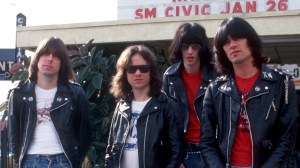
SANTA MONICA – AUGUST 1976: (L-R) Johnny Ramone, Tommy Ramone, Joey Ramone and Dee Dee Ramone of the rock and roll band "The Ramones" pose for a portrait holding letters that spell out the name of their band outside the Santa Monica Civic Auditorium in Los Angeles, California in August of 1976. (Photo by Michael Ochs Archives/Getty Images) -

Photo by Ivan Keeman/Redferns -

Photo by Paul Natkin/WireImage -
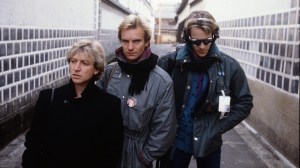
(MANDATORY CREDIT Koh Hasebe/Shinko Music/Getty Images) A portrait photoshoot with The Police in the Kurashiki Bikan historical quarter in Japan, 30th January 1981. L-R Andy Summers, Sting, Stewart Copeland. (Photo by Koh Hasebe/Shinko Music/Getty Images) -

NEW YORK – CIRCA 1963: Motown singer Mary Wells poses for a portrait circa 1963 in New York City, New York. (Photo by James Kriegsmann/Michael Ochs Archives/Getty Images) -

Photo by Michael Hickey/Getty Images