
Too much of anything can quickly turn sour. That’s a lesson I’ve learned the hard way every time I play a song that I love so often that I actually end up hating it. But I’ve never noticed that happening with these records from 1965, no matter how many times I listen.
“Yesterday” by The Beatles
Every so often, a melody that cuts right to the bone will be pulled out of the ether by a lucky songwriter, wooing and baffling the rest of the world in the process. For The Beatles in 1965, that lucky writer was Paul McCartney, who penned “Yesterday”. The ascending lines falling off into something more melancholy perfectly capture the wistful feelings McCartney describes in the lyrics.
Videos by American Songwriter
“Help Me, Rhonda” by The Beach Boys
Most people love Beach Boys records like their 1965 hit, “Help Me, Rhonda”, because of the catchy hooks and infectious harmonies. I admit that I love those two elements of this song just as much as the next listener. However, this song also has a sentimental attachment in that Rhonda is the name of my Honda. (Rhonda is the successor to Wanda the Honda, if you were curious.) A classic track all around.
“King Of The Road” by Roger Miller
Roger Miller’s “King Of The Road” was a country hit in 1965, and decades later, it’s just as appealing in its lackadaisical, wayward way. The idea of paying for a hotel room by helping out the hotel staff seems like some sort of fantastical, fictional concept, not something that was far more commonplace in the first half of the 20th century. Indeed, there’s an unavoidable charm to the concept of being a “man of means by no means.”
“(I Can’t Get No) Satisfaction” by The Rolling Stones
The Rolling Stones couldn’t possibly have imagined what kind of world they would be living in when they first wrote records like “(I Can’t Get No) Satisfaction”, which was a major hit in 1965. That means they also had no way of knowing just how relevant this song would remain for decades to come. Finding things to complain about really is timeless. And if Mick Jagger thought the men on the television and radio were annoying back then, he only had to wait a handful of decades to also get bombarded by people on his laptop and cell phone, too.
Photo by Barham/Tony Eyles/Mirrorpix/Getty Images
More The List
-

MERILVILLE, IN. – MAY 25: Iron Maiden at the Holiday Star Theater on May 25, 1982 in Merilville, Indiana. (Photo by Paul Natkin/WireImage) -

LONDON, ENGLAND – JUNE 06: Roger Waters performs on stage at The O2 Arena during the 'This is Not A Drill' tour, on June 06, 2023 in London, England. (Photo by Jim Dyson/Getty Images) -

NASHVILLE, TENNESSEE – DECEMBER 10: Vince Gill performs at the Ryman Auditorium on December 10, 2025 in Nashville, Tennessee. (Photo by Jason Kempin/Getty Images) -

American singer Donna Summer performing at 'The Music for UNICEF Concert: A Gift of Song' benefit concert held at the United Nations General Assembly in New York City, 9th January 1979. (Photo by Michael Putland/Getty Images) -
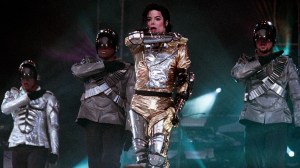
AMSTERDAM, NETHERLANDS – JUNE 8: Michael Jackson performs at Amsterdam Arena on June 8, 1997 in Amsterdam, Netherlands. (Photo by Paul Bergen/Redferns) -

Photo by Jorgen Angel/Redferns -
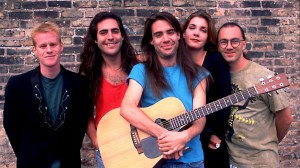
Crash Test Dummies on 8/17/91 in Chicago, Il. in Various Locations, (Photo by Paul Natkin/WireImage)