On September 18, 1970, the meteoric rise of American rock icon Jimi Hendrix came to a screeching halt after his death by barbiturate asphyxiation in London. In an instant, a man poised to continue changing the course of rock ‘n’ roll forever became permanently stuck in time. He would never see how the genre got increasingly heavier, how the blues became more psychedelic, or how those supergroups he was mulling over in his head at the time would’ve panned out.
The previous year, Hendrix was in Dallas, Texas, for a Jimi Hendrix Experience performance at Memorial Auditorium with Fat Mattress, Cat Mother, and The All Night Newsboys. When the rock ‘n’ roller first arrived, he stuck around on the tarmac to do an interview with Doug Terry, a WFAA-Channel 8 reporter who, interestingly, was still attending college at the time.
Videos by American Songwriter
While speaking to Terry on the tarmac, bandmates behind him, looking every bit of a 1969 hippie, Hendrix had a beautiful message about his hope for the future of the world. A world that would no doubt be made better by the music he created.
Jimi Hendrix Imagines a New Movement in Society, Musical and Otherwise
Jimi Hendrix and his bandmates looked even more West Coast hippie-fied standing next to the sharp suit and slick combed-over hair of Dallas reporter Doug Terry. The college reporter’s question spoke to the masses over 50 who struggled to reconcile with Hendrix and his posse’s style and attitude. “Do you consider yourself a dropout from society?” Terry asked Hendrix with a smile.
“No, I’m not a dropout, man,” Hendrix said. “I’m still living and breathing, just like you. We just look a little different. That’s all. We just have different ways of expressing ourselves, which should be the free point of view, anyway.
Hendrix continued, “We’re for anybody that’s gonna get themselves together, you know? We’re not for the whole lot of people sitting around in a big drug den, sitting around complaining. If they’re sitting around and still trying to get the stuff together in some kind of way, regardless if it’s a dropout of society or whatever it might be or if it’s the people in society. The idea now is to communicate and not to knock one another, you know, rebel, and all this. Well, quite actually, you have to start somewhere, so you go to the rebellious. The idea is to communicate and for everybody to be respected regardless of what group scene you might be in.”
At the end of the short interview, Hendrix said artists like Bob Dylan had been a tremendous influence on him. “Mentally, more so, than any other way,” he said.
Memorializing an Attitude Before His Death a Year and a Half Later
Jimi Hendrix’s death came one year and five months after his interview, almost to the exact date. The rock ‘n’ roller left this realm on September 18, 1970, leaving the world with only his recordings and film footage to remember him by. Moments like the one on the Dallas tarmac captured Hendrix’s effortless, casual way of speaking to others in an eloquent, thoughtful way. Even when asked if he was a dropout, Hendrix maintained a kind demeanor, likely made easier by the fact that the reporter, Doug Terry, seemed incredibly happy to be speaking with him.
And of course, he should be. He’s the one who made the assignment. Speaking to Flashback Dallas, Terry recalled, decades later, “I saw Hendrix at least three times, on one occasion being in the dressing room with a camera when he warmed up for a show. I was a weekend reporter and late night news anchor at Channel 8, and I assigned myself to go interview him. In those days, one could call up the airlines when a notable person was coming in, and they would give the flight number and arrival time. Amazing. Most of the people at the station at that time probably had no idea who Jimi was and wouldn’t have cared if they did know.”
If they didn’t know him then, they certainly did in the months, years, and decades that followed.
Photo by David Redfern/Redferns
More Features
-
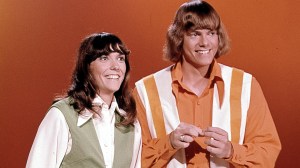
UNSPECIFIED – CIRCA 1970: Photo of Carpenters Photo by Michael Ochs Archives/Getty Images -
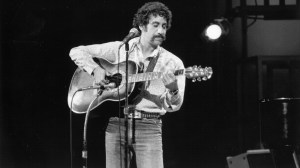
UNSPECIFIED – CIRCA 1970: Photo of Jim Croce Photo by Michael Ochs Archives/Getty Images -
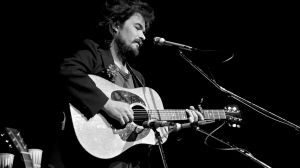
Singer-songwriter John Prine performs at Symphony Hall on April 26, 1974 in Atlanta, Georgia. (Photo by Tom Hill/Getty Images) -
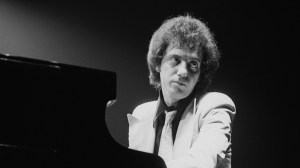
American singer-songwriter Billy Joel, performing in New York City, 7th December 1977. (Photo by Michael Putland/Getty Images) -
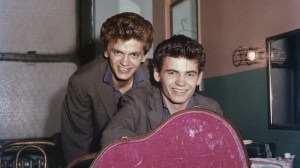
American rock and roll singers the Everly Brothers, Phil and Don Everly, circa 1958. (Photo by Archive Photos/Getty Images) -
Photo by Michael Ochs Archives/Getty Images -
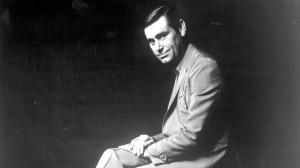
UNSPECIFIED – CIRCA 1970: Photo of George Jones Photo by Michael Ochs Archives/Getty Images