Your cart is currently empty!



3 Iconic Country Music Guitar Riffs From the 1950s That Transformed the Modern Guitar
Country music in the 1950s enjoyed widespread appeal and featured diverse styles from honky-tonk to the pristine Nashville sound. With the rise of rockabilly and early rock and roll, both influenced by country music, the electric guitar continued to take center stage. As the decade unfolded, Merle Travis and Chet Atkins inspired guitarists with virtuosic playing, and you can hear echoes of both in the list below.
Videos by American Songwriter
And as artists continued to crank the volume, and those especially who reacted against the Nashville sound (of which Atkins was an architect as a producer), the guitar riff became as crucial to country as it would eventually be to rock. So let’s see how these country music guitar riffs from the 1950s transformed the modern guitar.
“Folsom Prison Blues” by Johnny Cash
Before he was a member of Johnny Cash’s backing band, guitarist Luther Perkins worked as a mechanic in Memphis. For his iconic guitar riff in “Folsom Prison Blues”, he used a mechanic’s instinct to fix a problem. He didn’t want the low notes of his guitar to compete with bassist Marshall Grant, so Perkins began muting the strings in the style of Merle Travis. This led to his signature “boom-chicka-boom” syncopation, now standard among country guitarists. It also mimics the sound of a chugging train, perfect for Cash’s opening lyrics: “I hear the train a-comin’ / It’s rollin’ round the bend.”
“Dim Lights, Thick Smoke (And Loud, Loud Music)” by Joe And Rose Lee Maphis
While Perkins wasn’t a flashy guitarist, Joe Maphis represented the other end of the spectrum. Known as “The King of the Strings”, Maphis conquered multiple stringed instruments and notably played a double-neck Mosrite guitar. He was famous for his rapid-fire and ultra-clean flatpicking, tall stature, and Nudie suits. Inspired by the raw Bakersfield sound, Maphis recorded the honky-tonk standard “Dim Lights, Thick Smoke” as a duo with his wife, Rose Lee. His guitar hero was Mother Maybelle Carter, whose complex combination of playing rhythm and lead informed how Maphis approached the instrument.
“Blue Suede Shoes” by Elvis Presley
“Blue Suede Shoes” gives me an excuse to talk about both Scotty Moore and Carl Perkins. Perkins, a rockabilly legend, helped pioneer rock and roll. And Elvis Presley’s cover of Perkins’ tune stands as another Big Bang moment in rock history. Moore’s blend of jazz, blues, and country, as well as his use of slap tape echo, is influential across multiple genres, including punk. Borrowing from Chet Atkins, Moore’s hard-driving playing and swinging melodic solos became a bedrock of rockabilly, country, and the modern electric guitar.
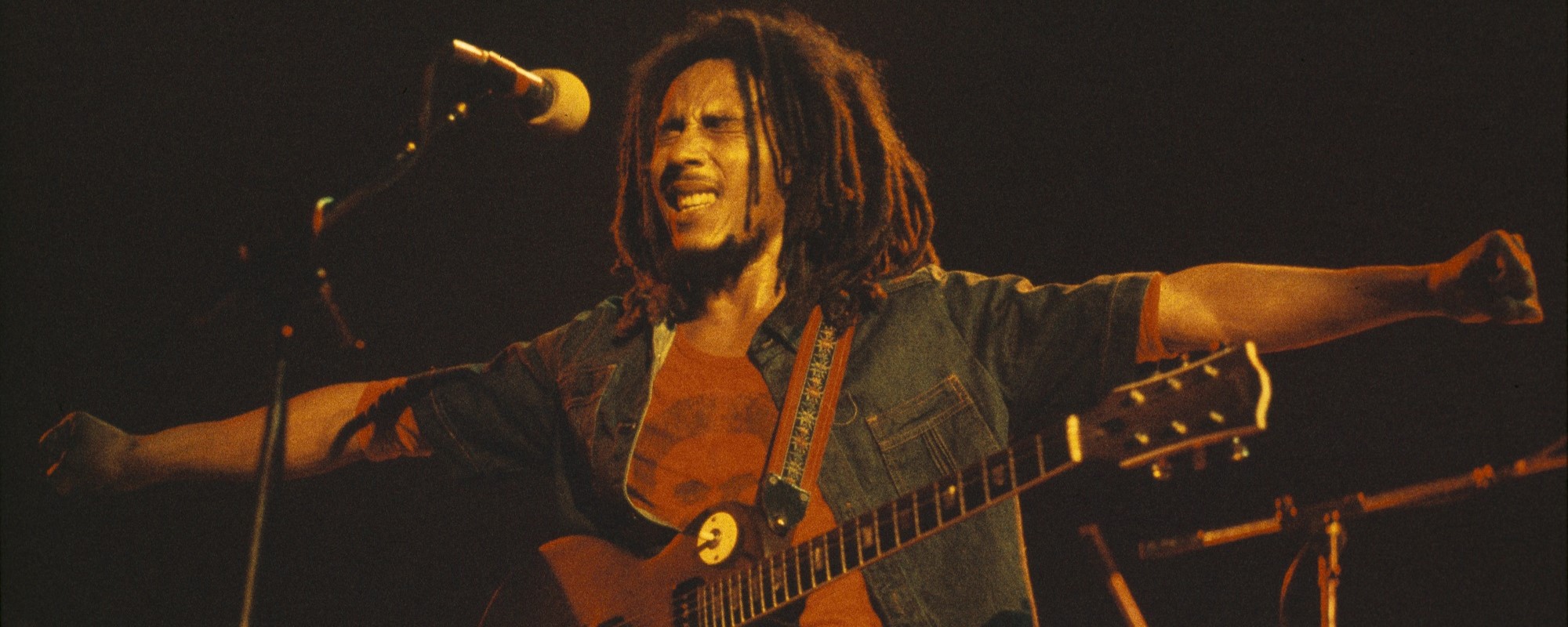
Photo by Michael Ochs Archives/Getty Images










Leave a Reply
Only members can comment. Become a member. Already a member? Log in.