When iconic artists go on tour, most fans buy tickets hoping to hear the “hits.” And the hits are typically decades old, released when the artists were young. However, many rock legends remain curious, continue to record worthwhile music, and occasionally release masterpieces. The tracks may not appear on a greatest hits anthology but are nonetheless essential chapters in groundbreaking careers. Here are two latter-day masterpieces from a pair of rock history’s most transformative voices.
David Bowie ‘Blackstar’ (2016)
Blackstar, David Bowie’s 26th and final studio album, was released on his 69th birthday. Two days later, the singer died. He’d battled liver cancer privately for 18 months, and after his passing, many began to reevaluate the meaning of his final LP. In “Lazarus”, he sings, “Look up here, I’m in heaven / I’ve got scars that can’t be seen.” It’s hard not to interpret this as anything other than one facing their own mortality. But it’s Bowie, and the brooding track could just as easily be a noir drama.
Videos by American Songwriter
Bowie’s backing band on the album is led by Donny McCaslin, the saxophonist in Maria Schneider’s big band orchestra. Blackstar isn’t a jazz album, but its musical perspective is. The title track is searching and fidgety, much like the rest of the album. Meanwhile, orchestral strings surround Bowie’s voice on “Dollar Days”, a mid-tempo number echoing his more familiar output. Then there’s the sputtering beats and angular guitars of “Sue (Or In A Season Of Crime)”, first recorded with Schneider’s orchestra and appearing in 2014 on the compilation, Nothing Has Changed.
Yet don’t go looking for an end-of-life hymn. Songs like “Tis A Pity She Was A Wh*re” and “I Can’t Give Everything Away” reveal an artist still in motion all the way until the very end.
Bob Dylan ‘Rough And Rowdy Ways’ (2020)
When Rough And Rowdy Ways arrived, it was Bob Dylan’s first album of new material since Tempest (2012). Between the two LPs, he released three collections of pop standards. A collection of covers after a long career of expanding the American Songbook with his own tunes. On the opening track, “I Contain Multitudes”, Dylan sings, “I’m a man of contradictions / I’m a man of many moods.” Which was always apparent, even before he plugged in his electric guitar and alienated folk purists in 1965.
Like much of Dylan’s latter output, the music is old-fashioned with death-on-my-mind lyrics and verses of poetry that often seem intent on throwing the listener off his trail. Again, a familiar theme. The wobbly blues of “False Prophet” might be biographical or whole-cloth fiction. “I ain’t no false prophet / I just know what I know / I go where only the lonely can go,” he howls in a broken voice.
In the sprawling album closer, “Murder Most Foul”, Dylan describes the 1963 assassination of John F. Kennedy. The title, taken from Hamlet, gets repurposed as an account of American distress and a culture happening around, because of, and after Kennedy’s gruesome death. The band, seemingly free of meter or a fixed tempo, supports Dylan in a combined drone. And you get a sense of zooming out, like the awed perspective of the Earthset image. To such a scale that all the trauma feels insignificant. Or, depending on the view, extraordinarily significant.
Photo by Gary Miller/Getty Images
More The List
-
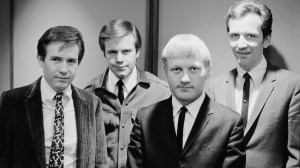
American rock & roll band the Bobby Fuller Four, circa 1966. From left to right, they are singer Bobby Fuller, bass player Randy Fuller, guitarist Jim Reese and drummer Dalton Powell. (Photo by Don Paulsen/Michael Ochs Archives/Getty Images) -

Faith Hill on 11/2/00 in Chicago, Il. (Photo by Paul Natkin/WireImage) -
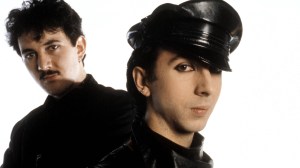
UNITED KINGDOM – NOVEMBER 01: Photo of Marc ALMOND and SOFT CELL; Marc Almond & Dave Ball (Photo by Fin Costello/Redferns) -
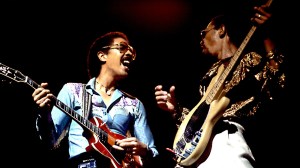
Brothers Johnson on 4/13/80 in Chicago, Il. (Photo by Paul Natkin/WireImage) -
Photo by Jack Kay/Mirrorpix via Getty Images -

NEW YEAR'S ROCKIN' EVE 1974 — Pictured: (l-r) Linda Ronstadt — Photo by: NBCU Photo Bank