Your cart is currently empty!



June Digital Cover Story: How Adam Lambert Turned Heartbreak and Change Into His Boldest Album Yet—“I Checked Off My Wish List of My Ideal Album”
Adam Lambert is calling from his home in New York City—a fact that clearly delights him, judging by the upbeat way he talks about it. After spending the last 25 years in Los Angeles, he made the big cross-country move, which directly impacted the way he approached the songwriting for his sixth album, ADAM, which is set for release on July 10. (The high-energy lead single, “Eat U Alive,” was released on May 8.)
Videos by American Songwriter
“I got out of a five year relationship and I moved to New York,” he says. “I just made the decision last year: ‘I think it’s time to make a change.’ I think that clean slate was a big inspiration for a lot of the music. The fact that I’m in this new headspace and new physical space is directly tied to the things that I’m exploring and learning about myself, and chapters that I’ve closed and new ones that I’m opening.”
As a result, Lambert is particularly pleased with the way these new songs have turned out. “In the past, I feel like I always had certain intentions, and some of them were met—but I think with this one, it’s like all the things I wanted it to be, it is. I checked off my wish list of my ideal album—it all came true,” he says.
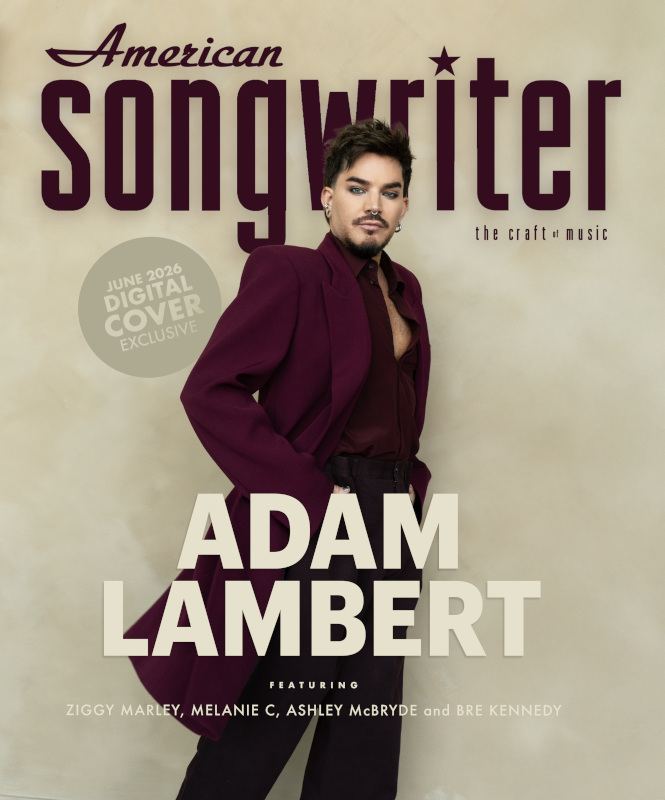
To ensure that he could create these songs exactly as he wanted them to be, Lambert is releasing this album via his own label (with distribution by The Orchard). “I took kind of a risk—I really am in the driver’s seat here, which feels really rewarding. I’m a good team player, I can play the game and collaborate with companies and whatnot, but sometimes what happens is, I feel like the creative vision sort of gets compromised—so it felt really good to come at this one completely free of having to impress anybody in a suit!” he says with a laugh.
“Another change is that my team is a bit restructured, and that’s in a really good place, so entering the writing process on this felt really positive,” he says. “I ended up hiring Jessica Thomas to do my A&R, who’s incredible. I brought her in right at the beginning and started spitballing with her and having these great conversations about the sound that I was after, and the style and the mood.”
When Lambert considered the seismic changes in his personal life, combined with the socio-political uncertainty in the world, he knew that this album should have a heavier, more industrial sound. “I thought that this is the right time to explore these kind of darker vibes because of the collective subconscious that we’re all existing in right now,” he says. “I was referencing a lot of music from the ’90s: Nine Inch Nails and Bjork and Massive Attack—this darker, moodier, alternative but also electronic kind of music—and that’s how the writing process started.”
Thomas helped him put together sessions with various songwriters and producers. Meanwhile, Lambert looked back on his previous collaborations for good people to bring in again, which led to the particularly crucial decision to invite Pete Nappi to become the album’s executive producer.
“He’s somebody that I worked with a while ago, and it was such a great experience,” Lambert says of Nappi. “I’m such a fan of his sonic style. He is such a major part of the way this album sounds, he has his fingers on a lot of the tracks, so I was very, very grateful to work on him with that.”
Lambert also thoroughly enjoyed working with the various songwriters who helped him craft these tracks: “I like people, I like socializing. I like talking. I like exchanging ideas and pondering the universe with people, so I love going into a songwriting room because that’s usually how most of these songs start, with a conversation.”
Wanting to make sure that these collaborators were given a fair shake, Lambert made a couple of unusual moves regarding their compensation. For one thing, after discussing it with Thomas, he decided to pay his co-writers a fee in advance. “We just said, ‘Let’s do this the right way: let’s give people what they deserve, give them a fee up front so they feel like they’re being taken care of.’ When people feel like they’re being appreciated for their work and compensated, they also do better work. I think that’s important, and I think it’s only fair,” Lambert says.
Then, when working on “Under the Rhythm” (which was released as the album’s second single on June 5), Lambert made another unorthodox more by paying more out of his own pocket so that his co-writers could get a better deal. “It turned out that in order to get the interpolation, it was a substantial amount of money, or they were going to ask for the majority of the publishing,” Lambert says of this track. “I thought, ‘I feel more comfortable just paying a fee and allowing the co-writers of the song to get their fair share of the publishing.’ I just think that that was the right thing to do.”
These decisions came about because of Lambert’s own observations of the music industry. “I’ve been doing sessions a lot over the last seventeen years, and I’ve become friends with a lot of songwriters,” he says. “The songwriting world is cutthroat. The fact that songwriters are asked to go into rooms, oftentimes with no pay, totally on spec, to hope something will come that maybe will get put on an album—I mean, it’s a really difficult business to be in. I know a lot of songwriters that are really brilliant that have to have second and third jobs because it’s just too difficult to depend on a paycheck in this business. To me, it’s such a crime because they’re a big reason why these songs become what they are: they’re the architects of the song.”
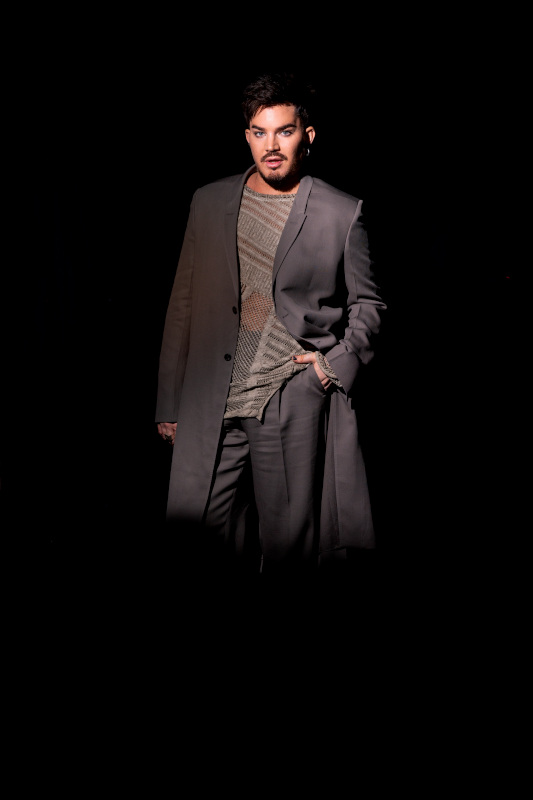
Much as Lambert admires other songwriters, though, he knows that he can hold his own in the writing room, too. “I think I’m good at zooming out and doing the big picture thing. I can get into the weeds and start nitpicking words and melodies, but I think what I tend to be able to do is go, ‘Is this going in the right direction? Is this the right feeling? Is this the right mood?’ I want to feel like there’s a world being created, or an energy or a vibe that’s happening. So I guess maybe that’s my main contribution, is keeping the train headed in a certain direction that I want.”
Lambert credits his background in musical theater, which he began doing when he was still a kid growing up in San Diego, for this ability to know what will click with his audience. “I’ve done a lot of live vocals, a lot of concerts, a lot of performances, and I want to make sure the material will support a great performance,” he says.
His big break came when, in 2009, he was the runner-up contestant on the hit television show American Idol. That success led to a deal with RCA Records, and he released his debut solo album, For Your Entertainment, also in 2009.
On For Your Entertainment, Lambert embraced a wide range of styles, including classic rock, glam, pop rock, and electropop. He has intentionally implemented this same musically adventurous spirit on all six of his releases.
“I think from the first album, I always kind of wanted to be an artist that didn’t stick to one sound,” he says. “I wanted to be able to move more seamlessly between genres. I don’t really feel like I like to be boxed in by one thing; I get bored if it’s too much of the same. I think the creative spirit needs to be challenged, and venture into the unknown for great things to happen.”
In addition to his successful solo career, Lambert has concurrently taken on a number of high-profile projects through the years. He has stepped in as the vocalist for the band Queen for numerous tours and shows, and also returned to his musical theater roots (he starred in Cabaret on Broadway in 2024, and in Jesus Christ Superstar at the Hollywood Bowl in 2025).
Lambert is, he says, immensely grateful that he has been able to carve out a long and versatile career: “I’m proud that I’m still being afforded the opportunity to do what I love, and that there’s fans that have stuck by me,” he says. “I feel like every couple of years I have to prove myself, and I’ve been really lucky to have these opportunities come up where I’m allowed to do that. There’s these little milestones in my career that I can point to that have allowed me to stay in the position I’m in. I get to earn my keep, and I’m lucky I have the chance to rise to the occasion.”
All photos by Dana Scruggs
Leave a Reply
Only members can comment. Become a member. Already a member? Log in.