In 1967, Peter Gabriel, Tony Banks, Mike Rutherford, Anthony Phillips, and Chris Stewart founded Genesis. Three years and three drummers later, Phil Collins joined the band in 1970, becoming their fourth and final drummer(Other than Collins’ son Nic, on their 2021-2022 tour). Following Collins’ inclusion in the band, the band experienced its most dramatic lineup change, and that was thanks to Peter Gabriel’s departure in 1975.
Like Fleetwood Mac and Van Halen, Genesis experienced a lot of lineup changes, and after Gabriel’s departure, the lead singer position was completely up in the air. As we all know, Phil Collins stepped into Gabriel’s role and guided Genesis into the golden age of their career. With Collins at the helm, Genesis scored a No. 1 hit and five top 10 albums on the Billboard 200. Needless to say, Phil Collins made the band his after Gabriel’s departure, but that nearly wasn’t the case.
Videos by American Songwriter
During Gabriel’s final tour with the band, Collins and the rest of the band members started to scramble for a new lead singer. During this process, Genesis reportedly auditioned 400 musicians, and during the auditions, Phil Collins would be by their side, walking them through the songs. At the end of the day, Genesis selection was right in front of their face.
How Phil Collins Felt Stepping Into the New Role
One of Peter Gabriel’s trademarks as the lead singer of Genesis was the theatricality with which he performed. Between his elaborate costumes and animated on-stage disposition, Gabriel had set a very particular precedent, a precedent Collins didn’t feel entirely comfortable continuing.
Concerning his reluctance to lean into the theatrical past of Genesis, he told The Guardian, “I set out what I would do and what I wouldn’t do. I personally felt that some of the visuals, the costumes and so on, were getting in the way of the vocals.”
“I didn’t think I’d be very good at doing that theatrical stuff anyway. So I said: ‘Look, I can sing the songs, but anything else will be a bit of a question mark,” added Collins. Phil Collins seldom put on costumes and embraced a verbose and overly excited on-stage personality. Rather, he got down to business, and that is why he is remembered alongside singing and drumming greats such as Levon Helm, Don Henley, Ringo Starr, and Karen Carpenter. Also, a side note, but if you’re a drummer, then you know just how hard it is to sing while performing.
Photo by Ron Wolfson/Michael Ochs Archives/Getty Images
More Features
-
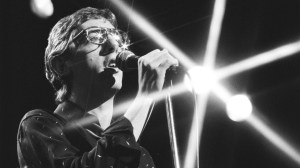
(MANDATORY CREDIT Koh Hasebe/Shinko Music/Getty Images) Randy VanWarmer live at Nakano Sunplaza Hall, December 5, Tokyo, Japan. (Photo by Koh Hasebe/Shinko Music/Getty Images) -
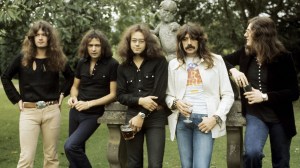
Photo by Armando Gallo/Getty Images -
LOS ANGELES – AUGUST 1977: R and B group The Emotions (L-R Pamela Hutchinson, Wanda Hutchinson and Sheila Hutchinson) pose for a portrait on the set of the TV show 'Soul Train' in August 1977 in Los Angeles, California. (Photo by Michael Ochs Archives/Getty Images) -
American Folk musician Todd Snider plays guitar as he performs onstage at Medinah Temple, Chicago, Illinois, November 27, 1997. (Photo by Paul Natkin/Getty Images) -
American vocalist, musician, songwriter, producer, actress and narrator Rickie Lee Jones performing live, circa 1979. (Photo by Gus Stewart/Getty Images) -
Bob Dylan (b. 1941) the cult American singer and songwriter, best known for his folk protest music during the 1960's. (Photo by © Hulton-Deutsch Collection/CORBIS/Corbis via Getty Images)