Your cart is currently empty!



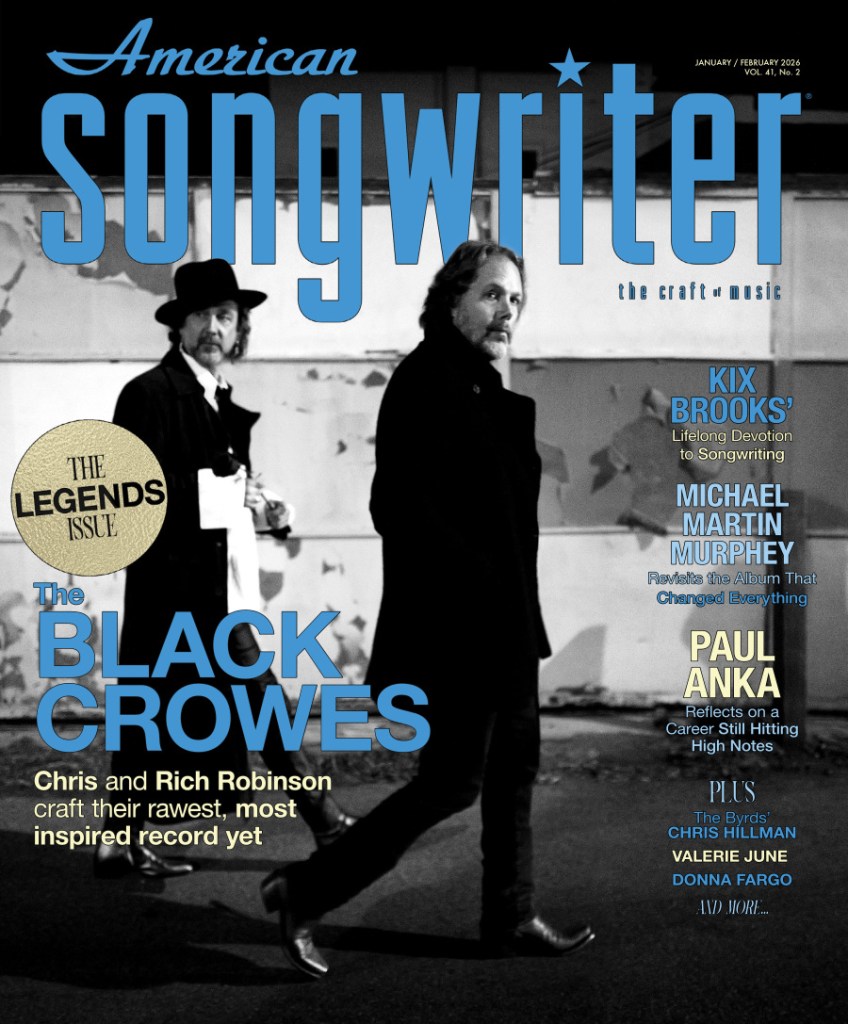
American Songwriter January/February 2026 Legends Cover Story: How The Black Crowes, Chris and Rich Robinson, Rediscovered Their Creative Fire by Letting Chaos Lead the Way
As they wrote and recorded the latest Black Crowes album, brothers Chris Robinson (vocals) and Rich Robinson (guitars) were basically working without any kind of plan. “I had the basic framework of the songs,” Rich says, “but when we got into the studio, we really started working on song structure, melodies, things like that.”
Videos by American Songwriter
“It was really spontaneous,” Chris says. “I had four or five notebooks filled with ideas, and whatever I was putting together on the spot.”
Working in such a freeform manner wasn’t stressful for them, though. “We know how to cast the spell, and we know how to keep the cauldron bubbling while we’re in there,” Chris says. “[With this album] we were on a roll. This is the most inspired and best music I think I’ve ever heard Rich play—and I feel Rich has played a lot of good music on a lot of Black Crowes records.”
Fans will be able to check out the results of this musical experimentation when A Pound of Feathers is released on March 13—and listeners may be surprised by some of what they hear. “I think some of it is stepping outside of our comfort zone, which I think is cool, and I think it’s just overall a really good rock and roll record,” Rich says.
While writing and recording this new material, the brothers divided their time between Los Angeles and Nashville (where Chris and Rich live, respectively). At first, they kept it between just the two of them: “I’m playing drums and he’s playing guitars and bass, and we’re just pounding out some ideas,” Chris says, adding that as recording commenced, they expanded things, but only to a certain degree: “We had Cully [Symington], our drummer, but we didn’t have the rest of the band, and so all the guitars and bass on the record are Rich.”
“Then we brought in Eric [Deutsch, keyboards] toward the end to play on some stuff,” Rich says. “To me, this is the best way to make music—to just go in when you’ve got some songs, make the record, and move on and don’t get caught up on anything.”
Chris agrees: “There was something about the rawness of it that really appealed to me. I was like, ‘That’s what we need to do: we need this heavy, funky, dark, raw record.’”
Due to his feelings about “the state of our world, the state of our country,” Chris says that this is a much darker record, in terms of lyrics, than their last one, 2024’s Happiness Bastards. “There’s a cynicism, and almost a nihilistic thing. As a lyricist, as a person of a poetic construct, I’m into art and poetry; I’m not into politics—but I also know what’s right and wrong, and it looks wrong to me. It looks broken. It looks horrible. It looks as far from being a humane place as I can see. These are all cycles and systems of things, and how it makes me feel is how the lyrics come out.”
Though they were open to letting the songwriting process evolve without any deliberate intervention, the brothers admit that things still unfolded in much the same way they have since they started their first band when they were teenagers.
“I’ve always written the music,” Rich says. “I’ll come up with a sketch or a framework for a song and then send it to Chris, and then he’ll have changes, and then we’ll get together in a room or in the studio and work out the changes.
“Life experience is the overall umbrella,” he continues, “but what you listen to, what you lived through, who you dated, who you broke up with, what you watched, what you read, what your parents did, how much you traveled, how much you didn’t travel—all the experiences that we have in our life, it kind of creates a stained glass filter in our minds, and it’s unique to us because of the uniqueness of our individual experiences. Taking all of these different influences in is going to come out in this natural design.”
“With Rich, I’m always like, ‘What else ya got in there?’” Chris says. “He’s always writing parts and bits and putting them together, and I’m constantly writing in notebooks [or the back] of a packet of matches or whatever. It’s really the thing that catapulted us into this whole world years ago: we like the writing.”
“I think Chris has a unique voice and a unique way of singing, the rhythmic nature of how he sings,” Rich says, “and I’m unique in the way that I play and the way that I write—I’m not just strumming normal chords.” This means that when they combine forces, “I think there’s a rawness. We’re not afraid to go there, musically or lyrically, and I think there’s a strong emotionality to the music. There’s a beauty, there’s a melancholy, but all of these emotional markers that we write from are authentic and heartfelt from us. Music is the delivery system to the emotions that you’re trying to convey.”
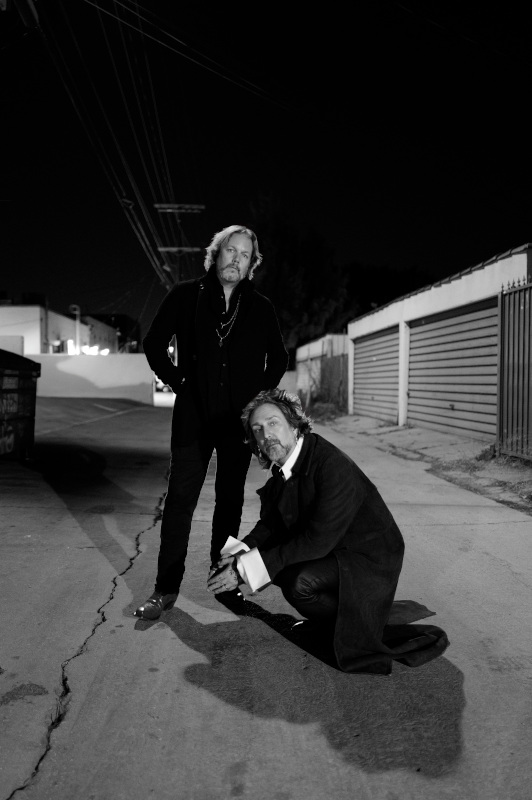
As they collaborate, Chris says, “Very little information needs to be exchanged to make this thing come alive.” Their synergy can undoubtedly be attributed, at least in part, to the fact that they’re brothers.
It can also be traced back to their childhood in suburban Atlanta, which was always centered around music. “Our dad was a musician, and he would take out the guitars and play; music was always on in the house,” Rich says. “It was a broad spectrum: jazz music, blues, rock and roll, gospel and spirituals, and anything and everything in between. One thing I think we got from our dad is his appreciation, because he really loved music—and I think to be a great musician, you have to be a great appreciator of music.”
As they grew older, other influences also came into the mix. The older brother by two years, Chris was “more of an expeditionary person, where he would go out and seek out these cool records and bring them back,” Rich says. “I would pick through his records and take what I liked and leave what I didn’t. I was always interested in the instrumentation. I’d really listen to every piece of music, and then listen to how it all works together. And I think that both of those approaches added to how we write songs together.”
“We were lucky enough to be of an age when the U.S. hardcore punk scene was being born,” Chris says of their formative years. That kind of music resonated, he says, because of “my sense of alienation, my sense of anger and frustration, of this suburban choice mom and dad made to be in that environment that was kind of culturally and intellectually stifling, so I found myself being influenced by this.”
It wasn’t long before the brothers formed a group of their own. “We never sat down and had a conversation about what we were doing. We were just like, ‘All right, we’re in a band,’” Rich says. Naming themselves Mr. Crowe’s Garden, they drew inspiration from the Paisley Underground bands in L.A., rock artists from the UK, and jangle rock groups from the South. “We were always pretty open to everything,” he says.
It took them a fair amount of time to sift through all of these influences and find their own distinctive sound, though. “When we started, Rich was a cool guitar player, but I don’t think anyone would have thought in 1987 that he would be the guitar player he is today, or that I would be the singer and or performer that I became—but I think everyone understood our dedication to the craft of songwriting,” Chris says. “We were unbelievably driven, and maniacal about our commitment, and taking it as far as it would go until there was nothing left.”
This approach was spectacularly successful. In 1990, when the band—now renamed The Black Crowes—released their debut album, Shake Your Money Maker, they immediately scored four massive hit singles: “Jealous Again,” “Hard to Handle,” “Twice as Hard,” and “She Talks to Angels.”
“After the success of Shake Your Money Maker, everyone just sat around, going, ‘Cool, give us that again! Where’s the next ‘Hard to Handle’?” Chris says. But he and Rich resisted this pressure as they created the band’s second album, The Southern Harmony and Musical Companion, which was released in 1992.
“When we made Shake Your Money Maker, I was 19,” Rich says. “We had written these songs, but we definitely wore our influences on our sleeves. We loved AC/DC, the Rolling Stones, Free, Otis Redding, and all these different things. But I feel like Southern Harmony was the first time we stepped into our own skin.”
That happened, he says, because after releasing Shake Your Money Maker, the Black Crowes embarked on an extensive world tour that lasted nearly two years, opening for everyone from Aerosmith to Robert Plant to ZZ Top. This experience drastically widened their musical horizons and also their skills.
“When we got back, we had had a collective experience as a band, and we were able to move freely with each other,” Rich says. “It’s almost like a form of ESP, like we can read each other’s minds. So by the time we got to Southern Harmony, Chris and I were not going to allow ourselves to sink into some sort of panic over trying to recreate some sort of success. We were far more interested in our newfound powers. Like, ‘Wow, we can play better. We’re better musicians. We’re better songwriters.’ And with all of that, creative expression comes without any barriers. It wasn’t the easiest route all the time, but definitely, we feel good about how we did it.”
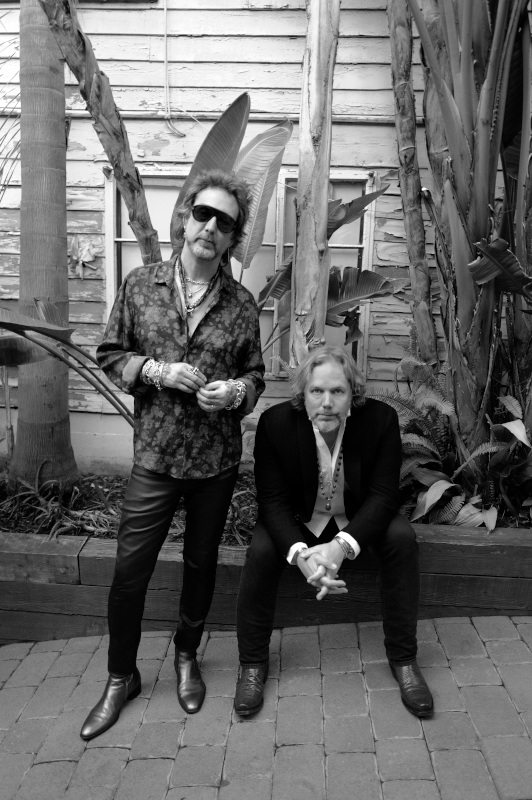
This defiant mindset continues to guide the way The Black Crowes have created every album ever since. “We’ve never really made the same record twice, and we never really got from point A to point B the same way,” Chris says. “Every record has its own specific circumstance around it.”
This attitude has brought The Black Crowes ongoing acclaim to the present day, as proven by the fact that their last album, 2024’s Happiness Bastards, was nominated for a Grammy award in the “Best Rock Album” category, and last year, the band was nominated for induction into the Rock & Roll Hall of Fame.
But both brothers are adamant that it remains the creative process, not this kind of recognition, that drives them—and they counsel aspiring artists to adopt the same individualistic and art-focused attitude.
“Don’t let people push you around,” Chris says. “Don’t let people tell you what to do. One of the reasons I think The Black Crowes are even here, still, is [because] of how many times someone from the record company would say, ‘This is what I think you should do.’ And I’d be like, ‘Cool, tell it to one of the other 50 bands on your label, because this is my only band, and this is my life, and if I’m going to make a mistake, I want it to be because I made the mistake, not because I listened to somebody else who doesn’t have anything to do with it, really.’”
When writing songs, Rich says, musicians should look inward, instead of trying to please others: “What do you want to say? How do you see the world? How do you want to sound? How do you want to play the guitar? You tap into yourself, and that becomes far more authentic.”
And, Chris adds, it’s important for musicians to understand that the music is only part of the job, if you want to make this your career. “Be proactive. Make things happen. Work harder. Write more. Be freer. Live and breathe it, and there’s no other choice. You can always go deeper. There’s always something else, a stone to uncover in your process. I see a lot of bands, and sometimes I’m like, ‘They’ve only done what’s required.’ Do more.”
This shared unyielding work ethic means that the brothers are always feeling creatively inspired. In fact, Rich says, “I could make another record now. I love being in the studio. I love making records.”
Who knows what those future songs will sound like, though. “We are still exploring to this day,” Rich says. “We’re still constantly trying to push ourselves. I always let the music dictate where we’re going. I never stop myself from writing a song, no matter what it sounds like. Once you write all these songs, you put it on the table, and then they’re like a magnet: they’ll attract themselves to each other, and they dictate what kind of record you’re going to make.”
Chris is also disinclined to place any kind of boundaries on their future output. “The only expectations we have are to make music that Rich and I can be proud of and say, ‘This is killer, this is what we like, this is representative of who we are and what we want to say.’”
The only thing they both will promise is that there will be much more to come from their band. This is significant because, through the years, The Black Crowes have sometimes been volatile, breaking up and reforming, with the latest iteration coming together in 2019.
Now, though, the brothers have figured out how to truly work harmoniously with each other—maybe because, as Rich admits, they never really lost their connection despite the years when they were working as solo artists or with other bands. “Even when I wasn’t in the Crowes, I was always writing for Chris’s vocals, whether I knew it or not,” he says. “I would always set up this chorus knowing what Chris could do to it. Or, ‘This is how this works, based on him.’ Because for 25 years, we made all these records and went out and toured the world. So that, coupled with the love for music, and coupled with family and all these things, is why we got back together.”
And beyond that, they’re also simply thrilled to find themselves still doing the work they began as teenagers. “It was 40 years ago that we played our first show in a club and got paid; that is pretty wild,” Chris says. Continuing in this career, he says, “is an amazing gift, and I’m always humbled in the face of the tradition that I get to work in. I wouldn’t understand life without the gift of music.”
Photos by Lindsey Ross


Leave a Reply
Only members can comment. Become a member. Already a member? Log in.