Your cart is currently empty!



Born on This Day in 1924, the Bluegrass Icon Who Made the Banjo What It Is Today
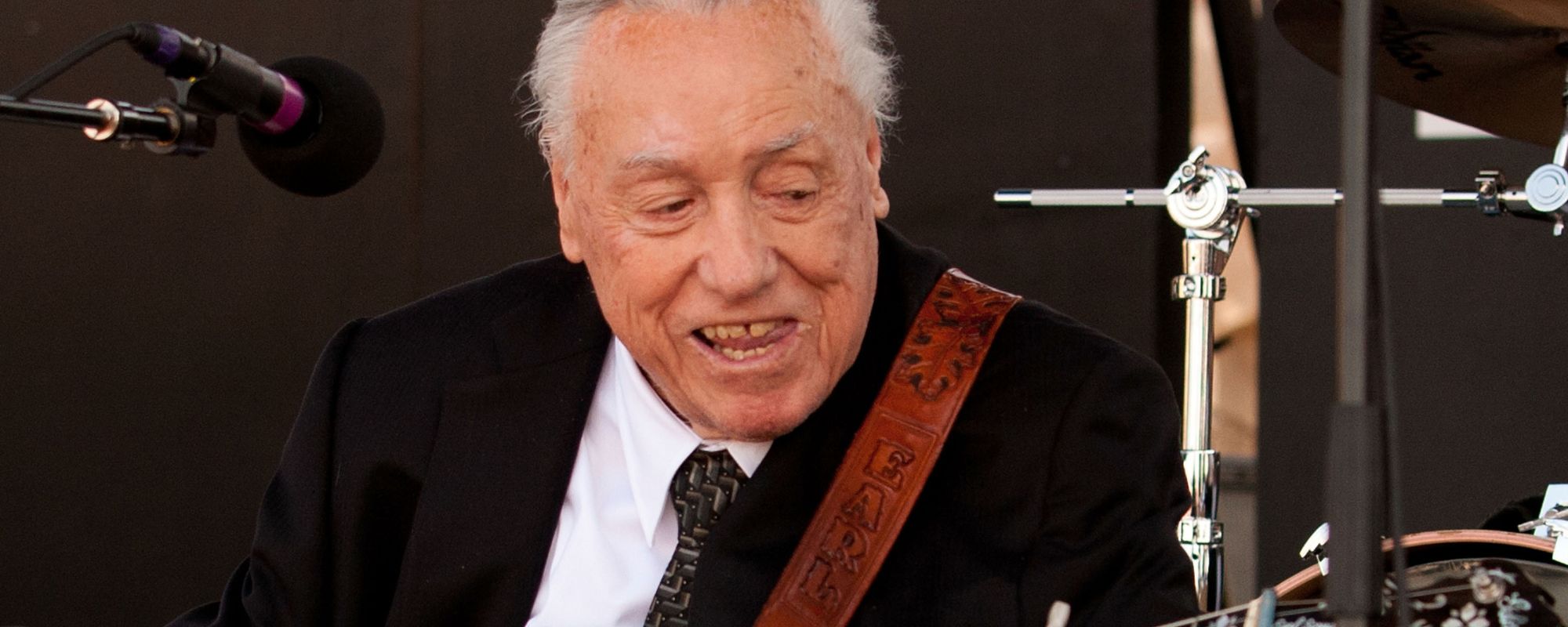
On this day (January 6) in 1924, Earl Scruggs was born in Flint Hill, North Carolina. He was a member of two of the most influential bluegrass groups. Moreover, he was at the forefront of the genre in its infancy. Scruggs is also partially responsible for bringing ‘grass to mainstream popularity. Most importantly, he changed the way generations of musicians approached the banjo. His innovative style has since become the gold standard.
Videos by American Songwriter
Scruggs started playing the bajo before he was big enough to hold the instrument. He was heavily influenced by the likes of DeWitt “Snuffy” Jenkins, who adapted fingerstyle guitar techniques to the instrument. He developed the finger-picked banjo style into something melodic, fast, and exciting. Today, the three-finger style of plucking is called “Scruggs style” and is the most-used style in bluegrass.
[RELATED: 4 One-Hit Wonders Who Left a Lasting Mark on Country Music]
Before Scruggs popularized the three-finger style, most banjo players used frailing or clawhammer style. This made the banjo more of a rhythm instrument. Most clawhammer players don’t take solos. “Scruggs style” transforms the banjo into a lead instrument and allows the players to take instrumental breaks, creating one of the most recognizable sounds in bluegrass.
Earl Scruggs and the Original Bluegrass Band
Bill Monroe is remembered as the father of bluegrass. He and his band, the Blue Grass Boys, combined country and gospel with folk music from Appalachia and Europe to create a new sound. They introduced what would come to be called “bluegrass” during a 1945 appearance on the Grand Ole Opry.
While Monroe’s band had been together for a few years before that landmark performance, their sound wasn’t complete until two key members joined the fold–Lester Flatt and Earl Scruggs. Flatt’s rock-solid guitar playing and Scruggs’ lightning-fast banjo picking helped give the band what it was missing.
Scruggs also played on the 1946 recording of “Blue Moon of Kentucky,” which has since been recognized as one of the genre’s seminal songs.
Flatt and Scruggs
The Blue Grass Boys saw several lineup changes over the years, with Bill Monroe being one of the only constant members. Three years after their landmark Opry performance, Lester Flatt and Earl Scruggs left the band. They formed Flatt and Scruggs and built a backing band they called the Foggy Mountain Boys.
Their song “Foggy Mountain Breakdown” appeared in the classic 1967 film Bonnie and Clyde and has become a bluegrass standard. More importantly, it introduced the group and its music to a new audience. However, nothing they recorded was as successful or as well-known as “The Ballad of Jed Clampett.”
“The Ballad of Jed Clampett” was the theme song for the hit TV show The Beverly Hillbillies. It played at the beginning and end of every episode. The group also released it as a single, and it reached the top of the country chart. Even more impressively, it reached No. 44 on the Billboard Hot 100.
The Earl Scruggs Revue
Flat and Scruggs changed the face of bluegrass music, but nothing lasts forever. In 1969, around 20 years after they formed their band, they went their separate ways. Lester Flatt wanted to continue making traditional ‘grass. Earl Scruggs, on the other hand, wanted to continue innovating and changing to keep their output fresh. This fundamental difference in opinion led to their split.
Scruggs enlisted his sons, Gary, Randy, and Steve, to form the Earl Scruggs Revue. “The rhythm patterns for much of the Revue material were different from what I had done for so long,” Scruggs said. “But Gary and Randy had been playing a lot at home, and I was sitting in on a lot of jam sessions with them, and friends would drop by. So, it really didn’t jump out at me all that much. It has been a refreshing, happy, and rewarding challenge.
According to the National Endowment for the Arts, Scruggs continued to perform into the 1980s. However, he had to stop touring before he fully retired. He passed away in 1996 at the age of 84, having changed the face of American music forever.
Featured Image by Jeff Kravitz/FilmMagic, Inc


Leave a Reply
Only members can comment. Become a member. Already a member? Log in.