Children rebelling against their parents is a tale as old as time. Usually, this natural separation tapers off as the child becomes an adult. And by the time that child is as old as their parents, there are usually more similarities between them than their teenage selves could stomach.
In other, rarer cases, this childhood rebellion can inform entire careers. This was certainly true of Hank Williams’ son, Randall Hank Williams. Most know him as the outlaw country musician under the moniker Hank Williams Jr. While he was willing to take on his father’s name, Williams Jr. spent much of his early career distancing himself from his dad.
Videos by American Songwriter
Junior’s proclivity for heavier, electric-guitar-oriented country music helped push him in a different direction. Then, a traumatic accident in 1975 left him with scars that he covered by wearing a large hat, dark sunglasses, and a full beard. After that, he was practically unrecognizable as Williams’ son.
Still, he was a Williams through and through. And when you’re that close to country music royalty, you’re likely to have some strong opinions about what constitutes true country music.
Hank Williams Jr.’s Opinion on Country Is What Some Might Call a “Hot Take”
Hank Williams Jr. is no stranger to controversy and pushback against his public comments, some of which have been political. But he’s also had his fair share of spicy opinions about the genre in which he was raised: country music. During a 1990s interview, Williams recalled reading a Billboard article that said there were 2,000 country radio stations across the United States. “Country is bigger than it’s ever been,” he said.
“But yet,” he continued, “when you look at the top ten albums of Willie Nelson or Tanya Tucker, Waylon Jennings, Dolly Parton, you have to think a while. Now, they’re not really the hardcore country artists, you know. I’m not going to mention any names, but you know what I mean.”
Williams hesitated to call superstars like Nelson and Parton “hardcore country.” But he ceded that all of the artists he listed had “paid their dues” traveling across the country in station wagons and buses as he had. He added, “We live in little country towns. Anne Murray and Neil Diamond don’t. But they get played on country stations. So, I don’t want anybody telling me, as long as they play Neil Diamond or Anne Murray or whatever, I don’t want anybody ever telling me that I’m not country.”
Does Location Really Matter When It Comes To Country Music?
Hank Williams Jr. isn’t the only one with strong opinions about country music. Even Jennings, whom he listed as “not hardcore,” was quick to denounce the idea of outlaw country. And as someone who lives 45 minutes from where Williams Jr. used to live in Springville, Tennessee (my husband went to school with his late daughter, Katie, and saw Williams at his junior high’s “Bring Your Parent to School Day”), I can attest that Williams wasn’t putting on airs when he said he lived in a rural town.
Still, does geographical location really play that important of a role in determining one’s genre? Anne Murray’s 55 million albums sold and four Grammy Awards would suggest otherwise. And that’s coming from someone who lives in a little country town just like Hank.
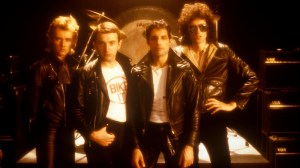
Photo by Michael Ochs Archives/Getty Images
More Features
-
Photo by Jeff Hochberg/Getty Images -
Tom Jones at the Metro in Chicago, Illinois, December 2,1994. (Photo by Paul Natkin/Getty Images) -
Luke Combs had a huge hit with his cover of Tracy Chapman's "Fast Car" -
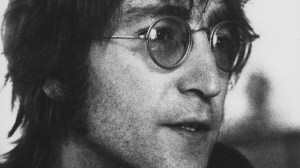
Singer, musician and songwriter John Lennon (1940 – 1980), circa 1970. (Photo by Archive Photos/Getty Images) -
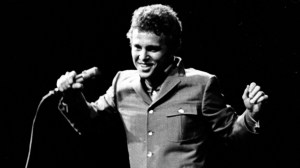
Singer Bobby Vinton attends Madison Square Garden Benefit Concert on June 16, 1966 at Madison Square Garden in New York City. (Photo by Ron Galella/Ron Galella Collection via Getty Images) -
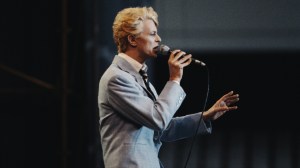
English singer and songwriter David Bowie (1947 – 2016) in concert during his Serious Moonlight tour, 1983. (Photo by Fox Photos/Hulton Archive/Getty Images) -
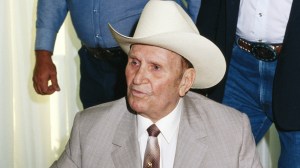
Gene Autry, who rose to fame by following Art Satherley's advice