At this point, most concerts you attend will feature an expected encore. The artist will wave goodbye, and the stage will turn black, only to cut back a few moments later with the artist back for more. It’s a little silly if we think about it too hard, but it’s been a concert tradition for decades. When did the encore turn from something an artist had to earn with a powerful performance to a run-of-the-mill expectation? Chart the history of the encore—especially as it pertains to rock concerts—below.
[RELATED: 3 Infamous Classic Rock Concert Moments Fans Still Talk About Decades Later]
Videos by American Songwriter
The Birth of “One More Song”
The idea of an encore is very old. As one probably could’ve guessed, the word is French for “again.” It first became tied up in performance culture in 18th-century Italian opera, particularly in London. Before you could pick up the needle, hit rewind, or replay, the only way for an audience to re-hear music was to ask the performer to run it back. The crowd would shout “encore” and the singer would go through their aria again.
Oddly enough, French audiences don’t use “encore.” Instead, they use other forms of saying “another” to express gratitude for a particular performance. This makes “encore” a specifically English tradition. That tradition would make its way into the modern American music world around the 1970s.
Rock Learns the Trick
For centuries, saying “encore” was reserved for a highly popular performance. Meaning, the musician had to earn it. That all changed when the idea of the encore became myth, epitomizing the heights of rock stardom.
But the early days of rock didn’t lean into the encore as much as they do in modernity. Artists like Elvis Presley and The Beatles weren’t too keen on the idea of returning to the stage once their setlist was done. Enter the famous “Elvis has left the building” phrase.
But in the 1970s, as rock shows grew bigger, the encore became directly correlated with success. Even if an artist didn’t earn the amount of success needed to have an encore demanded every show, they would tack one on to fake it. This became so commonplace that nowadays it’s an expected, sometimes tiresome tradition.
The Art of the Fake Exit
Many people credit Bruce Springsteen with modern encore culture. However, Springsteen earned every single one of his encores. He and the E Street Band didn’t deliver concerts; they delivered live epics. The audience was treated to hours of music from The Boss, who delivered multiple encores.
It worked out well for Springsteen, and thus many other bands followed suit. Over the decades, the art of the fake exit became standard at every rock concert (and really, every concert of every genre). Though we love a good tradition, it’s a little tedious to wait for a couple of cursory minutes, knowing the performer is coming back out. Will the fake encore ever filter out of concert culture? We can’t know for sure, but given how long it’s been a part of live music, it likely isn’t going anywhere soon.
(Photo by Michael Ochs Archives/Getty Images)
More Features
-
NASHVILLE, TN – APRIL 24: Singer-songwriter Eric Church and Katherine Blasingame Church attend Best Cellars Wine Dinner hosted by T.J. Martell Foundation on April 24, 2017 in Nashville, Tennessee. (Photo by Jason Davis/Getty Images for T.J. Martell) -
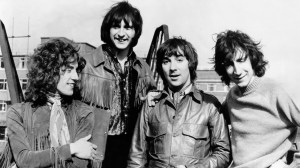
CIRCA 1975: Roger Daltrey, John Entwistle, Keith Moon and Pete Townshend of the rock and roll band "The Who" pose for a portrait in circa 1975. (Photo by Michael Ochs Archives/Getty Images) -
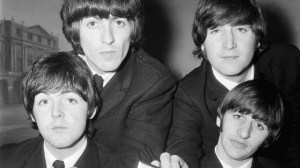
The Beatles pose with their MBEs at a press conference held at the Saville Theatre, London, following their investiture at Buckingham Palace. Top left to right: George Harrison, John Lennon. Bottom: Paul McCartney and Ringo Starr. 26th October 1965. (Photo by Mirrorpix via Getty Images) -
George Michael performing in 1989. (Photo by Jim Steinfeldt/Michael Ochs Archives/Getty Images) -
FRANKLIN, TN – Jimmy Wayne performs onstage during A Welby Street Christmas: Hosted by Serene & Pearl at Franklin Theater on December 9, 2016 in Franklin, Tennessee. (Photo by Jason Davis/Getty Images for Bandtwango) -
American singer-songwriter Donna Summer (1948 – 2012) performing on stage, USA, July 1979. (Photo by Michael Putland/Getty Images)