Two decades after Merle Haggard released conservative protest anthems like “Okie From Muskogee” and “The Fightin’ Side Of Me”, the country star showed the world he still had a few grievances to share with his 1990 track, “Me And Crippled Soldiers”. This late-era cut shared the same traditionalist views as his 1969 and 1970 hit singles, respectively. And much like these previous tracks, the 1990 cut stemmed from current events Haggard was witnessing at the time.
In “Me And Crippled Soldiers”, Haggard was protesting the Supreme Court ruling that protected flag burning under the First Amendment as a form of free speech. Considering Haggard topped the charts while singing “we don’t burn our draft cards down on Main Street,” it’s not all that surprising that he would have something to say about the court’s decision.
Videos by American Songwriter
“Now that it’s alright to burn the Stars and Stripes / guess nobody really needs old Uncle Sam / Might as well burn the Bill of Rights as well / and let our country go straight to hell / only me and crippled soldiers give a damn.”
Merle Haggard Bought Himself out Just to Release “Me And Crippled Soldiers”
When Merle Haggard first wrote “Me And Crippled Soldiers” in 1989, the country artist was on CBS’ roster. However, he began butting heads with his label after it stalled the release of his 1990 protest track. Not to be silenced, Haggard opted to buy himself out of his contract with CBS and signed to Curb Records, which promptly released the song on Blue Jungle in 1990. “I’ve never been a guy that can do what people told me,” Haggard told the New York Times that year. “It’s always been my nature to fight the system.”
CBS, meanwhile, told the newspaper, “Merle Haggard is a legend in country music, and we’re proud of our long association with him. But unfortunately, our different views regarding what Merle’s fans wanted to hear were rather far apart musically.” (For whatever it’s worth, the label wasn’t entirely wrong, as Blue Jungle peaked at a rather modest No. 47 on the Billboard country chart.)
Still, Haggard’s insistence on finding a record label that would release what he wanted to release is a testament to his lifelong uncompromising nature. Interestingly, Haggard would later say he regretted some of his more bullish songs like “Okie” and “Fightin’ Side”, lamenting that these songs pigeonholed him into ultra-conservative beliefs with which he didn’t necessarily identify. Some of these comments came after his 1990 release, so it’s unclear if the poor performance of Blue Jungle had anything to do with his change of heart.
Regardless, “Me And Crippled Soldiers” remains one of Haggard’s more pointed digs at what he believed to be anti-American behavior. His music seemed to argue that even if American citizens didn’t like everything about the United States, there was a certain level of decorum he believed ought to be maintained.
Photo by Clayton Call/Redferns
More Behind The Song
-
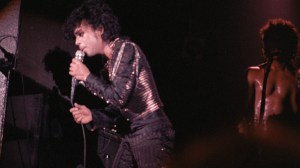
MINNEAPOLIS – AUGUST 3: Prince performs a benefit concert for the Minnesota Dance Theatre at First Avenue nightclub in Minneapolis, Minnesota on August 3, 1983. (Photo by Jim Steinfeldt/Michael Ochs Archives/Getty Images) -
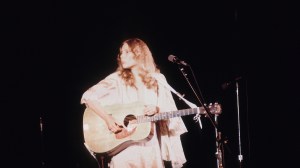
LOS ANGELES – 1974: Singer Joni Mitchell performs in 1974 in Los Angeles, California. (Photo by Donaldson Collection/Michael Ochs Archives/Getty Images) -
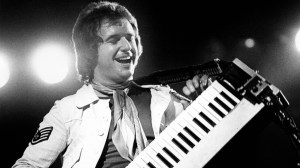
DETROIT, USA – 1st FEBRUARY: Gary Wright performs live on stage in Detroit, Michigan in February 1976. (Photo by Fin Costello/Redferns) -
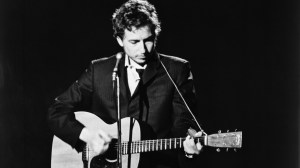
ASHVILLE, TN – JUNE 07: Bob Dylan appearing on "The Johnny Cash Show" for ABC/TV taped at Ryman Auditorium on June 7, 1969 in Tennessee, Nashville. (Photo by Michael Ochs Archives/Getty Images) -
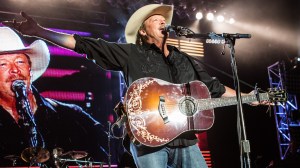
OS ANGELES, CA – JULY 25: Musician Alan Jackson performs at The Greek Theatre on July 25, 2012 in Los Angeles, California. (Photo by Chelsea Lauren/WireImage) -
Singer and songwriter performs in 1975 in Los Angeles, California. (Photo by Suzan Carson/Michael Ochs Archives/Getty Images) -
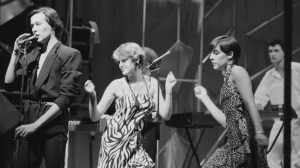
The Human League performing to their single 'Love Action (I Believe In Love)' on the BBC TV music show, 'Top Of The Pops', London, 6th August 1981. Left to right: Phil Oakey, Susanne Sulley and Joanne Catherall. (Photo by Michael Putland/Getty Images) -
LATE NIGHT WITH JIMMY FALLON — Episode 825 — Pictured: Musical guest Kenny Chesney performs on April 30, 2013 — (Photo by: Lloyd Bishop/NBCU Photo Bank/NBCUniversal via Getty Images via Getty Images)