It was May 3, 1952, and Kitty Wells had had enough. Country music promoters weren’t all that interested in boosting the careers of female singers, and the Nashville native (born Ellen Muriel Deason) had just about decided to throw in the towel altogether. She still needed a paycheck, however, which is why she walked into Nashville’s Castle Studios to record one last song. Written by J.D. Miller, “It Wasn’t God Who Made Honky Tonk Angels” countered Hank Thompson’s “The Wild Side of Life”, about a woman leaving her husband behind for “the glamour of the good life”.
“I wasn’t expecting it to make a hit,” Wells said. “I just thought it was another song.”
Videos by American Songwriter
Far from it. “Honky Tonk Angels” posited that maybe—just maybe—it was unfaithful men who created unfaithful women. In what is perhaps country music’s earliest diss track, Wells directly calls out Thompson’s No. 1 hit in the first verse.
As I sit here tonight, the jukebox’s playing / The tune about the wild side of life / As I listen to the words you are saying / It brings mem’ries when I was a trusting wife.
Kitty Wells Opened Doors
At a time when attitudes around sexual norms were rapidly changing, “Honky Tonk Angels” struck a chord. NBC banned the song for being too “suggestive”, and the Grand Ole Opry refused to let Wells perform it onstage. (That changed eventually due to popular demand.)
Despite that, “Honky Tonk Angels” ascended to the top of the Hot Country Songs chart, where it remained for six weeks. In addition to making Wells the first female solo artist to hold that spot, the song also crossed over to the Top 40. Notably, it also knocked Thompson’s “Wild Side of Life” off its No. 1 pedestal.
You don’t need to look far to see the impact that Kitty Wells made on country music with “It Wasn’t God Who Made Honky Tonk Angels”.
“I was absolutely thrilled, of course, to hear another girl was a big thing, because there weren’t that many at that time,” country star Jeannie Seely recalled to Rolling Stone in 2022.
Now that Wells had said it, it became more acceptable for other women in country music—Dolly Parton, Patsy Cline, Loretta Lynn, and Tammy Wynette—to call out male infidelity in a song. And it allowed young girls like Seely—12 years old in rural Pennsylvania at the time of the song’s release—to dream bigger.
“I didn’t have a lot of mentors back then,” she said. “So when [Wells] came along, and that record hit, I was like, ‘Wow, this opens a whole new world to me.’”
Featured image by David Redfern/Redferns/Getty Images
-
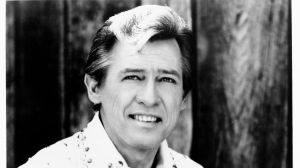
UNSPECIFIED – CIRCA 1970: Photo of Cal Smith Photo by Michael Ochs Archives/Getty Images -
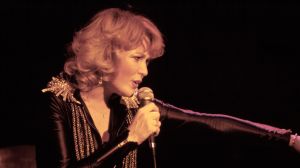
American Country musician Tanya Tucker performs onstage at the Bottom Line, in Greenwich Village, New York, New York, December 13, 1978. (Photo by Gary Gershoff/Getty Images) -
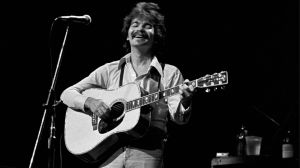
ATLANTA – Singer-songwriter John Prine performs at Atlanta Symphony Halll on April 23, 1975 in Atlanta, Georgia. (Photo by Tom Hill/Getty Images) -
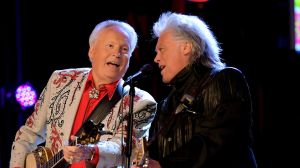
NASHVILLE, TENNESSEE – Buck Trent performs with Marty Stuart and his Fabulous Superlatives at the second of three Marty Stuart Artist-in-Residence Shows at Country Music Hall of Fame and Museum on September 18, 2019 in Nashville, Tennessee. (Photo by Jason Kempin/Getty Images for Country Music Hall of Fame and Museum)