Led Zeppelin was no stranger to criticism by the time they released their fifth studio album, Houses of the Holy, but subsequent responses from the band might suggest they gave the public more credit for their ability to pick up what they were putting down. One particularly divisive reggae track came about in the same way much of the music from Houses of the Holy did—through a rehearsal jam session at Stargroves. (Part countryside recording studio, part Mick Jagger manor and estate in East Woodhay, Hampshire.
Even the members of Led Zeppelin themselves couldn’t quite agree on whether their island-inspired song was too much of a laugh. For whatever it’s worth, it broke the Top 20 in the U.S., which is nothing to sneeze at.
Videos by American Songwriter
Led Zeppelin Wrote This Divisive Reggae Track During Stargroves Jam
Following an Australian tour in early 1972, Led Zeppelin returned to Mick Jagger’s estate, Stargroves, where The Rolling Stones’ frontman had devised the Rolling Stones Mobile Studio. Led Zeppelin previously recorded their fourth album on location at Stargroves and wished to capture that same kind of easygoing, relaxed creativity. The band was especially tight coming back from the road, and their rehearsals proved lucrative in the songwriting department. During one impromptu writing session, drummer John Bonham laid the groundwork for a doo-wop number á la the 1950s.
The upbeat groove gave the song a distinct reggae feel, which tied into the song’s title. Led Zeppelin took the title from British slang rooted in an old joke: “My wife just left on vacation.” “D’Yer mak’er?” (Did you make her?) “No, she wanted to go.” In a thick British accent, “d’yer mak’er” sounds like “Jamaica.” From the title to the style, “D’Yer Mak’er” was a result of the band having a laugh. But with jokes comes a risk of someone else not getting it.
“Maybe you could attack ‘The Crunge’ and ‘D’Yer Mak’er’ for being a bit self-indulgent,” guitarist Jimmy Page later said, per Bob Spitz’s Led Zeppelin biography. “But they’re just a giggle.” Vocalist Robert Plant had higher praise for the tracks (and the album as a whole), saying, “There was a lot of imagination on that record. I prefer it much more than the fourth album. I think it’s much more varied, and it has a flippance, which showed up again later.”
Despite What the Critics (And Band) Say, It’s Still a Classic Track
Robert Plant was quick to push the commercial appeal of Houses of the Holy tracks like “D’Yer Mak’er”, and considering the track broke the Top 20 in the States, he was obviously on to something. But the rest of the band wasn’t so sure. “When we did ‘D’Yer Mak’er’, [John Bonham] wouldn’t play anything but the same shuffle beat all the way through it,” John Paul Jones recalled in John Bonham: A Thunder of Drums.
“He hated it, and so did I. It would have been all right if he had worked at the part. The whole point of reggae is that the drums and bass really have to be very strict about what they play. And he wouldn’t, so it sounded dreadful.”
Despite its singular style (or perhaps because of it), Led Zeppelin’s divisive reggae track has become a classic among their discography. According to Jimmy Page (via Bob Spitz’s biography), the fact that “D’Yer Mak’er” sounded so different was a purposeful strength, not a weird accident.
“People still have this preconceived notion of what to expect,” he said. “How they should approach our albums is to forget they ever heard of a band called Led Zeppelin, forget about what they expect to hear, and just listen to what’s on that particular record. That’s all we ask. But we don’t get it.”
Photo by Evening Standard/Getty Images
-
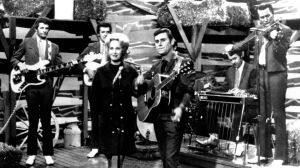
Tammy Wynette and George Jones Perform on stage with the Jones Boys in circa 1972. (Photo by Michael Ochs Archives/Getty Images) -
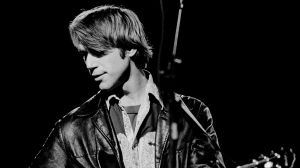
American Folk musician Todd Snider plays guitar as he performs onstage at Medinah Temple, Chicago, Illinois, November 27, 1997. (Photo by Paul Natkin/Getty Images) -
UNITED KINGDOM – WEMBLEY ARENA Photo of Gene WATSON, Country Music festival (Photo by David Redfern/Redferns) -
CHICAGO, ILLINOIS – American Rock musician David Lee Roth, of the group Van Halen, performs onstage at the Aragon Ballroom, Chicago, Illinois, March 4, 1978. (Photo by Paul Natkin/Getty Images) -
UNSPECIFIED – CIRCA 1970: Photo of Cal Smith Photo by Michael Ochs Archives/Getty Images -

American Country musician Tanya Tucker performs onstage at the Bottom Line, in Greenwich Village, New York, New York, December 13, 1978. (Photo by Gary Gershoff/Getty Images)