
On December 5, 1980, John Lennon gave what would be his final interview to Rolling Stone. He would be murdered three days later. In the nine-hour interview, Lennon gave editor Jonathan Cott a look at his domestic life with Yoko Ono and their son Sean, and provided insights into their recent album, Double Fantasy. He spoke freely and openly with Cott, who had first met Lennon and Ono in 1968. Initially, the interview was scheduled to run as the first cover story of 1981. However, Lennon’s tragic murder changed the magazine’s plans. Cott wrote Lennon’s obituary instead, and never fully transcribed his interview. It was later published in full in 2010.
Throughout the conversation, John Lennon would mention little things that Yoko Ono had taught him or told him, share an experience he had with Sean, or mention his former bandmates in passing. Since the interview was being held in the Lennons’ apartment in New York, there were charming moments of domesticity peppered throughout the text. Ono once came into the room and declared that someone was on the phone claiming to be George Harrison. When she started asking him questions, he hung up, and she called Harrison’s number to find out he’d actually been sleeping. Lennon expressed that they had to laugh about it, or “we’d go crazy, wouldn’t we?”
Videos by American Songwriter
In particular, John Lennon spoke at length about Double Fantasy, which had come out that November. It was mentioned that not a lot of rock stars would make an album with their wife and give her half of the record. Lennon reflected that it was the first time they’d made an album like that.
[RELATED: Sean Lennon on Yoko Ono: “She Never Has Moved On” From Relationship With John Lennon]
John Lennon Gave Delightfully Open Insights Into His Life and Process in Final Rolling Stone Interview
While John Lennon and Yoko Ono had made a similar record before where she had one side and he had the other, Lennon explained that this one was different. “Double Fantasy is a dialogue, and we have resurrected ourselves, in a way, as John and Yoko – not as John ex-Beatle and Yoko and the Plastic Ono Band,” he said.
“It’s just the two of us, and our position was that, if the record didn’t sell, it meant people didn’t want to know about John and Yoko – either they didn’t want John anymore or they didn’t want John with Yoko or maybe they just wanted Yoko, or whatever. But if they didn’t want the two of us, we weren’t interested,” he added.
Lennon explained that he had only considerably worked with two people throughout his career—Paul McCartney and Yoko Ono. “That ain’t bad picking,” he said. Lennon continued to speak about the record, art school, his inability to play, and the general selfishness of artists, among other topics. He spoke about Mick Jagger and Bruce Springsteen and their careers, and how he hoped Springsteen could weather the changes in his audience as time progressed. He also mentioned critics, the years he took off when Sean was born, and how torturous writing was for him.
Overall, John Lennon’s lengthy final Rolling Stone interview gives incredible insight into the man and the musician; how he was at home with his wife and son, and how he was when he was just talking to a friend.
Featured Image by Susan Wood/Getty Images
More Features
-
Musician Woody Guthrie poses for a portrait with his guitar circa 1941. (Photo by Michael Ochs Archives/Getty Images) -
Photo by Jack Robinson/Getty Images -
The Edge, Bono, Larry Mullen and Adam Clayton of U2 (Photo by Ron Galella, Ltd./Ron Galella Collection via Getty Images) -
LOS ANGELES – AUGUST 22: American folk-pop musicians (from left) Art Garfunkel and Paul Simon, of the duo Simon and Garfunkel, sing and play guitar as they perform on the CBS variety program 'The Red Skelton Hour,' USA, August 22, 1966. (Photo by CBS via Getty Images) -
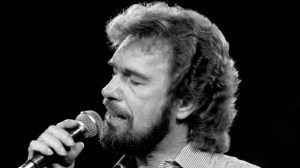
Gene Watson, who had several hits with Dallas Harms songs -
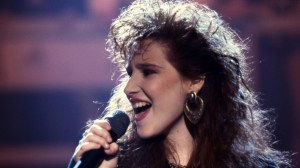
Pop star Tiffany performs on a TV show in 1987 in Los Angeles, California. (Photo by Ron Eisenberg/Michael Ochs Archives/Getty Images) -
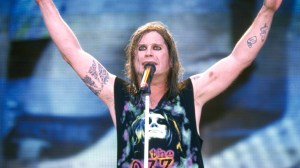
UNITED STATES – JANUARY 01: USA Photo of BLACK SABBATH and Ozzy OSBOURNE, performing live onstage with Black Sabbath on Ozzfest tour (Photo by Mick Hutson/Redferns) -
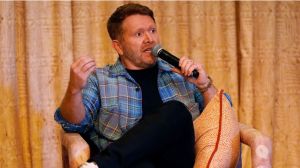
NASHVILLE, TENNESSEE – Shane McAnally speaks onstage during GLAAD's Pride & Progress Event at Soho House Nashville on June 05, 2026 in Nashville, Tennessee. (Photo by Erika Goldring/Getty Images for GLAAD)