Not even a band as big as the Beatles was exempt from a lousy show, and on August 21, 1966, the Fab Four played a concert that convinced Paul McCartney the Beatles should stop touring. (For the record, John Lennon and George Harrison didn’t need convincing—they were already sick of it.)
That fateful concert took place on a dreary, rainy day in St. Louis at Busch Stadium, which had only been open for three months when the Beatles, the Del-Rays, the Remains, Bobby Hebb, the Cyrkle, and the Ronettes descended on the rainy field.
Videos by American Songwriter
The Concert That Convinced the Beatles to Stop Playing Live
Beatlemania was in full swing in the summer of 1966, and unfortunately, so was a storm front covering most of the Midwest. The Beatles were originally scheduled to perform in Cincinnati on August 20 and St. Louis on August 21, but organizers postponed the Ohio concert to the following day due to heavy rain. Unfortunately for the Fab Four now playing a double-header in two different states, it was raining in St. Louis, too.
“It rained quite heavily, and they put bits of corrugated iron over the stage,” Paul McCartney later recalled in Anthology (via BeatlesBible). “So, it felt like the worst little gig we’d ever played at, even before we’d started as a band. We were having to worry about the rain getting in the amps, and this took us right back to the Cavern days. It was worse than those early days. And I don’t even think the house was full.”
Macca was right—it wasn’t. About 23,143 adoring fans showed up to watch the Beatles perform, which was about half of Busch Stadium’s capacity. “After the gig, I remember us getting in a big, empty, steel-lined wagon, like a removal van,” McCartney continued. “There was no furniture in there, nothing. We were sliding around, trying to hold on to something, and at that moment, everyone said, ‘Oh, this bloody touring lark. I’ve had it up to here, man.’ I finally agreed.”
The St. Louis Show Was Challenging in More Ways Than One
The Busch Stadium concert was a logistical and musical nightmare. The stadium’s echo and lack of on-stage monitors created an unforgiving slapback that made singing in time tremendously difficult, the six-band bill’s lineup had to change due to the constant threat of rain cancellation, and of course, there was the ever-present danger of using electronic gear in a storm.
“Our roadie, Ed Freeman, was stationed at the main AC connection to the stage to watch the performers and unplug the whole stage if anyone showed signs of an electrical shock,” the Remains’ frontman Barry Tashian recalled in Ticket to Ride. “Ed, who was pretty drenched himself, had some towels wrapped around the extension cord connection and had a tight grip on it, eagle-eyeing the stage, ready to tank those cords apart before anyone was electrocuted.”
After a show like that on an already arduous tour schedule, it’s unsurprising that the Beatles were ready to give up life on the road for a dry, comfortable studio. “George and John were the ones most against touring,” Paul McCartney said in Anthology. “We agreed to say nothing but never to tour again. We’d always tried to keep some fun in it for ourselves. But now, even America was beginning to pall because of the conditions of touring.”
The Beatles’ final concert of their career took place days later, on August 29, 1966, at Candlestick Park in San Francisco, California. Although they would go on to perform their famous rooftop set at their Apple Corps headquarters three years later in January 1969, the rainy and stressful North American run of 1966 marked a whimpering end to the Fab Four’s touring career.
Photo by MediaPunch/Shutterstock
More Features
-

Natalie Imbruglia -
Steve Lukather of Toto performs live on stage at 'Muziekcentrum Vredenburg', Utrecht, Netherlands, 26th September 1982. (Photo by Rob Verhorst/Redferns) -
American singer-songwriter Billy Joel, performing in New York City, 7th December 1977. (Photo by Michael Putland/Getty Images) -
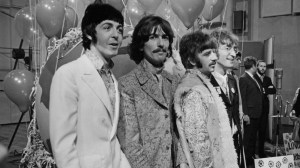
Photo by Ivan Keeman/Redferns -
November 15, 1991 file photo of Michael Jackson (Photo by L. Cohen/WireImage) -
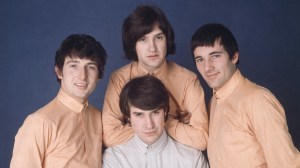
British pop group The Kinks, circa May 1964. Clockwise, from left: drummer Mick Avory, guitarist Dave Davies, bassist Pete Quaife (1934 – 2010) and singer Ray Davies. (Photo by Tom Hustler/Central Press/Hulton Archive/Getty Images)