When music fans think of vanity record labels assigned to top acts, they probably roll their eyes a little bit. That’s because most of these labels never amount to much. The artists generally find that running their own careers supersedes their desire to help others establish theirs.
But Led Zeppelin stands out as an exception to that rule. They signed an act to their vanity label that quickly became one of 70s rock’s biggest bands.
Videos by American Songwriter
A New Deal
Led Zeppelin was conducting a contract renegotiation with Atlantic Records from an extreme position of strength in 1973. They’d been a cash cow for the label ever since their first album hit stores four years earlier. Coming off the massive success of their Houses Of The Holy album earlier that year and many lucrative tours, they could ask for just about anything.
Along with a big boost in compensation, the band asked to be put in charge of their own label, which would be distributed and marketed by Atlantic. They not only wanted to put out their own music on this imprint, but they also wanted to sign other acts to this new company. And they eventually named it Swan Song Records.
Led Zeppelin showed savvy in terms of the acts they wanted to sign. They realized that they wouldn’t have the time or inclination to develop unheralded acts. Instead, they aimed for acts that had already proven themselves in some fashion. As a supergroup of sorts, Bad Company fit the bill.
The Company You Keep
Bad Company featured Paul Rodgers, who was already well known on Top 40 radio for singing lead on the song “All Right Now” for Free. Drummer Simon Kirke also came from Free. Guitarist Mick Ralphs arrived from Mott The Hoople, and bassist Boz Burrell left King Crimson behind.
Led Zeppelin signed them, along with a few other acts, not long after Swan Song Records was established. And they indirectly helped Bad Company get the ball rolling. Led Zep scheduled recording time at their beloved Headley Grange home away from home in late 1973 to start work on their sixth album.
But bassist John Paul Jones needed a little break and didn’t attend the sessions. Since the other three members couldn’t get much done without him, they decided to leave before the allotted time they had purchased from the estate’s owners. But Led Zep manager Peter Grant decided they’d get some bang for their buck. He sent Bad Company to Headley Grange to work on their material.
Immediate Success
As the group had already been rehearsing plenty prior to that point, it didn’t take Bad Company long to find a groove. They essentially laid down their self-titled album in a stretch of only nine days.
Swan Song Records released the Bad Company album in May 1974. A few weeks later, the single “Can’t Get Enough” hit the airwaves, eventually making it to the Top 5 in the US as the band’s debut cut.
Interestingly enough, the LP generally received favorable reviews from many of the same outlets that consistently panned Led Zeppelin. Bad Company also proved more of a singles threat than Led Zep, who generally eschewed radio concerns.
In total, Bad Company developed into a legendary band, one of hard rock’s most accessible acts. Not bad for a vanity label hire.
Photo by Michael Putland/Getty Images
More Behind The Song
-
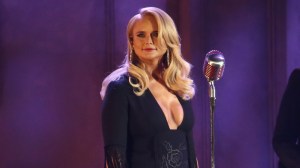
NASHVILLE, TN – NOVEMBER 08: (FOR EDITORIAL USE ONLY) Miranda Lambert performs onstage during the 51st annual CMA Awards at the Bridgestone Arena on November 8, 2017 in Nashville, Tennessee. (Photo by Terry Wyatt/FilmMagic) -
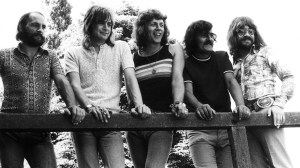
English pop group The Moody Blues, group portrait, 1972, (L-R) Mike Pinder, Justin Hayward, John Lodge, Ray Thomas and Graeme Edge. (Photo by Michael Putland/Getty Images) -
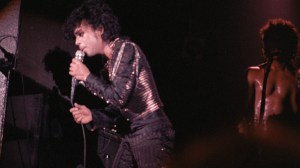
MINNEAPOLIS – AUGUST 3: Prince performs a benefit concert for the Minnesota Dance Theatre at First Avenue nightclub in Minneapolis, Minnesota on August 3, 1983. (Photo by Jim Steinfeldt/Michael Ochs Archives/Getty Images) -
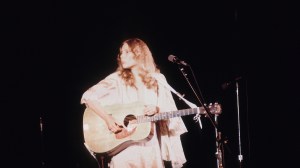
LOS ANGELES – 1974: Singer Joni Mitchell performs in 1974 in Los Angeles, California. (Photo by Donaldson Collection/Michael Ochs Archives/Getty Images) -
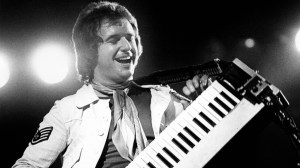
DETROIT, USA – 1st FEBRUARY: Gary Wright performs live on stage in Detroit, Michigan in February 1976. (Photo by Fin Costello/Redferns) -

ASHVILLE, TN – JUNE 07: Bob Dylan appearing on "The Johnny Cash Show" for ABC/TV taped at Ryman Auditorium on June 7, 1969 in Tennessee, Nashville. (Photo by Michael Ochs Archives/Getty Images) -
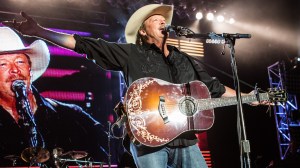
OS ANGELES, CA – JULY 25: Musician Alan Jackson performs at The Greek Theatre on July 25, 2012 in Los Angeles, California. (Photo by Chelsea Lauren/WireImage) -
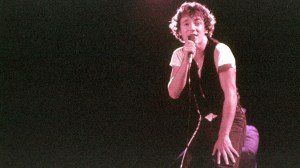
Singer and songwriter performs in 1975 in Los Angeles, California. (Photo by Suzan Carson/Michael Ochs Archives/Getty Images)