Your cart is currently empty!



With New Music and Renewed Purpose, Donna Fargo, 80, Keeps Inspiring Others to Believe
Donna Fargo has long been in the pursuit of happiness, operating with the motto: “If people are not happy, they’re cheating themselves.”
Videos by American Songwriter
“I always carried the dream in my heart that I wanted to be a singer,” Fargo tells American Songwriter. “My first dream was to be happy, and I think that was the underlying foundation of my biggest dream.”
Those words have rung true for Fargo since her humble beginnings in the small town of Mount Airy, North Carolina. She cites Elvis Presley and Brenda Lee as early musical influences and recalls going to one of Lee’s shows as a child, and being in awe seeing someone her age doing what she wanted to do.
“She was so young, and I was so young, and I thought, ‘If she can do that, I probably could too,’” Fargo says. In addition to performing at local talent shows, Fargo cut her teeth singing at church and has a vivid memory of a woman’s reaction to her powerful rendition of the gospel hymn, “Mansion Over the Hilltop.”

“The lady behind me shouted when I was singing, and it scared me to death. I waited a moment and then picked back up and started singing the rest of the song,” she says. “When I got home, I said, ‘Daddy, Voda Brim shouted when I sang, and she didn’t shout for anybody else!’ I think I knew then that I wanted to sing.”
The future star held onto that dream after graduating from high school and venturing on to college in California, where her brother was living at the time. She attended the University of Southern California, where she studied English and psychology.
“I thought [California] would be a good place to really see if I can do this dream and make it come true. I was trying to educate myself in all aspects of life,” Fargo says of why she chose to study both subjects, noting that she was drawn to psychology to learn more about herself, yet also knew she wanted to teach English.
She graduated with a teaching degree in 1966 and went on to teach English at Northview High School. She later became head of the English department. Though Fargo was passionate about the job and the students she was teaching, her dream of being a singer was still alive.
“I remember walking down the corridors of the school listening to Carly Simon on the radio and thinking, ‘I’m going to sing songs,’” Fargo says. “I wanted to be a great teacher. I loved the kids and tried to give positive vibes to them. I wanted them to feel confident in themselves and that they could make their dreams come true.”
Fargo soon became a living example of that when her brother discovered a company in Hollywood that was looking for a female singer to sing demos. “I thought, ‘I’ve never sung a demo, but I bet I could,’” she says.
Despite feeling like she “didn’t have any confidence at all,” Fargo showed up prepared with the two records she’d made in her hometown. She ended up getting signed and recording several demos. “I thought, ‘This is what I should be doing,’” she says.
The demo sessions then turned into guitar lessons, as Fargo took it one step further and asked the publisher to teach her how to play guitar so that she could try to write songs. “He taught me to play guitar well enough to play the melodies I was hearing in my head, along with the lyrics I was hearing,” she says. “My first dream was to become a singer, and then I thought, ‘Well, I need a hit record.’”
Fargo devoted almost every free moment she had to music and spent her weekends, school holidays, and summer vacations writing songs. She recalls one afternoon in June when the lyrics Shine on me, sunshine / Walk with me, world / It’s a skip-a-dee-do-dah daykept coming to her. These would turn into the opening lines of her first hit song, “The Happiest Girl in the Whole U.S.A.,” altering the course of her life.
Penned solely by Fargo over the course of three days, “Happiest Girl” shot to No. 1 on the country charts and reached No. 11 on the all-genre Billboard Hot 100, bringing Fargo’s longtime dream into tangible form. She says that the song “wrote itself” and came from an honest place of being “so in love” with her husband, producer and manager Stan Silver.
“That song is very important to me; it gave me a career,” she says. “I think a lot of people wanted to be happy, and because it was written in the first person, I think that they felt it when they heard it. At shows, I would see people who knew every word, and it was so joyful for me. As a little girl, I wanted to help people, and I thought, ‘I’m not wealthy, so I can’t give them money. What I can do is help them with living [my] dream and showing them that it’s possible to make dreams come true.’”
Following the success of “Happiest Girl,” Silver started booking Fargo in Southern California area clubs to get experience performing in front of an audience. With a “now or never” mentality, Fargo quit teaching and went all in on her dream—she bought two buses (one for herself and the other for the band) and was on the road, full time, performing wherever her agent booked a show.
“As I gained experience, I gained a little more confidence in myself,” she says, adding that she would sometimes see her former students in the crowd. “Happiest Girl” set the stage for Fargo’s many other hits throughout the 1970s, six of which reached No. 1 on the country charts: sophomore single “Funny Face,” “Superman,” “You Were Always There,” “You Can’t Be a Beacon If Your Light Don’t Shine,” and “That Was Yesterday.”
Fargo reveals that “Funny Face” was written before “Happiest Girl” and that she toyed with roughly 16 verses before she reached the version fans know and love today. “My songwriting is more conversational in tone,” she says. “I’m just so fortunate that I had enough sense to respond to that urge within me to really see if I could write songs. I think when any songwriter gets an idea, the best time to write it is right when they get that first inspiration, because all the pieces will come together. You just have to keep listening to your heart, trusting what you hear, and then trying to keep on being consistent and patient.”
Fargo also made a point to stretch herself as a songwriter when she penned a song about suicide, “Forever Is As Far As I Could Go,” the final track on her chart-topping 1973 album, My Second Album.
She introduces the song, about a woman who succumbed to her sadness, with a brief statement: “I think that life is the most precious gift and that we have an obligation to protect it. I believe that sadness is a part of life, that we determine the way we deal with it, and if we learn to live with sadness, we enhance our potential for happiness.”
“I grew up writing songs and trying to figure life out and share it with people,” Fargo says, adding that she wrote “Forever” as a way to “try to write something for everybody.”
“I wanted every song to be able to affect somebody positively,” she says. “I really have a sense that I need to be a positive voice and wanted to be prepared to help in any little way I could. I tried to write the best songs I could. I’ve learned lessons from each of them and followed my heart all the way.”
In addition to music, Fargo channeled her positive spirit into her 1997 book, Trust in Yourself: Thoughts About Listening to Your Heart and Becoming the Person You Want to Be, and a series of Blue Mountain Arts greeting cards that offer thoughtful and poignant messages.
But her journey has not been without struggle. Fargo was diagnosed with multiple sclerosis in 1978 and suffered two strokes as a result. In 2021, her husband passed away unexpectedly, which led her into an intense grief period. “He was so important to me,” she says. “All of a sudden you’re alone and you have to make decisions that he used to make, so that was a growing process.”Despite the hardship, Fargo continues to share positive messages through music. In March 2025, she released the single “You Can Count on Me,” an upbeat number that casts her in the role of the ultimate confidant to lean on in life’s toughest moments.
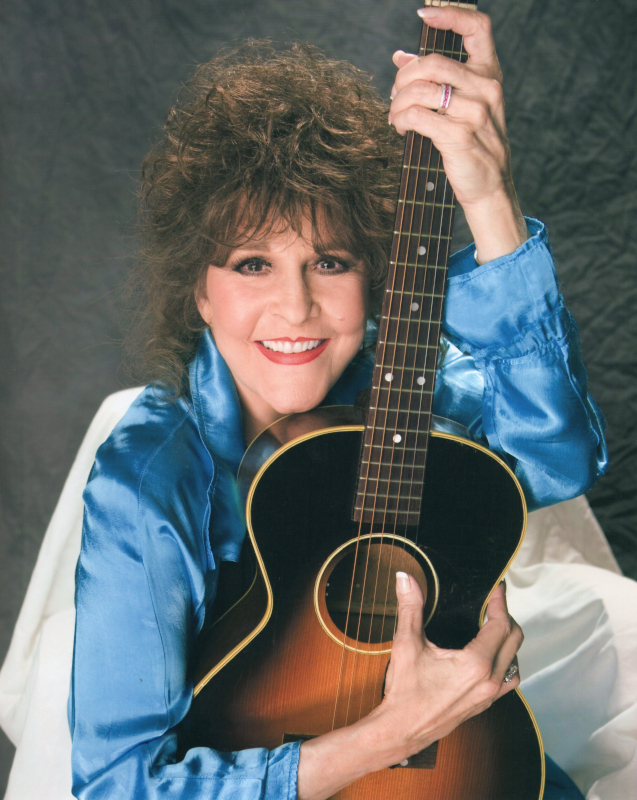
“It’s a song about love and loyalty and equal partnership,” she says. “I think it’s a positive song to inspire people to believe that there is such a thing as true love and that you can count on each other. I want people who listen to it to think, ‘You can count on me.’ If everybody would do that, it would lift them up and be a positive thing.”
At 80 years old, the effervescent Fargo shows no signs of slowing down. She’s releasing the collector’s edition of her novel, Heartaches and Mind Storms, that carry little life lessons that she hopes will help readers, including tips on a healthy diet based on her experiences with MS. She also hints that she’s been in the recording studio and has roughly 10 unreleased songs, including one she calls “my favorite song I ever wrote,” that she plans to include on an album that will likely be released in 2026.
“I’m looking forward to people hearing what other songs I’ve written in the last few years,” she says. “I just want to be a better songwriter with every song I write and share things that can help people in life.”
Fargo points to a specific moment following her husband’s death that affirmed her faith and desire to dream. She was battling a bout of depression one day when she asked God for a sign that her husband was in heaven. Upon returning to the bedroom, she saw that the light on her late husband’s side of the bed was turned on for the first time in months. “It was a supernatural event,” she says. “It just inspired me all over again that you can do it, you can make other dreams come true.”
Fargo’s faith and heart are leading the way as she continues to build her legacy of happiness. “I was just trying to do what I was led to do. I felt like God was leading me, and I trusted in the process,” she says of her career. “I just do what feels right to do at the time. You never know what the future holds. I have to figure out the rest of the way, but as long as you’re taking care of the present and looking forward, everything’s gonna be all right. I’m starting over, and I’ll never stop. I love music and I love life.”


Leave a Reply
Only members can comment. Become a member. Already a member? Log in.