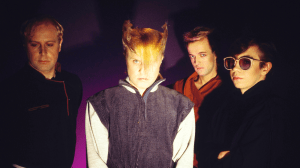
In the 1960s, when vinyl reigned supreme and digital music consumption was still a distant, sci-fi fantasy, record labels released 45 singles that included A-sides and B-sides. The A-side was typically the track that the label and its artists were trying to push commercially. In contrast, the B-side was typically the spot for throwaway tracks, deep cuts, and songs that the artist didn’t expect would be as successful as their A-side counterpart.
However, music is a funny thing, and not even the best producers and record labels can ever truly anticipate what song will speak to an entire global audience and which ones won’t. As a result, we ended up with countless 1960s classics that you might assume were A-sides due to their enduring popularity. But you’d be wrong.
Videos by American Songwriter
“The Times They Are a-Changin’” by Bob Dylan
Bob Dylan’s 1964 protest anthem, “The Times They Are a-Changin,’” is arguably one of the most iconic songs in his entire discography. The song effectively spoke for an entire generation distraught by the social discontent, war, and political turmoil that plagued the 1960s. Along with tracks like “Blowin’ in the Wind” and “Like a Rolling Stone,” the song solidified Dylan as a folk music hero.
But amazingly, he never released the track as an A-side single—or a single at all, as far as U.S. releases go. Instead, he used the song as the title track to his third studio album, which hardly suffered from its lack of American singles. (Note: Dylan would release the song as a single in the U.K. the following year in March 1965.)
“Sugar Mountain” by Neil Young
For lovers of Neil Young and 1960s folk music in general, “Sugar Mountain” is an underrated classic in the Canadian singer-songwriter’s catalogue. This quintessential Young track covers topics in which he was proficient: aging, love, life’s meaning, and the magnetic draw of nostalgia. It even inspired a Joni Mitchell classic, “The Circle Game,” which she wrote to process her own feelings about Young’s lament to lost youth.
Despite its ubiquity among Young fans, this 1960s classic was never an A-side. It served as the B-side for “Cinnamon Girl” and “The Loner,” but it didn’t make its way onto a full-length album until 1977 when Young included it on his 3-LP compilation, Decade. Young, who wrote the song when he was only 19, has since stated that some of the lyrics embarrass him now.
“All My Loving” by the Beatles
The Beatles’ 1963 track, “All My Loving,” is a prime example of the Fab Four’s early teeny-bopper music. Perfect fodder for the wildfire that was Beatlemania, the upbeat love song preceded the band’s iconic Ed Sullivan debut and served as the ideal track for young fans everywhere to latch on to with full strength. It’s by far one of the most recognizable and distinctive songs in the Beatles’ discography.
We’d say this is one of the Beatles B-sides that rivaled their A-sides, but amazingly, one of the greatest 1960s classics of all time never made it to a 45 single at all (with the exception of Canada). In other countries, the song was only the title track to an EP the Beatles released in the U.K., Sweden, Australia, and New Zealand.
Photo by Giorgio Rossi/Shutterstock
More The List
-
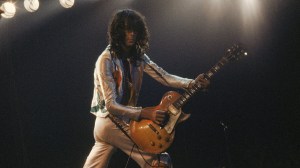
c. 1978 Led Zeppelin guitarist Jimmy Page performing. -

0000120354-PC-Vue22A-Korody 001 -

American singer-songwriter Mariah Carey wearing a black leather jacket, UK, 1995. (Photo by Mick Hutson/Redferns/Getty Images) -

UNITED KINGDOM – JANUARY 01: VH1 Photo of DEEP BLUE SOMETHING (Photo by Patrick Ford/Redferns) -
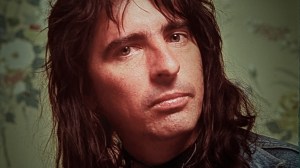
Alice Cooper posing in his hotel room, Amsterdam -
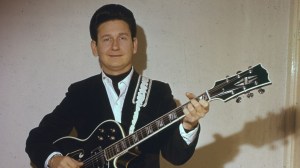
April 1964: Legendary American rock'n'roll singer Roy Orbison (1936 – 1988) at Dolphin Square in London. (Photo by Moore/Fox Photos/Getty Images) -
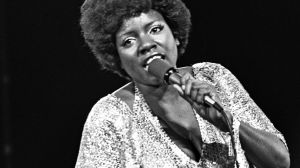
HOLLYWOOD – DECEMBER 13, 1975: Disco singer Gloria Gaynor performs a song on December 13, 1975, in Hollywood, California. (Photo by Michael Ochs Archives/Getty Images)