
On Station To Station, David Bowie embraced his controversial and final persona, The Thin White Duke.
It precedes his Berlin Trilogy: Low, “Heroes”, and Lodger. And also features a stylistic shift toward krautrock bands like Kraftwerk and Neu!. The cover art features a still from the film The Man Who Fell To Earth, starring Bowie as an alien named Thomas Jerome Newton. And Bowie was indeed a man falling. He’d developed a cocaine addiction and caused even greater controversy by appearing to support fascism.
Videos by American Songwriter
The album is complex, with Bowie navigating sprawling themes, including the occult, Christianity, Kabbalistic symbolism, and love. This final point, beyond the mysticism (and drugs), finds The Thin White Duke searching for a deeper human connection above all else. His personal life was buried under an avalanche of drugs, fame, odd fascinations, and controversy. Yet, somehow, he still emerged with a masterpiece.
Consider these three songs an introduction to Station To Station. The album contains only six tracks, so allow half the record to give you an idea of what The Thin White Duke was up to in 1976.
“Station To Station”
The 10-minute title track begins with a warped train moving from the right speaker to the left speaker. It gives the sense of a train moving in reverse. From there, it becomes bleak and plodding krautrock, with all signs pointing toward Low. Then Bowie makes a statement: “The return of The Thin White Duke, throwing darts in lovers’ eyes.” A Eurocentric Thin White Duke sings about magical moments and mysticism, before claiming, in self-aware irony, all this has nothing to do with cocaine: “I’m thinking that it must love.”
“Golden Years”
“Golden Years” became a hit in the U.K. and the U.S., proving Bowie wasn’t finished with the funk and “plastic soul” of Young Americans. And Bowie’s golden love song arrived against the backdrop of his growing fame and personal chaos. The narrator offers protection for his love interest, even finding sanctuary inside a limousine: “In the back of a dream car, twenty-foot long.” The doo-wop vocal recalls vintage 1950s pop, while the krautrock hints at Bowie’s coming Berlin sessions.
“Wild Is The Wind”
Nina Simone recorded “Wild Is The Wind” on her album of the same name in 1966, a favorite of Bowie’s. For a chapter fueled by drugs, Bowie’s voice remained in excellent shape. He croons here as an homage to Simone, closing Station To Station on a dramatic and emotional note. Near the song’s end, Bowie’s voice climbs to an operatic falsetto, as he pleads for love, for rebirth, connection. Finally, his affection, he says, is spring and life itself. Out of control and resigned “like creatures of the wind.”
Photo by Michael Putland/Getty Images
More The List
-
Photo by Brian Rasic/Getty Images -
LOS ANGELES – CIRCA 1975: Country singer Dolly Parton performs onstage wearing a yellow dress in circa 1975 in Los Angeles, California. (Photo by Michael Ochs Archives/Getty Images) -
CROCKETT – APRIL 12: A CBS television country music presentation, A Special Kenny Rogers. Originally broadcast April 12, 1979. Crockett, TX. Pictured is Kenny Rogers. (Photo by CBS via Getty Images) *** Local Caption *** Kenny Rogers -
English musician, singer, songwriter, and composer Paul McCartney records the Lennon-McCartney composition 'Thingumybob' with the Black Dyke Mills Band in Saltaire, City of Bradford, West Yorkshire, 30th June 1968. (Photo by Tony Evans/Timelapse Library Ltd./Getty Images) -
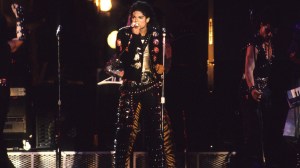
USTRALIA – NOVEMBER 20: Photo of Michael JACKSON; Michael Jackson performing on stage, with backing singers, at the Paramatta Stadium in Sydney – Bad Tour (Photo by Bob King/Redferns) -
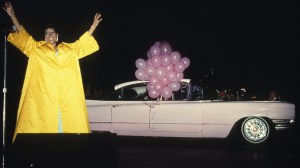
American musician Aretha Franklin performs in concert, New York, New York, circa 1990. (Photo by Larry Busacca/WireImage) -
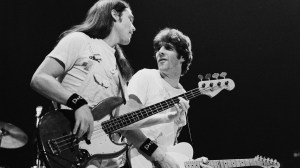
Bassist Timothy B. Schmit (left) and singer/guitarist Glenn Frey (1948 – 2016) performing with American rock group, The Eagles, USA, November 1979. (Photo by Michael Putland/Getty Images)