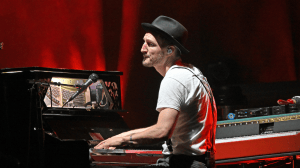
There’s no musical feedback quite as immediate as workshopping a new song in front of a live audience. More often than not, people will be incredibly forthcoming with their emotions when watching a live performance, even if that emotion is sheer boredom. The ideal feedback, of course, is high energy, loud applause, and, even better still, a request to play the song again.
These three records received such positive reactions from the audience that they prompted the musicians to release studio versions of the crowd favorites. If you’ve ever wondered whether your clapping or whistles make a difference in an artist’s mind, allow these songs to prove it.
Videos by American Songwriter
“Rumble” by Link Wray
Even if you don’t know “Rumble” by Link Wray by name, you’ve likely heard the song before. One of the first instances of distorted, fuzzy guitar tone, Wray helped shape modern rock ‘n’ roll as we know it today simply by fulfilling an audience request. While playing a record hop in Virginia, the attendees asked Wray and his band to perform a song they could do a popular dance, “The Stroll,” to. Not knowing what that would be, Wray began improvising on his guitar. A too-hot mic next to his amp caused his tone to distort, and the rest was history.
“The kids just went ape,” Wray later said of the crowd’s positive reaction to his soon-to-be hit record. The crowd chanted, “Play that weird song! Play that weird song!” After he was done. The band performed four renditions of the track that night. Link Wray & His Wray Men released “Rumble” as a single on the last day of March 1958.
“Takin’ Care of Business” by Bachman-Turner Overdrive
In another instance of mid-performance improvisation, Bachman-Turner Overdrive’s classic rock hit, “Takin’ Care of Business”, might have never come to be, had frontman Randy Bachman not been looking for a way to come back from a poor rendition of “Oye Como Va” at a full-band gig. Knowing the band wasn’t going anywhere, Bachman decided to start improvising on an old song of his called “White Collar Man”. Except this time, Bachman added a call-and-response with his band, which proved to be the missing magic ingredient.
“I said to them, ‘Just play these three chords, and follow me.’ When I got ot the hook, I started singing, ‘Taking care of business.’” When the band sang along, Bachman would reply, “Every day!” “Then—boom—it hit me,” Bachman said in a 2024 interview with Guitar Player. “This is a classic!”
“Lovesick Blues” by Hank Williams
Elsie Clark and Jack Shea might be the first musicians to record a version of Cliff Friend and Irving Mills’ “Lovesick Blues”, but Hank Williams is the star who made it famous. Interestingly, Williams’ team didn’t think he should record a version of the song. Williams’ producer, Fred Rose, didn’t think the song was strong enough to deserve a full recording. But Williams—and, more importantly, the audience at Louisiana Hayride in Shreveport—disagreed.
On January 9, 1949, Williams and his band performed a rendition of “Lovesick Blues” for the crowd watching the live radio program. According to The Shreveport Times, “capacity crowds…nearly [tore] the house down for encores of ‘Lovesick Blues’.” The yodeling lament of lost love would become a country music standard and one of Williams’ signature songs.
Photo by David Warner Ellis/Redferns
More The List
-
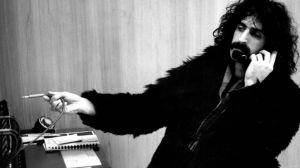
NEW YORK – DECEMBER 21: Rock and roll guitarist Frank Zappa wears a black fur coat as he operates a telephone switchboard and talks on the phone at Apostolic Studio – Soho on December 21, 1966 in New York City, New York. (Photo by Michael Ochs Archives/Getty Images) -
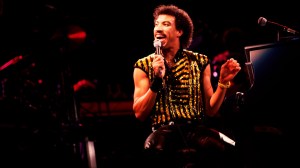
Lionel Richie performing on stage at the Rosemont Horizon in Rosemont, Illinois, June 12, 1984. (Photo by Paul Natkin/Getty Images) -
Photo by David Redfern/Redferns/Getty Images -
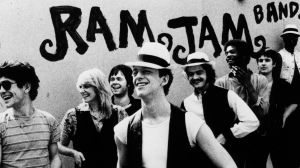
UNSPECIFIED – JANUARY 01: Photo of RAM JAM; Posed group portrait of Ram Jam (Photo by Echoes/Redferns) -
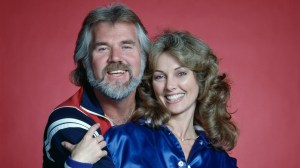
CROCKETT – APRIL 12: A CBS television country music presentation, A Special Kenny Rogers. Originally broadcast April 12, 1979. Crockett, TX. Kenny Rogers with guest, country singer Dottie West. (Photo by CBS via Getty Images) -
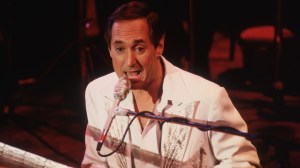
circa 1975: American songwriter, pianist and singer Neil Sedaka on stage at the Colston Hall in Bristol. (Photo by Hulton Archive/Getty Images) -
Brielpoort – Deinze – Belgium – 13/12/1985 Simple Minds: Jim Kerr Photo gie Knaeps