
Folk music will always be timeless, partially because of its ability to adapt and use new techniques. Here are some songwriting techniques you might recognize from popular 60s folk tunes.
The Use of Repetition To Drive a Point
In some songs, you don’t need a ton of words to get your point across. In fact, some of the most influential tunes throughout history say a lot without saying that much at all. Pete Seeger’s “We Shall Overcome”, which was made even more popular by Joan Baez in 1963, does a great job of this.
Videos by American Songwriter
The song consists of five to six main stanzas that are structured identically, with the singer making slight lyrical tweaks in each. In Baez’s version of the song, “We shall overcome” is repeated more than 10 times.
Using Alternate Song Structures
Many songwriters are familiar with using a traditional Verse-Chorus-Verse-Chorus-Bridge-Chorus structure. However, when it comes to folk music, oftentimes people like to think outside the box in this area.
A fantastic example of this is the way Bob Dylan uses strophic form in his song “Blowin’ in the Wind” instead of a traditional ABABCB structure. The use of strophic form makes this song ten times more impactful, especially because it also gives Dylan a chance to answer his own questions. In the first section, he sings:
How many roads must a man walk down
Before you call him a man?
How many seas must a white dove sail
Before she sleeps in the sand?
Yes, and how many times must the cannonballs fly
Before they’re forever banned?
The answer, my friend, is blowin’ in the wind
The answer is blowin’ in the wind.
Dylan adds two more song sections like this one, with his lyrical content growing progressively darker as the song carries on.
The Use of Metaphors To Reveal a Deeper Meaning
Sometimes metaphors in songs do a better job of getting a point across than saying things straight. A song that does an excellent job of this is Joni Mitchell’s “Both Sides, Now”, which was first released by Judy Collins in 1967. In “Both Sides, Now”, Mitchell uses clouds as a metaphor for love and life. When you’re young, you often view things as much simpler and prettier than they actually are, and as you get older and experience the storms of life, you gain a new perspective. In “Both Sides, Now” Collins sings:
But now they only block the sun
They rain and they snow on everyone
So many things I would have done
But clouds got in my way
I’ve looked at clouds from both sides now
From up and down and still somehow
It’s cloud illusions I recall
I really don’t know clouds at all.
Photo by: Fiona Adams/Redferns
More The List
-

Singer Bobby Vinton attends Madison Square Garden Benefit Concert on June 16, 1966 at Madison Square Garden in New York City. (Photo by Ron Galella/Ron Galella Collection via Getty Images) -

English singer and songwriter David Bowie (1947 – 2016) in concert during his Serious Moonlight tour, 1983. (Photo by Fox Photos/Hulton Archive/Getty Images) -

NASHVILLE, TENNESSEE – AUGUST 24: Vince Gill performs during the 15th Annual Academy Of Country Music Honors at Ryman Auditorium on August 24, 2022 in Nashville, Tennessee. (Photo by Brett Carlsen/Getty Images for ACM) -

Reba McEntire performing in Birmingham, Alabama, May 7, 1985. (Photo by Paul Natkin/Getty Images) -
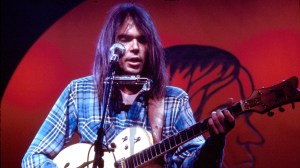
Photo by Michael Putland/Getty Images -

CIRCA 1972: Singer Mick Jagger of the rock and roll band "The Rolling Stones" performs onstage in circa 1972. (Photo by Michael Ochs Archives/Getty Images) -

NEW YORK, NEW YORK – DECEMBER 09: Bruce Springsteen performs onstage during The Rainforest Fund 30th Anniversary Benefit Concert Presents 'We'll Be Together Again' at Beacon Theatre on December 09, 2019 in New York City. (Photo by Kevin Mazur/Getty Images for The Rainforest Fund) -
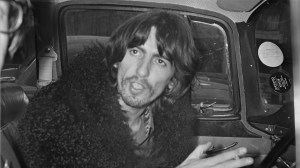
English musician, singer and songwriter George Harrison (1943 – 2001) leaving a recording studio in Twickenham, London, 16th January 1969. (Photo by William Lovelace/Daily Express/Hulton Archive/Getty Images)