
The human experience is only so unique from person to person, and in the same way, songs about universal circumstances will only be so unique, too. Songwriters have been using words like “love,” “heart,” “my girl/boy,” “my woman/man,” and even prepositional phrases like “out the door” and “in their arms” to describe heartache, love, and more.
But every so often, a songwriter will have a stroke of creative genius and find a way to relate these innately human phenomena to inanimate objects. Perhaps the object is a metaphor for something larger than itself. Sometimes, the object is a place or location that’s given precedence over the people who find themselves there.
Videos by American Songwriter
In all five cases below, the songwriters expertly weave in inanimate imagery to speak to neuroses and experiences that are all-too painfully human.
“Three Cigarettes In An Ashtray” by Patsy Cline
Patsy Cline’s “Three Cigarettes In An Ashtray” was written by Eddie Miller and W.S. Stevenson. The deep cut, which later appeared on Cline’s eponymous debut, places an ashtray at the center of a love triangle. First, there are two cigarettes in the ashtray. Then, when the other woman comes and steals the man away from the narrator, she sings about there being three cigarettes in the ashtray. (Fun fact: if you visit Patsy Cline’s home in Winchester, Virginia, they have three cigarettes in a stand-up ashtray, two of which have lipstick around the filter.)
“Hello Walls” by Faron Young
“Hello Walls” comes from a particularly prolific period in Willie Nelson’s career as a songwriter, during which he churned out country standard after country standard. Faron Young’s rendition of this melancholy track helped elevate the song into such a status. In this classic heartbreak tune, the narrator sings to the walls and windows of his home, asking if they miss the woman who left him as much as he does. Nelson’s personification of these inanimate objects paints an even lonelier picture of a man sitting in an empty house, making the song even sadder.
“The Chair” by George Strait
George Strait’s 1985 hit, “The Chair”, uses the location of two people falling in love as the central point of the song. Songwriters Hank Cochran and Dean Dillon did a tremendous job establishing the different phases of the two characters’ relationships in a one-sided conversation. First, the clunky intro. Then, they get to know each other. They reveal they’re both single. Eventually, the pair leaves together. And through it all, the one constant that keeps the listener rooted in the story is that image of a swivel stool in a crowded dive bar.
“MacArthur Park” by Donna Summer
If someone were to take the lyrics to “MacArthur Park” at face value, they might assume that someone is really, really letting a ruined cake bring them down. But therein lies the magic of Jimmy Webb’s songwriting for this iconic tune first made famous by Richard Harris (and later by Donna Summer). The cake being left out in the rain isn’t an actual cake. It’s the narrator’s relationship with the unnamed subject of their lamentations. Just like in Patsy Cline’s song, the inanimate object becomes the emotional crux, the physical representation of internal pain.
“Brand New Key” by Melanie
Melanie’s upbeat ditty about how having a “brand new pair of rollerskates” while the song’s subject has a “brand new key” sounds like a lighthearted, childlike tune upon first listen. But the roller skate key isn’t the important part of the song. What’s important is that the key gave the narrator a reason to go over to her beau’s house, which is how she realizes that something is amiss in their relationship. The inanimate object, the key, then turns Melanie’s track into a moving-on song, implying that she’s on a new path without the person ignoring her affection.
Photo by Michael Ochs Archives/Getty Images
More The List
-
Photo by Michael Putland/Getty Images -
CIRCA 1972: Singer Mick Jagger of the rock and roll band "The Rolling Stones" performs onstage in circa 1972. (Photo by Michael Ochs Archives/Getty Images) -
NEW YORK, NEW YORK – DECEMBER 09: Bruce Springsteen performs onstage during The Rainforest Fund 30th Anniversary Benefit Concert Presents 'We'll Be Together Again' at Beacon Theatre on December 09, 2019 in New York City. (Photo by Kevin Mazur/Getty Images for The Rainforest Fund) -
English musician, singer and songwriter George Harrison (1943 – 2001) leaving a recording studio in Twickenham, London, 16th January 1969. (Photo by William Lovelace/Daily Express/Hulton Archive/Getty Images) -
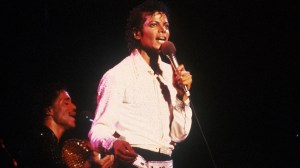
NEW YORK, NY – CIRCA 1984: Michael Jackson performing circa 1984 in New York City. (Photo by Robin Platzer/Images/Getty Images) -
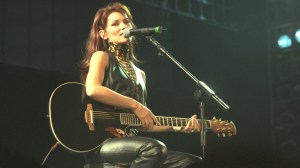
Original Caption) The American singer Shania Twain. (Photo by Stephane Cardinale/Sygma via Getty Images) -
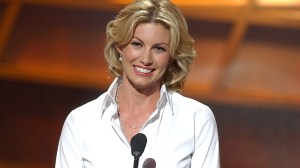
Faith Hill presents the Best Moment Award during 2004 ESPY Awards – Show at Kodak Theatre in Hollywood, California, United States. (Photo by M. Caulfield/WireImage for ESPN) -
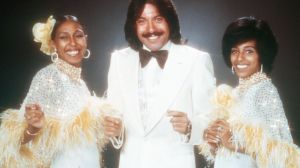
Photo by Michael Ochs Archives/Getty Images