Billy Joel is 22 again thanks to AI. The singer is the subject of a new documentary, which filmmakers completed using real audio and AI visuals.
1971: Billy Joel’s Lost Interview is based on a long-lost 55-year-old authentic radio interview for C.W. Post’s WCWP station’s “That’s Interesting” show. The interview took place in December 1971, just after the release of Joel’s debut solo album, Cold Spring Harbor.
Videos by American Songwriter
In the film, a 22-year-old Joel—as well as his manager, Irwin Mazur, and the interviewer, Ed Mann—are visually created with the help of AI. Meanwhile, the audio originates from an authentic quarter-inch reel-to-reel tape recording of the interview.
Joel did not have involvement in the documentary, according to People.
The documentary will have its world premiere at the second annual Long Island Music & Entertainment Hall of Fame Music Documentary Film Festival on Sept. 25.
“We are entering a new era in filmmaking, where emerging technologies like artificial intelligence are creating new possibilities for preserving and sharing stories from the past,” Tom Needham, Executive Director of the LIMEHOF Music Documentary Film Festival, said in a press release. “We recognize that AI in entertainment is a topic that will generate discussion and different viewpoints, but this film demonstrates how technology, when used thoughtfully, can help us reconnect with important moments in music history.”
“1971: Billy Joel’s Lost Interview allows audiences to see a young Billy Joel before worldwide fame changed his life,” he added. “We hope people will experience it with curiosity and an open mind.”
Billy Joel Documentary Director Speaks Out
The 20-minute documentary was directed by Adam Ripp. The director said that “it is a tremendous honor” for the film to be the festival’s opening night selection.
“Featuring the earliest known recorded interview with Billy Joel—predating his earliest known Piano Man-era interviews by approximately three years—the film captures him at the very beginning of his extraordinary journey, speaking candidly about his life, his struggles and the music he was determined to create,” Ripp said. “I cannot imagine a more meaningful setting for the film’s world premiere than an institution dedicated to preserving and celebrating Long Island’s remarkable musical legacy.”
Mann, who conducted the 1971 interview, served as a producer on the film.
“It’s like 50 years just disappeared. We were all good looking back then,” Mann said. “Adam brought to life something that was not possible. The recreation of the interview now allows an insight of Billy, which perhaps was not often seen in 1971. For me, personally, it is so gratifying to have participated in something which has another life in such an exciting way.”
“The amazing thing about Billy’s face is that he’s so different now, and that’s exactly how he looked at the time of the interview,” he added. “He was a kid, he was soft-spoken, he was sweet. It was him; it was really him. That was an earlier version of him, but that was him.”
Photo by Michael Ochs Archives/Getty Images
More Latest Music News & Stories
-
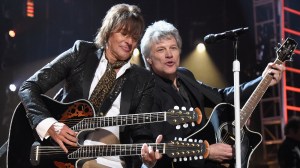
CLEVELAND, OH – APRIL 14: Inductees Richie Sambora and Jon Bon Jovi of Bon Jovi perform during the 33rd Annual Rock & Roll Hall of Fame Induction Ceremony at Public Auditorium on April 14, 2018 in Cleveland, Ohio. (Photo by Kevin Mazur/Getty Images For The Rock and Roll Hall of Fame) -

NASHVILLE, TENNESSEE – SEPTEMBER 10: Zach Bryan performs at The Basement East on September 10, 2026 in Nashville, Tennessee. (Photo by Jason Kempin/Getty Images) -

Photo by Shannon Finney/Getty Images -

NASHVILLE, TN – SEPTEMBER 22: ***EXCLUSIVE*** Singers and Songwriters John Anderson, Blake Shelton and John Rich (Big& Rich) backstage during the second annual ACM Honors at Schermerhorn Symphony Center on September 22, 2009 in Nashville, Tennessee. (Photo by Rick Diamond/Getty Images for ACM) -
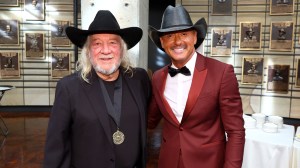
NASHVILLE, TENNESSEE – OCTOBER 18: (L-R) John Anderson and Tim McGraw attend the Country Music Hall of Fame and Museum Class of 2026 Medallion Ceremony at Country Music Hall of Fame and Museum on October 18, 2026 in Nashville, Tennessee. (Photo by Terry Wyatt/Getty Images for Country Music Hall of Fame and Museum) -
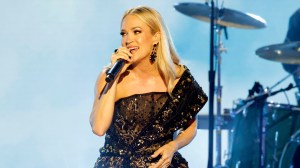
NASHVILLE, TENNESSEE – MARCH 19: Carrie Underwood performs onstage during Opry 100: A Live Celebration at Grand Ole Opry at the Ryman Auditorium on March 19, 2025 in Nashville, Tennessee. (Photo by Jason Kempin/Getty Images for the Grand Ole Opry) -
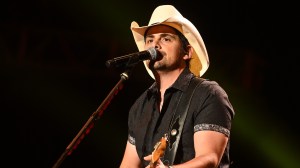
ALPHARETTA, GEORGIA – JULY 24: Brad Paisley performs in concert at Ameris Bank Amphitheatre on July 24, 2021 in Alpharetta, Georgia. (Photo by Paras Griffin/Getty Images)