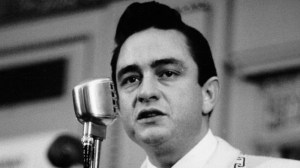
In the late 1940s, Johnny Horton struck out on looking for gold in Alaska. Fortunately, he had taken up songwriting in his spare time, and after winning a talent contest in Henderson, Texas, he decided to pursue music as a career path instead. Known for historically-inspired sagas like “The Battle Of New Orleans” and “North To Alaska”, Horton was at the height of his fame in November 1960 when a car accident claimed his life. Today, we’re taking a look at the all-too-brief life and career of Johnny Horton, born on this day (April 30) in 1925 in Los Angeles, California.
The youngest of five children born to sharecropper parents, Horton grew up primarily in the small East Texas town of Rusk. He learned guitar from his mother, Ella Claudia Horton, at age 11.
Videos by American Songwriter
Upon graduating from high school in 1944 in Gallatin, Texas, Horton attended junior colleges in Jacksonville and Kilgore before landing a basketball scholarship to Baylor University in Waco. He would eventually move to Washington to attend Seattle University, although he never graduated from any of these institutions.
Finding Success With Historical Ballads
After deciding to pursue music full time, Johnny Horton scored a regular role on Louisiana Hayride and a recording contract.
At first, the growing popularity from his Hayride role didn’t translate to record sales. Deciding to put his musical career on hiatus, Horton got a job at a tackle shop in 1954.
By the following year, however, his new manager and bassist, Tillman Franks, had finagled him a yearlong contract with Columbia Records.
Inspired by Elvis Presley, Horton shifted to a more rockabilly style. His first Top 10 country hit, “Honky-Tonk Man”, came in 1956.
He followed with more Top 10 songs: “I’m a One-Woman Man”; “I’m Coming Home”; and “All Grown Up” before scoring his first country No. 1 hit, “When It’s Springtime In Alaska (It’s Forty Below)”.
Horton’s next single, “The Battle of New Orleans”, would become his best-known. Written in 1936 by folk songwriter Jimmy Driftwood, the song puts a lighthearted spin on the aforementioned battle from the perspective of a soldier.
Everyone from Dolly Parton to Les Claypool has since covered “The Battle of New Orleans”, but Johnny Horton’s version enjoyed the most success, topping both the country music charts and the Hot 100. It also won him the 1960 Grammy Award for Best Country & Western Recording.
How Johnny Horton Predicted His Own Death
In 1960, Johnny Horton had an eerie premonition.
While visiting his friend, singer-songwriter Merle Kilgore—Hank Williams’ former personal manager—the “Johnny Reb” singer told him that he’d had a vision he was going to die at the hands of a drunk.
On Nov. 5, 1960, Johnny Horton was traveling from Austin to Shreveport with two band members, Franks and Tommy Tomlinson, when their vehicle collided with an oncoming car on a Highway 79 bridge near the small town of Milano.
While everyone involved sustained injuries, Horton died en route to the hospital. He was just 35 years old.
When Johnny Cash heard about the death of his good friend, “[I] locked myself in one of the hotel’s barrooms and cried,” the Man in Black wrote in his 2003 autobiography.
Featured image by Michael Ochs Archives/Getty Images
-
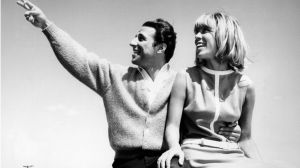
CIRCA 1965: Songwriters Barry Mann and Cynthia Weil pose for a portrait circa 1965. (Photo by Michael Ochs Archives/Getty Images) -
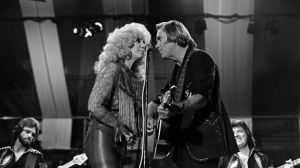
Tammy Wynette And George Jones, Wembley Arena, London – 1981, Tammy Wynette And George Jones, Wembley Arena, London – 1981 (Photo by Brian Rasic/Getty Images) -

CHARLOTTE, NORTH CAROLINA – OCTOBER 08: (EDITORS NOTE: Image has been created using a starburst filter) Riley Green performs onstage during SiriusXM's Play On Series Presented By Spectrum In Charlotte at The Underground on October 08, 2026 in Charlotte, North Carolina. (Photo by Derek White/Getty Images for SiriusXM) -
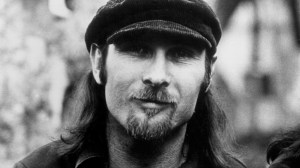
Pop duo Darrell "Dash" Crofts (R) and Jim Seals Of Seals and Crofts pose for a Warner Bros Records publicity still circa 1975. (Photo by Michael Ochs Archives/Getty Images) -
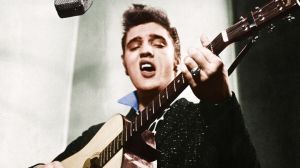
1/1956-Close up of Elvis Presley playing guitar. -
Naomi and Wynonna Judd during The Judds farewell tour. -
THE DEAN MARTIN SHOW — Episode 15 — Pictured: Tennessee Ernie Ford — (Photo By: NBC) via Getty Images)