
For many singer-songwriters, the breakthrough hit arrives when they play the game a bit and capitulate to what pop audiences expect. Intensely personal songs are usually reserved for album tracks.
Gordon Lightfoot bucked that trend. His first American hit after many years of success in his native Canada came with a song that took place within a proverbial dark night of the soul.
Videos by American Songwriter
A Canadian Hero
Gordon Lightfoot came of age in an era when it was somewhat unusual for solo songwriters to score hits with their own songs. Aside from the occasional exception, a la Bob Dylan, 60s songwriters who weren’t in bands often had to rely on others to bring their songs to the public, at least in America.
In Canada, Lightfoot’s home country, it was a different story. He released eight top 40 hits throughout the 60s in Canada. None of them received much attention in America, in part because they weren’t heavily promoted.
Still, Lightfoot gained a measure of notoriety in the States via covers of his songs by well-respected artists. That included Bob Dylan himself, who did a version of Lightfoot’s “Early Morning Rain” on his 1970 album Self Portrait. The 70s, however, would witness Lightfoot’s emergence as a major player on the American music scene.
Breaking Through With a Heavy Heart
Gordon Lightfoot switched record labels at the start of the decade. He felt that United Artists wasn’t doing a great job of promoting him, so he made the move to Reprise. That move paid off in a big way, as Lightfoot’s first album for the label delivered his first US hit of any magnitude.
But even that success took a little bit of waiting. Lightfoot recorded “If You Could Read My Mind” for his 1970 LP Sit Down Young Stranger. The album utilized orchestration to help make his spare songs a bit more pop-friendly. Randy Newman did some of the orchestral arrangements on the record. Nick DeCaro handled those honors on “If You Could Read My Mind”.
“If You Could Read My Mind” caught on immediately in Canada, reaching No. 1. Subsequently, the label changed the album title to If You Could Read My Mind to take advantage of the song’s popularity. After it swept through Canada, a US release was arranged in 1971. And the song continued its hot streak here, peaking at No. 5.
“Mind” Games
Gordon Lightfoot later admitted that “If You Could Read My Mind” was written at a very difficult point in his life. His first marriage was crumbling, in part because of his own infidelity. Although he used some metaphors to couch the particulars, such as imagining he and his wife as characters in movies and novels, the intensity of the emotion is palpable throughout the song.
Perhaps that’s what drew audiences to it. You don’t hear any artifice or misdirection in the lyrics. When Lightfoot makes his concluding statement (“I don’t know where we went wrong/But the feeling’s gone and I just can’t get it back”), it’s as devastating an admission as you’ll hear in a Top 5 hit.
“If You Could Read My Mind” got the ball rolling for Gordon Lightfoot in America. He’d end up with five more Top 40 US hits, including the No. 1 “Sundown” in 1974. And he kept up the level of confessional authenticity that characterized his breakthrough hit.
Photo by Getty Images
More Behind The Song
-
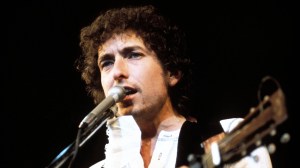
UNITED STATES – MAY 09: Photo of Bob DYLAN; performing live onstage at the benefit for ousted Chileans: Felt Forum, New York (Photo by Steve Morley/Redferns) -

NEW YORK: Janis Ian performs live on stage in New York in 1975 (Photo by Richard E. Aaron/Redferns) -
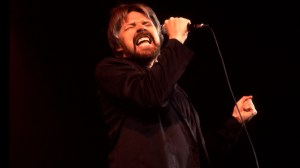
Musician Bob Seger performs at the Poplar Creek Music Theater, Hoffman Estates, Illinois, August 13, 1986. (Photo by Paul Natkin/Getty Images) -

American vocalist, musician, songwriter, producer, actress and narrator Rickie Lee Jones performing live, circa 1979. (Photo by Gus Stewart/Getty Images) -
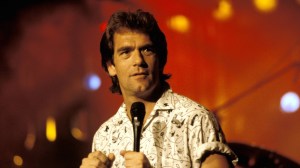
UNSPECIFIED – JANUARY 01: Photo of Huey LEWIS & The News; (Photo by David Redfern/Redferns) -
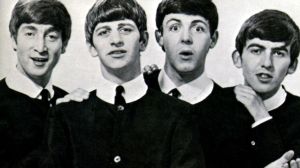
Photo by Fireshot/Universal Images Group via Getty Images -
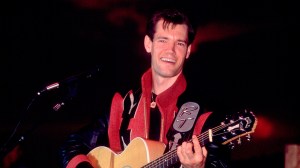
American Country musician Randy Travis plays guitar as he performs onstage at the Wisconsin State Fair, Milwaukee, Wisconsin, July 15, 1988. (Photo by Paul Natkin/Getty Images) -
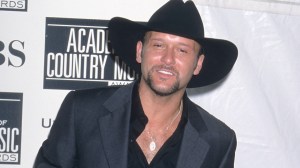
UNIVERSAL CITY, CA – MAY 3: Singer Tim McGrawl attends the 35th Annual Academy of Country Music Awards on May 3, 2000 at the Universal Amphitheatre in Universal City, California. (Photo by Ron Galella, Ltd./Ron Galella Collection via Getty Images)