On this day (May 1) in 2023, Gordon Lightfoot died at Sunnybrook Hospital in Toronto, Ontario, Canada, at the age of 84. His songs were hits for him and several other artists in the 1960s and ’70s. Moreover, Lightfoot’s ability to intertwine stories and melodies resulted in songs that left their mark on the hearts and minds of generations of listeners and songwriters.
Lightfoot released his debut single, “(Remember Me) I’m the One,’ in 1962. It reached No. 3 on an influential radio countdown show. A year later, “I’m Not Sayin’” marked his entry into the national charts in Canada. It reached No. 12 on the RPM chart and No. 3 on the country chart. He continued to see success in his home country. Then, in 1971, he moved from United Artists to Reprise Records and began to see international success.
Videos by American Songwriter
While his recordings didn’t perform well outside of Canada before he moved to Reprise, other artists charted with his songs. For instance, Marty Robbins took “Ribbon of Darkness” to the top of the country chart in 1968. His song “For Lovin’ Me” was a No. 30 hit for Peter, Paul, and Mary. That song and “Early Mornin’ Rain” were recorded by multiple high-profile artists, including Elvis Presley, Bob Dylan, the Kingston Trio, and The Grateful Dead.
Gordon Lightfoot’s Most Enduring Hit
Gordon Lightfoot released several international hits in the 1970s. Songs like “The Circle Is Small (I Can See It in Your Eyes),” “Rainy Day People,” “Carefree Highway,” and “Beautiful” charted well in Canada and the United States. Many of those hits also performed well in Australia and the United Kingdom. However, no song in his catalog can match the longevity of “The Wreck of the Edmund Fitzgerald.”
The song went to No. 1 on multiple charts in Lightfoot’s home country. It was also a top 10 hit on the Hot 100 and Adult Contemporary charts in the United States. However, the song’s impact and legacy far outshine its chart performance.
The Edmund Fitzgerald sank on November 10, 1975, on Lake Superior, taking her 29 crew members to the lake’s cold depths. According to Songfacts, Lightfoot first read about the tragedy in a Newsweek article. He didn’t believe the article went deep enough into the story behind the tragedy. So, he decided to dig deeper. “It was quite an undertaking,” he said of the research. “I went and bought all of the old newspapers, got everything in chronological order, and went ahead and did it because I already had a melody in my head,” he added. That melody was from an Irish dirge that he first heard when he was a child.
Keeping Memories Alive
Lightfoot’s signature song has been telling a tragic tale of a shipwreck that would otherwise likely have been largely lost to history. He is not, however, the only person who worked to keep that memory alive.
According to 901 News, the Great Lakes Maritime Academy holds an annual memorial service for those who died when the Edmund Fitzgerald sank. Every year, they ring a bell 29 times to honor the men who died. In November 2023, the bell tolled 31 times. “Twenty-nine for the lives lost that day back in 1975 on Lake Superior, once for all lives lost at sea, and once for singer Gordon Lightfoot, who wrote the ballad of the ship’s sinking.”
Featured Image by Al Clayton/Getty Images
-

UNITED STATES – JANUARY 01: NASHVILLE Photo of Alan JACKSON, Alan Jackson performing on stage (Photo by Beth Gwinn/Redferns) -
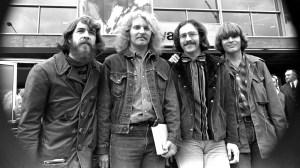
Creedence Clearwater Revival -
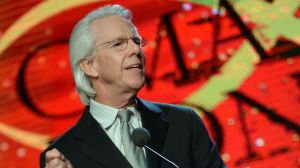
NASHVILLE, TN – Musician Jim Ed Norman speaks onstage during the GMA Honors Celebration and Hall of Fame Induction at the Allen Arena at Lipscomb University on April 29, 2014 in Nashville, Tennessee. (Photo by Rick Diamond/Getty Images for GMA) -
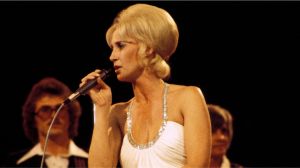
UNITED KINGDOM – WEMBLEY EMPIRE POOL Photo of Tammy WYNETTE, performing live onstage at the Country Music Festival (Photo by Andrew Putler/Redferns) -
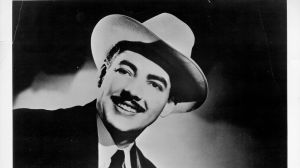
UNSPECIFIED – CIRCA 1970: Photo of Stoney Cooper Photo by Michael Ochs Archives/Getty Images -

Flea performing with Red Hot Chili Peppers