
We often think of record deals as the pinnacle of success for a band. But sometimes, those contracts backfire, causing more harm than good. Memphis folk-rockers Big Star learned this lesson the hard way in 1972 after the release of their debut studio album, #1 Record. Featuring cuts like “Thirteen” and “When My Baby’s Beside Me”, the album was warmly received by those who listened to it.
The only problem, of course, was that not many people were.
Videos by American Songwriter
How Stax Almost Made This Big Star Album Flop
There was a time when Stax Records was the gold standard for Southern record labels. From Otis Redding to Isaac Hayes to The Staple Singers, some of the best blues, funk, and soul came from this Memphis-based company. For a local band like Big Star, landing a recording contract with Stax was a point of pride. But by the time Stax was set to release Big Star’s debut, they were in a state of decline.
Big Star’s debut sold fewer than 10,000 copies, but it was through no fault of their own. When #1 Record first came out, Stax didn’t have the means to promote or distribute the album properly. It wasn’t that people didn’t want to listen—in fact, most reviews offered glowing praise for the power pop album. The issue was that there were no copies in stores to sell. The Billboard charts didn’t take into consideration why an album wasn’t selling. It just focuses on the ones that were. Consequently, Big Star’s singles fell short of the mainstream charts.
According to John M. Borack’s Shake Some Action: The Ultimate Guide To Power Pop, the poor performance of Big Star’s debut worsened interpersonal relations. And considering the bandmates had already been fighting amongst themselves, this commercial flop was just fuel to the fire. Alex Chilton is said to have attempted suicide, exacerbated by the grief and frustration of their unsuccessful album release.
The Band Eventually Found Their Footing
Two years later, Big Star released their sophomore album, Radio City, through EMI. Increased demand for #1 Record led EMI to distribute both albums as a double LP. This bolstered Big Star’s notoriety, eventually landing the band the success they deserved all along. #1 Record eventually lived up to its name in spirit, if not actual sales performance, influencing countless bands that came after them.
Indeed, without Big Star—and the subsequent releases that helped boost their ubiquity—bands like R.E.M., Tom Petty & the Heartbreakers, and even early KISS might have sounded entirely different.
Photo by Michael Ochs Archives/Getty Images
More Behind the Album
-

Photo by Ed Rode/Getty Images -
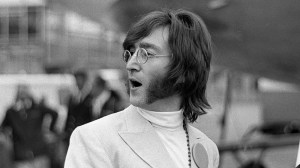
Photo by Murphy/Daily Herald/Mirrorpix via Getty Images -
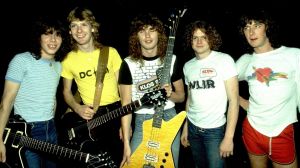
Def Leppard on 8/23/81 in East Troy, Wi. (Photo by Paul Natkin/WireImage) -
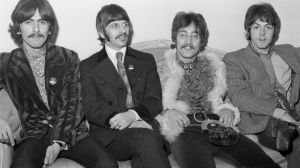
LONDON – MAY 19: (L-R) English musician, singer, songwriter and guitarist George Harrison (1943-2001), English musician, singer and drummer Ringo Starr, English singer, songwriter and guitarist John Lennon (1940-1980), and English singer, songwriter and bassist Paul McCartney of the Beatles attend a press party at the home of manager Brian Epstein supporting the release of Sgt. Pepper's Lonely Hearts Club Band, May 19, 1967 in London, United Kingdom. (Photo by Jeff Hochberg/Getty Images) -
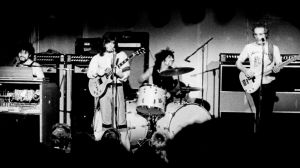
UNITED KINGDOM – JANUARY 01: MARQUEE Photo of VANILLA FUDGE, performing live onstage – L-R: Mark Stein, Vince Martell, Carmine Appice, Tim Bogert (Photo by Estate Of Keith Morris/Redferns) -
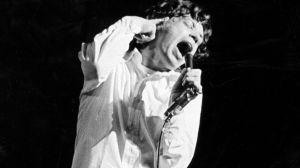
CIRCA 1966: Singer Mick Jagger of the rock and roll band "The Rolling Stones" performs onstage in circa 1966. (Photo by Michael Ochs Archives/Getty Images) -
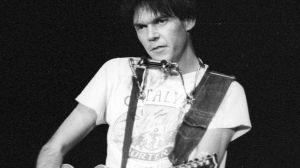
Musician Neil Young performing onstage in 1978 in Los Angeles. (Photo by Michael Ochs Archives/Getty Images) -
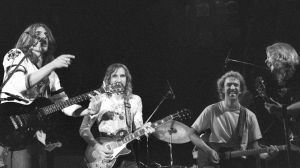
The Eagles perform on stage in Amsterdam, Netherlands, 1975. (L-R) Glenn Frey, Joe Walsh, Bernie Leadon, Don Felder. (Photo by Gijsbert Hanekroot/Redferns)