
In the 1960s, rock and Motown music had a lot of successful solo artists, like Elvis Presley, Aretha Franklin, and others. But there were also numerous groups that became popular in the 1960s as well. These are three hit singles from 1965, all by groups that show off their stunning harmonies in the songs.
“I Can’t Help Myself (Sugar Pie Honey Bunch)” by The Four Tops
On The Four Tops’ sophomore album, appropriately called Four Tops Second Album, is “I Can’t Help Myself (Sugar Pie Honey Bunch)“. Written by Brian Holland, Lamont Dozier, and Eddie Holland, “I Can’t Help Myself (Sugar Pie Honey Bunch)” is the quartet’s first No.1. single, likely in part due to their tight vocal harmonies.
Videos by American Songwriter
In the chorus, the men sing, “Can’t help myself / No, I can’t help myself / ‘Cause, sugar pie, honey bunch (Sugar pie, honey bunch) / I’m weaker than a man should be / I can’t help myself / I’m a fool in love, you see.”
“Stop! In The Name Of Love” by The Supremes
Although The Supremes began as a quartet, by 1965, the group was down to three members. Still, their flawless harmonies sounded just as good, maybe better, on “Stop! In The Name Of Love”.
Written by the same three men who wrote “I Can’t Help Myself (Sugar Pie Honey Bunch)”, “Stop! In The Name Of Love” begins with a wall of sound, with all three members singing “Stop! In the name of love / Before you break my heart“.
The song, on their More Hits By The Supremes album, became their fourth consecutive No. 1 hit.
“Help Me, Rhonda” by The Beach Boys
By 1965, The Beach Boys were used to having hit after hit at radio. So it’s no surprise that “Help Me, Rhonda”, from their album The Beach Boys Today!, went all the way to the top of the charts.
What makes “Help Me, Rhonda” stand out, aside from the simple chorus that repeats, “Help me Rhonda / Help, help me Rhonda,” is who sang lead. Band member Al Jardine takes the lead on the song, a rarity for the group.
“I did have a hard time with [the song],” Jardine admits. “I don’t really know. Some kind of meter thing in there. I never really tackled a lead much before. I was always interested in the backgrounds. Carl [Wilson] and I were always on the harmonies, but to take a lead was a big leap forward. And this was not an easy lead, to be honest with you. It was pretty different. I was happy that Brian asked me to sing the lead. Brian [Wilson] had this idea of how he wanted it, and I had an idea of how I heard it, and that’s basically what you get.”
In 1970, Roy Orbison recorded a version of the song for his The Big O record.
Photo by Michael Ochs Archives/Getty Images
More The List
-
Photo by Larry Hulst/Michael Ochs Archives/Getty Images -
DENMARK – MARCH 02: Photo of LED ZEPPELIN; Robert Plant – Led Zeppelin, March 2, 1973 in Copenhagen, Denmark (Photo by Jorgen Angel/Redferns) -
IRVINE, CA – AUGUST 14: Tom Petty and The Heartbreakers in concert at Irvine Meadows Amphitheater on August 14, 1989 in Irvine, California. (Photo by Jeffrey Mayer/WireImage) -
UNITED STATES – JULY 24: Photo of Johnny CASH; Johnny Cash performing on stage, (Photo by Gai Terrell/Redferns) -
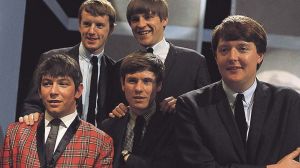
UNITED KINGDOM – JANUARY 01: BBC STUDIO Photo of ANIMALS, L-R: Eric Burdon, John Steel, Hilton Valentine, Alan Price, Chas Chandler, posed, group shot on set of TV Show (Photo by David Redfern/Redferns) -
LEXINGTON, KENTUCKY – JUNE 07: Tyler Childers performs during Day 2 of the 2026 Railbird Music Festival at The Infield at Red Mile on June 07, 2026 in Lexington, Kentucky. (Photo by Stephen J. Cohen/Getty Images) -
Photo by Arthur Grimm/United Archives via Getty Images -
FORT LAUDERDALE, FL – NOVEMBER 09: Vanilla Ice aka Rob Van Winkle attends the documentaries of 'Ice Ice, Baby Hip Hop's 1st Global #1" screening during the 37th Annual Fort Lauderdale International Film Festival at Savor Cinema on November 09, 2022 in Fort Lauderdale, Florida. (Photo by Johnny Louis/Getty Images)