
One can easily draw a line between The Rolling Stones and American blues artists like Muddy Waters, thanks in no small part to the fact that the British rock ‘n’ rollers named their entire band after a Waters track. But fewer rock aficionados would assume that The Stones were taking cues from the likes of George Jones in the early 1960s.
Sure, Jones and The Stones don’t seem readily similar. But get right down to the “lost women and too much boozing” motifs popular to both genres, these country and rock acts aren’t much different. And according to Rolling Stones guitarist Keith Richards, he pulled a trick he saw in Jones’ band for “Jumpin’ Jack Flash”. The Stones released this non-album single in May 1968 with “Child Of The Moon” as its B-side.
Videos by American Songwriter
The song was a hit. Harkening back to their earliest, bluesiest days, The Rolling Stones’ 1968 single seemed like a departure from the more flowery psychedelia of Their Satanic Majesties Request. And we suppose if you’re going to get back to the basics, there aren’t many better examples than Jones’ straightforward Americana sound.
Keith Richards Picked up This Trick for “Jumpin’ Jack Flash”
The Rolling Stones’ 1968 single, “Jumpin’ Jack Flash”, features all the usual Mick Jagger bravado and memorable Keith Richards riffs one would expect from the band. However, the acoustic instrumentation is a notable addition that sets this No. 1 track apart from the heavier corners of the band’s catalog. As Richards later revealed, he achieved this sound by copying a trick he first saw in George Jones’ backing band.
“I used a Gibson Hummingbird acoustic tuned to open D, six-string,” the guitarist explained. “Open D or open E, which is the same thing—same intervals—but it would be slackened down some for D. Then, there was a capo on it, to get that really tight sound. And there was another guitar over the top of that, but tuned to Nashville tuning. I learned that from somebody in George Jones’ band in San Antonio in 1964. The high-strung guitar was just an acoustic, too.”
Nashville tuning involves replacing the lowest four strings on the guitar with strings that are an octave higher, producing a bright, shimmery sound. Having a rhythm player on a Nashville tuning guitar is standard practice in classic country music. But as The Rolling Stones demonstrated in 1968, it has its place in rock ‘n’ roll as well.
Photo by Michael Ochs Archives/Getty Images
More Behind The Song
-
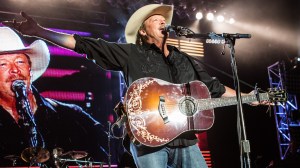
OS ANGELES, CA – JULY 25: Musician Alan Jackson performs at The Greek Theatre on July 25, 2012 in Los Angeles, California. (Photo by Chelsea Lauren/WireImage) -

Singer and songwriter performs in 1975 in Los Angeles, California. (Photo by Suzan Carson/Michael Ochs Archives/Getty Images) -
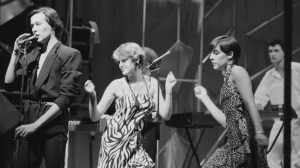
The Human League performing to their single 'Love Action (I Believe In Love)' on the BBC TV music show, 'Top Of The Pops', London, 6th August 1981. Left to right: Phil Oakey, Susanne Sulley and Joanne Catherall. (Photo by Michael Putland/Getty Images) -
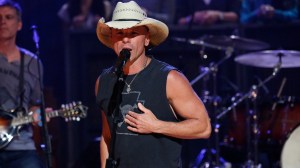
LATE NIGHT WITH JIMMY FALLON — Episode 825 — Pictured: Musical guest Kenny Chesney performs on April 30, 2013 — (Photo by: Lloyd Bishop/NBCU Photo Bank/NBCUniversal via Getty Images via Getty Images) -
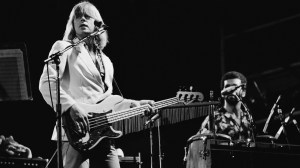
Roseann Cash on 11/15/87 in Chicago, IL. (Photo by Paul Natkin/WireImage) -

Portrait of Canadian musician Joni Mitchell wearing a black short-sleeved dress with several necklaces, November 1968. This image was from a photo shoot for the fashion magazine Vogue. (Photo by Jack Robinson/Getty Images) -

DON GIBSON, Country Sänger, 70er. (Photo by kpa/United Archives via Getty Images) -
Photo by Hulton Archive/Getty Images