Leave it to the Liverpudlian to come up with a seafaring analogy for their contributions to the world of rock ‘n’ roll. John Lennon, who spent his childhood and teen years in the port town of Liverpool, England, came up with a surprisingly accurate description of what The Beatles did for music and, more generally, the world in the 1960s. And in doing so, he also followed up on some especially bitter comments he made about the Fab Four post-breakup.
Lennon was certainly no stranger to speaking his mind, even if that opinion was going to be controversial. He did it while he was a Beatle, like when he claimed his band was “bigger than Jesus.” And even after The Beatles were no more, Lennon continued ruffling feathers by saying things like, “The Beatles was nothing” in a tempestuous interview with Rolling Stone in 1970.
Videos by American Songwriter
“I learned lots from Paul and George, in many ways,” Lennon continued. “But they learned a damned sight lot from me—they learned a f***ing lot from me.” Interpersonal band dynamics aside, the educational impact of these three men on the rest of the planet simply can’t be understated, either. And after he had time for his emotions to cool down, Lennon was able to see the forest for the trees—and what his band’s role actually was in the Swinging Sixties.
John Lennon Used Sailing Terminology to Describe The Beatles’ Impact
The Beatles breakup was lengthy, highly contentious, and, in many different ways, painful for everyone involved. John Lennon wasn’t just losing his bandmates. He was also losing friends that he had effectively grown up with in Liverpool. The split created a deep hurt that manifested as bitterness in many of Lennon’s interviews following the breakup. While speaking to a French media outlet in 1975, Lennon seemed to have a much cooler head about the whole thing. He admitted to being bitter—and added that he could change his mind.
“I was upset,” Lennon argued in his defense. “Emotionally upset. We just split up, you know? I call it a divorce, right? But when I think about [The Beatles’ impact], you know, I can change my mind. The thing I didn’t like was the insistence that we led something. My picture of it now is there was a ship going to discover the new world. And The Beatles were in the crow’s nest on the same ship. Maybe The Stones are up there, too, or whoever, but let’s say Beatles were up in the crow’s nest, and we just said, ‘Land, ho! Right?’ That’s it. We were part of it, and we were in the crow’s nest, and we contributed whatever we contributed.”
For any landlubbers out there, the crow’s nest refers to the high platform on a sailing ship’s main mast where a sailor would look out for land, hazards, and other vessels. Lennon’s ability to finally reconcile the importance of his former band through seafaring terminology makes sense. Not only for his Liverpool upbringing, but because his father, Alfred “Freddie” Lennon, was also a merchant seaman who spent his life on the open water.
The Fab Four Were on the Ship, but They Weren’t in the Wheelhouse
John Lennon’s analogy for The Beatles’ influence on the 1960s is an interesting way to digest the grandiosity of the band’s musical legacy. For Fab Four critics who haven’t understood the decades-long hype around the band, Lennon’s metaphor also helps paint a more accurate picture as to why, exactly, the world went nuts with Beatlemania in the 1960s. And in a way, the ex-Beatle’s argument makes room for the very real possibility that it could have been anyone up there in the crow’s nest. It just so happened to be four lads from Liverpool.
“What we did was wake up the avant-garde in the music and film,” Lennon said in his 1975 interview. “Not just [The] Beatles, but our movement, whatever it was. Rock ‘n’ roll or whatever you call it, you know. The so-called avant-garde was asleep.”
All the world needed was someone hollering down the main mast to wake it up.
Photo by Ken Regan /American Broadcasting Companies via Getty Image
More Features
-
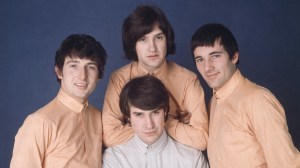
British pop group The Kinks, circa May 1964. Clockwise, from left: drummer Mick Avory, guitarist Dave Davies, bassist Pete Quaife (1934 – 2010) and singer Ray Davies. (Photo by Tom Hustler/Central Press/Hulton Archive/Getty Images) -
Photo by: Gary Null/NBC via Getty Images -
LAS VEGAS, NEVADA – Kane Brown performs onstage during the 61st Academy of Country Music Awards at MGM Grand Garden Arena on May 17, 2026 in Las Vegas, Nevada. (Photo by Kevin Mazur/Getty Images for ACM) -
(MANDATORY CREDIT Koh Hasebe/Shinko Music/Getty Images) Bon Jovi, live, Moscow Music Peace Festival 1989 at Luzhniki Stadium, Moscow, USSR, 12th and 13th August, 1989. (L-R) Richie Sambora (guitar), Jon Bon Jovi (vocals). (Photo by Koh Hasebe/Shinko Music/Getty Images) -
CARDIFF, WALES – JUNE 24: Robert Smith of The Cure performs onstage during a concert at Blackweir Fields on June 24, 2026 in Cardiff, Wales. (Photo by Maxine Howells/Getty Images) -
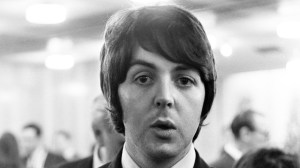
Paul McCartney of The Beatles, at press conference to announce Leicester University's art festival, held at the Royal Garden Hotel, London, 5th February 1968. (Photo by Blandford/Mirrorpix/Getty Images) -
Sandy West performing with the Runaways