Your cart is currently empty!



On This Day in 1940, Woody Guthrie Wrote the Lyrics to This Generation-Defining Protest Song in a New York City Hotel Room
Many listeners confused the intent of Woody Guthrie’s “This Land Is Your Land.” On the surface, this song is a patriotic ode to America’s ideals. That smokescreen is precisely why this is the perfect protest song.
Videos by American Songwriter
Guthrie started this song much earlier than it was released. On this day in 1940, Guthrie decided to hit back at one particular act of patriotism from Irving Berlin. The result was the earliest version of “This Land Is Your Land.” This generational folk song was not only a chance for Guthrie to air his grievances, but also the moment he became a name no one would soon forget.
Woody Guthrie’s “This Land Is Your Land”
In the 1940s, songs weren’t yet pieces of poetry to be picked apart for a deeper meaning. It was the 60s that would see that approach become more commonplace. Guthrie would become a trailblazer with this song, having written it when he did. While Guthrie didn’t intend this song to be deeply coded or misleading, the audience had trouble disentangling his meaning, making it a first for folk music.
Guthrie heard Berlin’s “God Bless America” in the late 30s and it grieved him. At the time, a significant portion of the country was feeling the toll of the Great Depression. Needless to say, it wasn’t a time that inspired blind patriotism. Nevertheless, Berlin’s song was played nearly everywhere, eventually moving Guthrie to put pen to paper in response.
Songfacts: This Land Is Your Land | Woody Guthrie
Bruce Springsteen covered this on his boxed set Live 1975-1985. After having “Born In The U.S.A.” misinterpreted by politicians as a patriotic anthem, this song had special relevance to him. Other artists who recorded the song include Tennessee Ernie Ford, Lee Greenwood, The Kingston Trio, Trini Lopez, The New Christy Minstrels, The Mormon Tabernacle Choir, and Woody’s son Arlo Guthrie.

His response was “This Land Is Your Land.” The original lyrics were much more cutting to Berlin and his ideas than the finalized version. The protest nature of the song was much clearer, with lines about the country’s greed and lack of compassion.
“As I went walking I saw a sign there / And on the sign it said “No Trespassing” / But on the other side it didn’t say nothing / That side was made for you and me,” the first cut verse reads, with the other saying, “In the shadow of the steeple I saw my people / By the relief office I seen my people / As they stood there hungry, I stood there asking / Is this land made for you and me?”
Cutting those lines meant that more people would listen to his message. So, it was likely a much-needed sacrifice from Guthrie.
Enduring Legacy
Since its wide release in 1951, this song has become an American standard. While it’s still used in patriotic settings, more and more artists have begun singing this song as Guthrie intended, calling out the country for various reasons.
Bruce Springsteen and folk legend Pete Seeger famously sang the full version of this song at President Barack Obama’s inauguration, underscoring the message at its heart. More and more, Guthrie’s original version has been making its way out into the world, clearing up any confusion about what he meant with this undisputed classic.
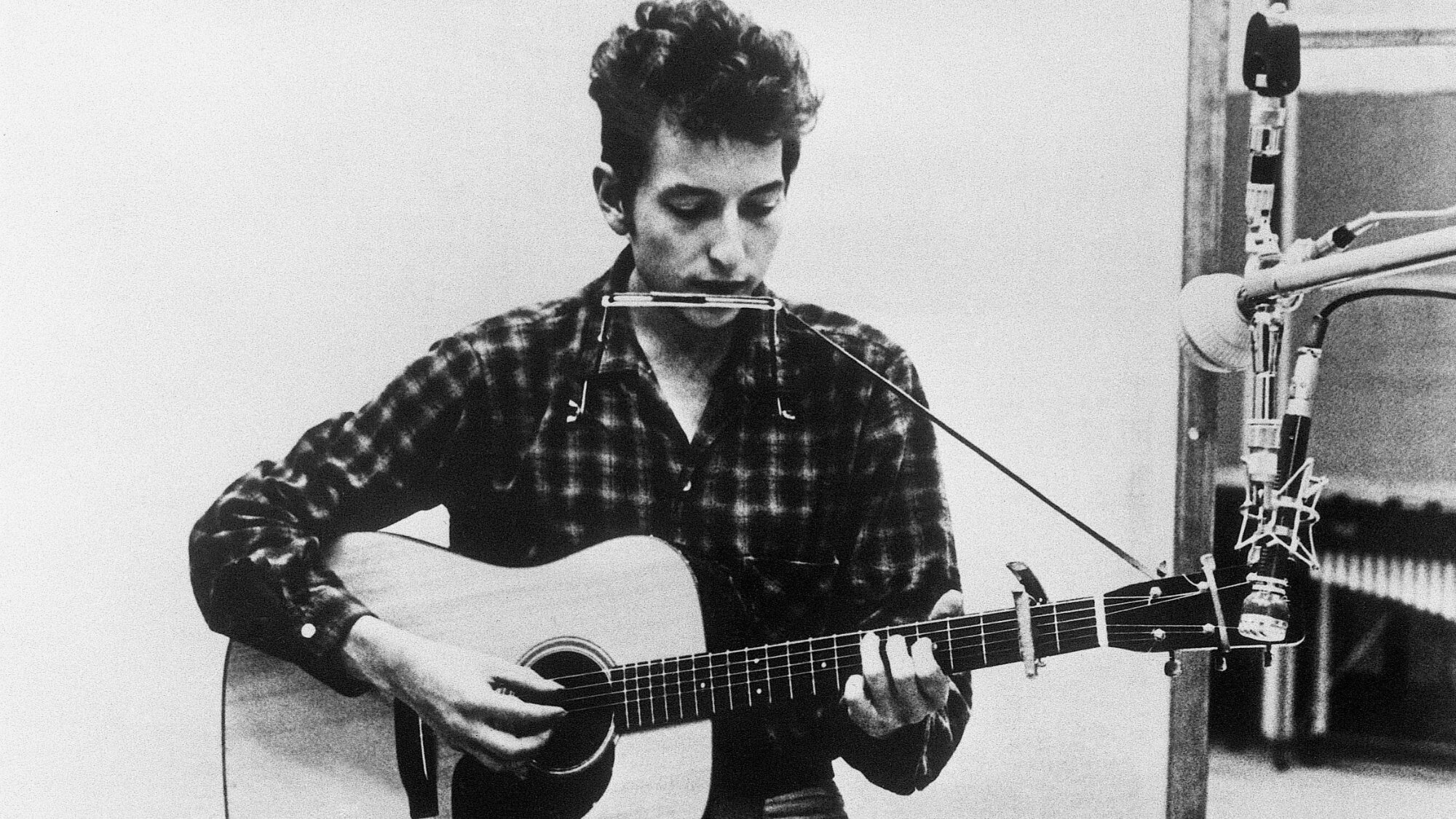
Photo via the Library of Congress/Getty Images






Leave a Reply
Only members can comment. Become a member. Already a member? Log in.