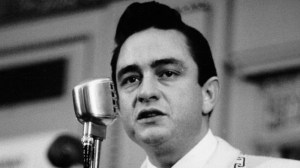
The United States has a rich history of protest music, with artists like Johnny Cash and Bob Dylan spinning collective rage and political anxieties into eloquent messages of unity and hope. And some of the best protest songs come cleverly disguised as cheerful patriotic tunes, such as Woody Guthrie’s iconic “This Land Is Your Land”. On this day (April 16) in 1944, Guthrie finally recorded the song that would reverberate across generations.
Woody Guthrie Meant This as a Sarcastic Response to This Patriotic Anthem
Not long after arriving in New York City in the early 1940s, Woody Guthrie strolled into Folkway Records founder Moses Asch’s office, “plopped himself on the floor, and announced, ‘I’m Woody Guthrie.”
Videos by American Songwriter
An unimpressed Asch replied, “So?” And thus began one of the most influential partnerships in folk music history.
On shore leave from the Merchant Marines, Guthrie arrived at Folkway Records on April 16, 1944, to record with Asch. Among the songs that came into being that day was “This Land Is Your Land.”
Guthrie had actually written “This Land Is Your Land” four years earlier in February 1940, freshly arrived in New York City from his native Oklahoma, in his room at the Hanover House hotel at 43rd St. and 6th Ave.
The song came about as a sort of allergic reaction to Irving Berlin’s “God Bless America”. In fact, Guthrie initially dubbed the song sarcastically “God Blessed America for Me”.
As for the melody, Guthrie drew inspiration from “Oh, My Loving Brother”, a Baptist hymn recorded by the Carter Family as “The World’s on Fire”.
“He tended to write words first, and later on picked out a tune,” said folk singer Pete Seeger, who would go on to record his own version of the song. “Woody once said, ‘When I’m writing a song and I get the words, I look around for some tune that has proved its popularity with the people.’”
The Return of the More Radical Verses
Upon its release in 1951, Woody Guthrie cut some of the verses more critical of America from “This Land Is Your Land”, likely to make the song more palatable for widespread audiences.
In the decades since, both Seeger and Arlo Guthrie, Woody’s son, have made it a point to include these verses in their performances, including this one: There was a big high wall there that tried to stop me. / The sign was painted, said ‘Private Property’/ But on the backside, it didn’t say nothing / This land was made for you and me.
Featured image by CBS via Getty Images
-
1/1956-Close up of Elvis Presley playing guitar. -

Naomi and Wynonna Judd during The Judds farewell tour. -
THE DEAN MARTIN SHOW — Episode 15 — Pictured: Tennessee Ernie Ford — (Photo By: NBC) via Getty Images) -
UNSPECIFIED – CIRCA 1970: Photo of Earl Thomas Conley Photo by Michael Ochs Archives/Getty Images -
UNITED STATES – JANUARY 01: NASHVILLE Photo of Alan JACKSON, Alan Jackson performing on stage (Photo by Beth Gwinn/Redferns) -
Creedence Clearwater Revival -
NASHVILLE, TN – Musician Jim Ed Norman speaks onstage during the GMA Honors Celebration and Hall of Fame Induction at the Allen Arena at Lipscomb University on April 29, 2014 in Nashville, Tennessee. (Photo by Rick Diamond/Getty Images for GMA)