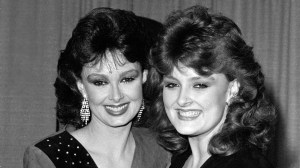
On this day (June 1) in 1959, Johnny Horton topped the Billboard Hot 100 with “The Battle of New Orleans.” It stayed at No. 1 for six consecutive weeks. Two weeks earlier, on May 18, the song started a 10-week run at the top of the Hot Country Songs chart. Decades later, it remains Horton’s best-known song. However, the song started its life in a classroom.
Before Jimmy Driftwood was a renowned songwriter, he was an educator with a passion for music. He wrote “Battle of New Orleans” and other songs during his time as a high school principal and history teacher in Arkansas for his students. Driftwood used his compositions to get students interested in historical events and to help them remember facts.
Videos by American Songwriter
Horton released his rendition of “The Battle of New Orleans” in April 1959, spreading Driftwood’s history lesson to a massive audience. Along with topping the country and pop charts in the United States, it was also No. 1 in Canada and Australia. Additionally, Billboard named it the Song of the Year in 1959. Horton’s recording won two Grammy Awards that year as well.
The History Behind Johnny Horton’s Hit
The Battle of New Orleans marked the end of the Gulf Campaign in the War of 1812. On January 8, 1815, British forces tried to capture New Orleans. American forces, led by Andrew Jackson, Choctaw Chief Pushmataha, and Daniel Patterson, fought them back, killing, wounding, and capturing more than 1,000 men. Days after the battle, the British gave up attempts to claim territory in the Gulf region.
The song’s melody also has a strong connection to the battle. According to Songfacts, Jimmy Driftwood often explained the connection when he performed the song. “After the Battle of New Orleans, which Andrew Jackson won on January 8, eighteen and fifteen, the boys played the fiddle again,” he said. “That night, they changed the name of [the fiddle tune] from the battle of a place in Ireland to the ‘Eighth of January.’ Years passed and, in about nineteen and forty-five, an Arkansas school tracker slowed the tune down and put words to it,” he explained.
Johnny Horton further connects the song to the land on which the battle was fought. His version of the song begins with the opening bars of “Dixie.” The song was popular in the years leading up to the American Civil War. Then, became one of a handful of songs co-opted by the Confederacy and used as national anthems.
Featured Image by Michael Ochs Archives/Getty Images
-
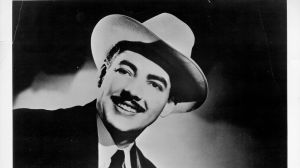
UNSPECIFIED – CIRCA 1970: Photo of Stoney Cooper Photo by Michael Ochs Archives/Getty Images -

Flea performing with Red Hot Chili Peppers -

NASHVILLE, TN – Dean Miller accepts the Poet's Award on behalf of his father Roger Miller at the 6th Annual ACM Honors at Ryman Auditorium on September 24, 2012 in Nashville, Tennessee. (Photo by Frederick Breedon IV/Getty Images for ACM) -
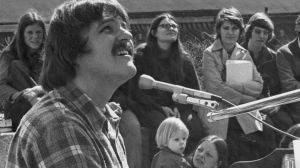
Photo by Michael Ochs Archives/Getty Images -
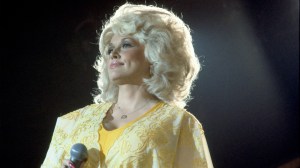
LOS ANGELES – CIRCA 1975: Country singer Dolly Parton performs onstage wearing a yellow dress in circa 1975 in Los Angeles, California. (Photo by Michael Ochs Archives/Getty Images)