Generally speaking, an artist has little say over which song in their catalogue becomes a signature track—something Merle Haggard had to learn the hard way after he came to regret a song that essentially defined his career. Haggard had already experienced more life than most when he wrote the 1969 hit song. But as he got older, he realized the wisdom he thought he had in his early 30s wasn’t quite as profound or nuanced as he thought.
Even as time marched on from the song’s September 29, 1969, release, “Okie from Muskogee” followed Haggard through the decades. In a 2012 interview with GQ, Haggard lamented that his signature song, ironically, “set [his career] back about forty years.”
Videos by American Songwriter
Merle Haggard Believed It When He Wrote It
The 1960s were a tumultuous time of great change. For some, this was a much-needed and long-overdue transition to better rights and political representation. For others, this change felt like a threat to their way of life. Wars overseas were tearing the population apart, leaving anti-war protestors and veterans equally disillusioned and upset. Progress and change were clashing against tradition and antiquity, something Merle Haggard encapsulated in the title track to his 1969 album, Okie from Muskogee.
Haggard’s time in prison was fresh in his mind when he wrote the words, “We don’t burn our draft cards down on Main Street ‘cause we like living right and being free.” The country singer told The Boot, “When I was in prison, I knew what it was like to have freedom taken away. Freedom is everything.” During Vietnam, there were all kinds of protests. Here were these [servicemen] going over there and dying for a cause—we don’t even know what it was really all about—and here are these young kids that were free b****ing about it. There’s something wrong with that.”
“Okie from Muskogee” topped the Billboard Hot Country Songs chart and enjoyed modest crossover success with a No. 41 placement on the Hot 100. While Haggard stood by his opinion that burning the flag and disrespecting veterans were wrong, he added nuance to his perspective over the years. And as it turns out, that nuance would make it difficult to stand proudly behind what became Haggard’s signature song.
The Signature Song Was a Character Study, but the Character Changed
After an artist releases a song into the world, they no longer have any control over how people perceive or relate to it. Such was the case for “Okie from Muskogee”, which became the framework on which many people based their prejudices toward those who looked different from them. In hindsight, Haggard regretted the inevitable associations that sprang from his song. “It was the photograph that I took of the way things looked through the eyes of a fool,” he told American Songwriter. “I was just as dumb as a rock about that time, and most of America was under the same assumptions I was.”
“I sing the song now with a different attitude onstage,” he continued. “If you use that song now, it’s a really good snapshot of how dumb we were in the past. They had me fooled, too. I’ve become educated. I think one of the bigger mistakes politicians do is to get embarrassed when somebody catches them changing their opinion. What if they learned the truth since they expressed themselves in the past? I’ve learned the truth since I wrote that song. I play it now with a different projection. It’s a different song now. I’m different now. I still believed in America then; I don’t know that I do now.”
Photo by Paul Natkin/Getty Images
-
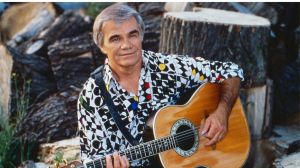
Kilometer 330, Country Musiksendung, Deutschland 1989 – 1992, Gaststar: amerikanischer Countrysänger Dickey Lee. (Photo by Frank Hempel/United Archives via Getty Images) -
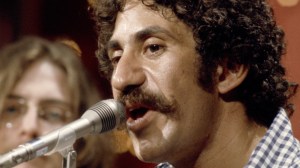
MIDNIGHT SPECIAL — Episode 27 — Aired 7/27/73 — Pictured: (l-r) Maury Muehleisen and Jim Croce perform — Photo by: Gary Null/NBCU Photo Bank -
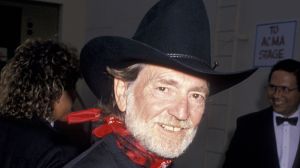
Musician Willie Nelson attends 24th Annual Academy of Country Music Awards on April 10, 1989 at Disney Studios in Burbank, California. (Photo by Ron Galella, Ltd./Ron Galella Collection via Getty Images) -
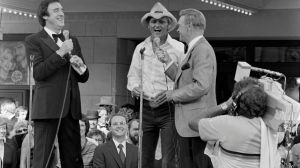
Jim Nabors (L) and Jerry Reed (C) appear onstage during a screening at the Paramount Theatre in Austin, Texas, on July 11, 1982. (Photo by Ken Vaughan/WWD/Penske Media via Getty Images) -

Steve Gulley of Mountain Heart and Grasstowne, September 20, 1962 — August 18, 2020. (Photo courtesy of Facebook) -
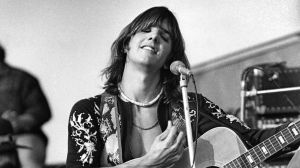
LIVERMORE, CA – Gram Parsons of The Flying Burrito Brothers performs onstage at The Altamont Speedway on December 6, 1969 in Livermore, California. (Photo by Robert Altman/Michael Ochs Archives/Getty Images) -
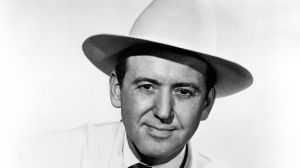
American musician Red Foley poses for a portrait circa 1955. (Photo by Michael Ochs Archives/Getty Images)