On May 4, 1970, a dark incident known as the Kent State shootings took place at Kent State University in Ohio. The shootings took place during a 300-person rally meant to protest the Vietnam War, the draft, and the presence of the National Guard on college campuses. After being called in to break up the protest, National Guard soldiers fired into the crowd. Four students were killed and nine others were wounded.
The shooting caused outrage among college students around the country. A student strike, which had begun just a few days prior, had reached over four million across college campuses around the country. The incident also furthered the public’s negative view of US involvement in the Vietnam War at the time. Later, eight of the 28 soldiers were charged with violating the civil rights of Kent State’s students. However, they were later acquitted.
Videos by American Songwriter
Like many shocked Americans at the time, singer-songwriter Neil Young learned of the tragedy by reading a spread in Time Magazine. The article featured photos of the aftermath of the horrific shooting. And it affected him so profoundly that he wrote one of the most intense and memorable protest songs of the 1970s. That song was “Ohio”, recorded and released with Crosby, Stills, Nash & Young just a few weeks later.
Neil Young Was Inspired To Write CSNY’s “Ohio” After Seeing Photos of the Kent State Shootings in ‘Life Magazine’
“Tin soldiers and Nixon’s comin’ / We’re finally on our own / This summer I hear the drummin’ / Four dead in Ohio.”
“Ohio” was recorded live on May 21, 1970, and took only a few takes. It wasn’t easy, though.
“David Crosby cried when we finished this take,” said Young in the liner notes for the Decade retrospective.
The whole experience was an intense and emotional one. “Ohio” also featured the B-Side, “Find The Cost Of Freedom”. That song is a Stephen Stills-penned lament for those who died during the Vietnam War.
Both songs were mastered and released the following month, and listeners certainly resonated with the song. “Ohio” peaked at No. 14 on the Billboard Hot 100 chart. It also reached the Top 20 in Canada and the Netherlands. Today, the song is remembered as a sharp critique of American politics and military power at the time. And the line “four dead in Ohio” still haunts listeners to this day.
Photo by Steven Clevenger/Corbis via Getty Images
-
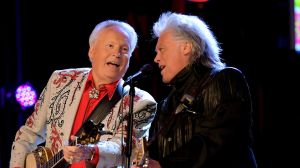
NASHVILLE, TENNESSEE – Buck Trent performs with Marty Stuart and his Fabulous Superlatives at the second of three Marty Stuart Artist-in-Residence Shows at Country Music Hall of Fame and Museum on September 18, 2019 in Nashville, Tennessee. (Photo by Jason Kempin/Getty Images for Country Music Hall of Fame and Museum) -

LOS ANGELES, CA – Singer Scotty McCreery is announced the season's 2011 American Idol winner during Fox's "American Idol 2011" finale results show held at Nokia Theatre LA Live on May 25, 2011 in Los Angeles, California. (Photo by Kevin Winter/American Idol 2011/Getty Images) -

NASHVILLE, TENNESSEE – Megan Moroney poses backstage during the 19th ACM® Honors™ at The Pinnacle on August 19, 2026 in Nashville, Tennessee. (Photo by John Shearer/Getty Images for ACM)