Other than the music, one of the most recognizable elements of Pink Floyd‘s 1973 album, The Dark Side Of The Moon, is the snippets of dialogue featured at the end of several tracks. On the album, some of the songs that feature those snippets include “Speak To Me”, “The Great Gig In The Sky”, and “Money”. To get these pieces of dialogue, Roger Waters wandered about Abbey Road recording studio asking people questions. He asked Paul McCartney some of those questions, but unimpressed with his answers, Waters didn’t end up adding his verbal contributions to the record.
For a bit of context, Pink Floyd recorded and produced several of their most iconic tracks at the famed studio, including The Dark Side Of The Moon. During the recording of the album, McCartney was in the studio recording his Red Rose Speedway, so he was readily available to answer questions about the album. Though, as stated previously, Rogers thought his answers were utterly pointless. Consequently, they never made it on the album.
Videos by American Songwriter
Why Roger Waters Was Unsatisfied With Paul McCartney’s Answers
The questions Rogers asked people in Abbey Road Studios reportedly consisted of simple ones concerning favorite colors, foods, and other arbitrary subjects. However, they got deeper, as Rogers started to inquire about death, fear, violence, and other darker topics. Some people, including Abbey Road doorman Gerry O’Driscoll, took it seriously and, as a result, gave the album the iconic quote, “There is no dark side of the moon, really.” Paul McCartney did the exact opposite.
In The Dark Side of the Moon: The Making of the Pink Floyd Masterpiece, Waters recalled Paul McCartney’s futile contributions to the album, as he told the author, “He was the only person who found it necessary to perform, which was useless, of course.” “I thought it was really interesting that he would do that,” and “He was trying to be funny, which wasn’t what we wanted at all,” added Waters.
Per his music and lyrics, Paul McCartney is familiar with and does know how to toil in the realm of morbidity and existential gloom. Although at the end of the day, that’s not his bag, as he is seemingly a humorous and lighthearted man whose perception of the world is outlined by optimism. That being so, is it surprising that he didn’t meet Rogers’ standards? To us, not so much. Regardless, there you have it, that’s why Paul McCartney didn’t appear on Pink Floyd’s magnum opus.
Photo by Jorgen Angel/Redferns
More Features
-
Photo by Richard E. Aaron/Redferns -
UNSPECIFIED – CIRCA 1970: Photo of Little Jimmy Dickens Photo by Michael Ochs Archives/Getty Images -
LAS VEGAS, NEVADA – APRIL 05: Rhett Akins performs onstage at ACM: Stories, Songs & Stars: A Songwriter's Event Benefiting ACM Lifting Lives on April 05, 2019 in Las Vegas, Nevada. (Photo by Rich Fury/Getty Images for ACM) -
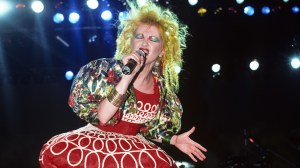
Cyndi Lauper performing at a WNEW Christmas Concert at Madison Square Garden in New York City on December 19, 1986. -
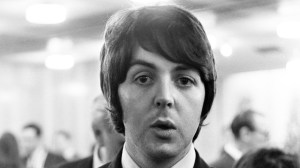
Paul McCartney of The Beatles, at press conference to announce Leicester University's art festival, held at the Royal Garden Hotel, London, 5th February 1968. (Photo by Blandford/Mirrorpix/Getty Images) -
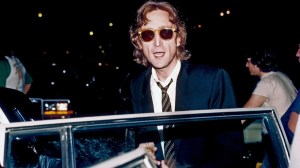
NEW YORK – AUGUST 1980: Former Beatle John Lennon arrives at the Times Square recording studio 'The Hit Factory' before a recording session of his final album 'Double Fanasy' in August 1980 in New York City, New York. (Photo by Vinnie Zuffante/Getty Images) -
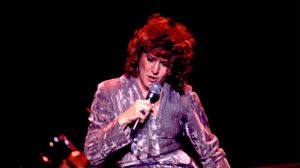
CHICAGO, ILLINOIS – American musician Lacy J. Dalton (born Jill Lynne Byrem) performs on stage at the Park West Theater, Chicago, Illinois, April 4, 1981. (Photo by Paul Natkin/Getty Images)