No matter how seasoned a musician may feel at the peak of their fame, time and time alone is what provides true clarifying wisdom and professional insight, which is why The Who guitarist Pete Townshend can look back on the latter half of his band’s career and identify the mistakes, trickery, and stagnation that defined this particular era.
Townshend mused on these mistakes and swindles during an interview with the New York Times in 2025, exactly six decades after The Who achieved their first hit single, “I Can’t Explain”. At 80 years old, Townshend was in no short supply of time’s gift of hindsight.
Videos by American Songwriter
The 1982 Career Move Pete Townshend Called a Mistake
The battle between artistry and relevance is a tale as old as time in the music industry. When a band reaches legacy status like The Who (and even for smaller acts who aren’t quite there), the pressure to continue creating strictly from a commercial standpoint is tremendous. No new releases means that your band is liable to slip off the charts altogether, risking a deep dive into irrelevancy and an effective end to one’s career. This can lead to albums that are less than great, and Pete Townshend posits that It’s Hard was one such record for The Who.
Speaking to the New York Times in 2025, Townshend called The Who’s 1982 album, It’s Hard, “one of our weakest. I didn’t feel I was able to write great songs for The Who. I didn’t know who we were anymore.” It’s unsurprising, then, that Townshend would also call the corresponding promotional tour “a mistake. I was in terrible shape, with family troubles, and I needed a sabbatical. I wrote to the music newspapers and said, ‘I’m stopping work with The Who.’ We already had a tour booked, and when it started, I realized it was being billed as the final tour. I should have objected, but I didn’t.”
Townshend wanted The Who to become a studio-only band, à la The Beatles in their later years. Bassist John Entwistle pushed back against this idea, threatening to quit if Townshend shelved The Who’s touring act. When Townshend followed through with it, so did Entwistle. These hiatuses were short-lived, however, and the band was back performing one-offs and reunion tours by the late 1980s.
How the Who Went From Generational Voices to… Geriatric Swindlers?
If Pete Townshend and his devoted fans can forgive us for the “geriatric swindlers” bit, the term is merely a more descriptive way of encapsulating the insights Townshend offered about the idea of reunion tours, pop music, and his place in the industry as an aging godfather of rock ‘n’ roll. From the start of his New York Times interview, Townshend admitted that the band’s 2025 farewell (again) tour is a pseudo-swindle. “We are willing to swindle them,” Townshend laughed. “That’s what we’ve done our entire life. Why stop?”
The Who guitarist and principal songwriter didn’t always feel that way about what his band was doing. Back in the 1960s, when young people were approaching the band to tell them what songs like “I Can’t Explain” meant to them, Townshend felt like a true voice of his generation. “The swindle starts,” he clarified, “when you become a property and don’t belong to your fans anymore. You belong to record companies, to promoters, to managers. The audience worships you for what you’ve done years before. They’re not interested in anything new. For Roger [Daltry, The Who’s singer] and I, it’s difficult to do anything other than feel like we’re a Who tribute band.”
It isn’t often that a swindler can tell someone they’re swindling them and have that person respond with excitement and gratitude, but The Who is a notable exception. The band wraps up their “The Song Is Over North American Farewell Tour” in September 2025, which has been a beautiful testament to the fact that when the rock music is as fantastic and legendary as The Who, people don’t mind getting a little swindled by the nostalgia of it all.
Photo by Michael Putland/Getty Images
More Features
-
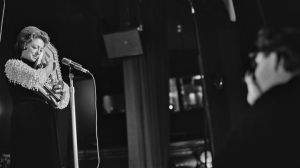
American singer and musician Maybelle Carter (1909-1978) of The Carter Family, playing the autoharp as the band perform live at Columbia Recording Studios, possibly during the recording of 'An Historic Reunion' at Columbia Recording Studios in Nashville, Tennessee, June 1966. Maybelle and her daughters had also performed as The Carter Sisters and Mother Maybelle. (Photo by Don Paulsen/Michael Ochs Archives/Getty Images) -
Photo by American Stock/Hulton Archive/Getty Images -
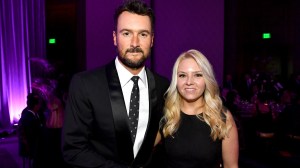
NASHVILLE, TN – APRIL 24: Singer-songwriter Eric Church and Katherine Blasingame Church attend Best Cellars Wine Dinner hosted by T.J. Martell Foundation on April 24, 2017 in Nashville, Tennessee. (Photo by Jason Davis/Getty Images for T.J. Martell) -
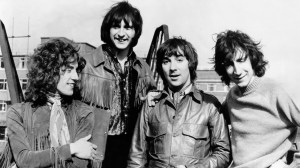
CIRCA 1975: Roger Daltrey, John Entwistle, Keith Moon and Pete Townshend of the rock and roll band "The Who" pose for a portrait in circa 1975. (Photo by Michael Ochs Archives/Getty Images) -
The Beatles pose with their MBEs at a press conference held at the Saville Theatre, London, following their investiture at Buckingham Palace. Top left to right: George Harrison, John Lennon. Bottom: Paul McCartney and Ringo Starr. 26th October 1965. (Photo by Mirrorpix via Getty Images) -
George Michael performing in 1989. (Photo by Jim Steinfeldt/Michael Ochs Archives/Getty Images) -
FRANKLIN, TN – Jimmy Wayne performs onstage during A Welby Street Christmas: Hosted by Serene & Pearl at Franklin Theater on December 9, 2016 in Franklin, Tennessee. (Photo by Jason Davis/Getty Images for Bandtwango)