
Whether they were performing as Dr. Hook & The Medicine Show or simply Dr. Hook, this band that originated from New Jersey did a lot of damage on the pop charts. The group managed a decade’s worth of pop hits in their time together.
Interestingly enough, they had six hits that landed at either No. 5 or No. 6 on the US pop charts over the years. One of those, the Sam Cooke cover “Only Sixteen”, just missed the cut here. The other five are Dr. Hook’s biggest American hits.
Videos by American Songwriter
5. “Cover Of The Rolling Stone” – No. 6 in 1972
Dr. Hook benefitted early in their career from receiving a steady supply of songs from Shel Silverstein. Silverstein had a way of approaching pop music from angles not yet attempted. He wrote “Cover Of The Rolling Stones” as a parody of the old story of a band wanting to make it to the big time. Of course, it became a self-fulfilling prophecy when Dr. Hook did indeed make it to the cover. Ray Sawyer, who usually served as percussionist for the band, sang lead here. And he delivered a charmingly offbeat performance that winked at the self-reflexivity of it all.
4. “Sharing The Night Together” – No. 6 in 1978
You couldn’t count Dr. Hook out for very long. It seemed like they always managed to follow up an album without any hits with an LP that brought them to the spotlight. In 1978, Pleasure And Pain served as one of their comeback records. Recorded in Muscle Shoals, Alabama, to give it serious soul credibility, it established them as laid-back, romantic balladeers. In lead singer Dennis Locorriere, they had a guy who could handle that material quite well. “Sharing The Night Together”, written by Ava Aldridge and Eddie Struzick, was right in his wheelhouse.
3. “When You’re In Love With A Beautiful Woman” – No. 6 in 1979
Songwriter Even Stevens eventually became a go-to guy for crossover country success, as evidenced by a string of hits he helped to pen for Eddie Rabbit in the early 80s. But before that, he wrote this track with just enough of a disco lilt to keep things current. Stevens allegedly hounded Dr. Hook’s producer Ron Haffkine until he relented and took “When You’re In Love With A Beautiful Woman” to the band. Not only did the track hit the Top 10 in the US, but it also became Dr. Hook’s lone No. 1 hit in the United Kingdom.
2. “Sexy Eyes” – No. 5 in 1980
Let’s just pause for a minute to appreciate what these guys pulled off at the end of the 70s. At a time when many other bands who came of age in the early 70s were scuffling to stay in the pop music mix, Dr. Hook churned out three songs in a row that landed in the Top 15. First was the aforementioned “When You’re In Love With A Beautiful Woman”, followed by “Better Love Next Time”, which peaked at No. 12. Then came “Sexy Eyes”, another testament to lust and l’amour that took the band into the 80s in style.
1. “Sylvia’s Mother” – No. 5 in 1972
Dr. Hook’s biggest hit is also their finest musical achievement. It started with Shel Silverstein, who wrote a crackerjack weeper. Indeed, Silverstein actually lived through the situation described in the song. He tried to call a soon-to-be-wed ex to change her mind at the last minute, only to be rebuffed by her mother. Dr. Hook took it from there and pitched in with some tortured harmonies. And lead singer Dennis Locorriere captures both the desperation and devastation that envelop the hapless narrator.
Photo by Rick Diamond/Getty Images
More The List
-
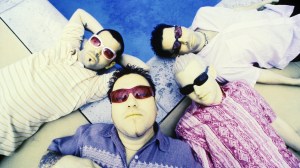
LOS ANGELES – MAY 1999: (EDITORS NOTE: THIS IMAGE WAS CREATED USING COLOR INFRARED FILM) American rock band Smash Mouth (L – R) drummer Kevin Coleman, vocalist Steven Harwell, guitarist Greg Camp and bassist Paul De Lisle pose for a May 1999 portrait in Los Angeles, California. (Photo by Bob Berg/Getty Images) -
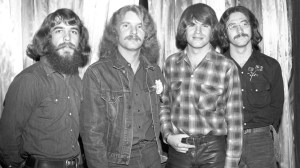
Left to right: Doug Clifford, Tom Fogerty, John Fogerty and Stu Cook of American rock group, Creedence Clearwater Revival, in New York City, 1970. (Photo by PoPsie Randolph/Michael Ochs Archives/Getty Images) -
Photo by Kevin Mazur/WireImage -
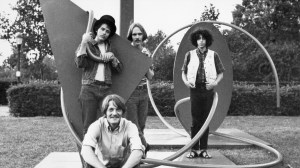
CIRCA 1967: Members of the rock band "Youngbloods" pose for a circa 1967 portrait. Original members include Jesse Colin Young, Lowell "Banana" Levinger, Jerry Corbitt and Joe Bauer. (Photo by Michael Ochs Archives/Getty Images) -
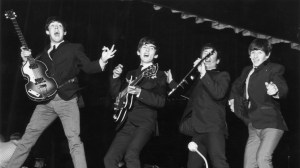
The Beatles, from left to right: Paul McCartney, George Harrison (1943 – 2001), John Lennon (1940 – 1980) and Ringo Starr, jump for joy during a rehearsal for the Royal Command Performance at the Prince of Wales Theatre. (Photo by Fox Photos/Getty Images) -
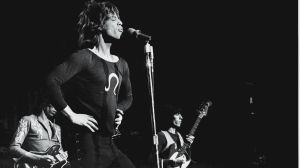
English singers, musicians, and songwriters Mick Jagger (at microphone), Keith Richards and Bill Wyman (far right) of the rock band 'The Rolling Stones,' perform on stage at Madison Square Garden, November 28, 1969. Jagger stands with his hands on his hips, eyes closed, and lips pursed together as he sings. (Photo by David Fenton/Getty Images) -
Featured Image by Gijsbert Hanekroot/Redferns -
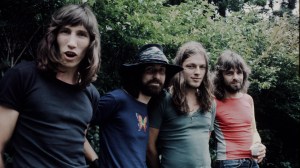
(MANDATORY CREDIT Koh Hasebe/Shinko Music/Getty Images) Pink Floyd live at Hakone Aphrodite, Kanagawa, August 6, 1971. (Photo by Koh Hasebe/Shinko Music/Getty Images)