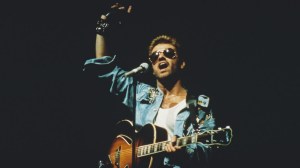
The 1970s saw music exploding in every direction. The 1960s had opened eyes and ears to what was possible, and the 1970s were fulfilling that promise—at least from a popular music standpoint.
Here below, we wanted to dive into three songs from back in the day that not only surprised fans but also altered the future. Indeed, these are three one-hit wonders from the 1970s that changed music history forever.
Videos by American Songwriter
“TSOP (The Sound Of Philadelphia)” by MFSB featuring The Three Degrees (Single, 1974)
Here’s a good trivia question for you. What was the first television theme song to hit No. 1 on the Billboard Hot 100? You might be surprised to hear that the answer is “TSOP (The Sound Of Philadelphia)” by MFSB featuring The Three Degrees. Indeed, the 1974 track, which opened the popular TV show Soul Train, was so captivating that it rocketed up the charts during the decade. Of course, that paved the way for other hit television theme songs to do well, including those for sitcoms like Happy Days and Laverne & Shirley later on.
“Rapper’s Delight” by The Sugarhill Gang from ‘Sugarhill Gang’ (1979)
While hip-hop music first started in the early 1970s in the Bronx, it was the 1979 song “Rapper’s Delight” by The Sugarhill Gang that helped to turn the burgeoning genre into a mainstream success. From there, other groups like the Beastie Boys and Run-DMC took the style to new heights in the 1980s. But those artists and others like Jay-Z or Dr. Dre may never have gotten their shot had it not been for the rap collective from 1979. Indeed, Sugarhill Gang’s brand of rhyming over disco beats certainly got audiences going.
“Soul Makossa” by Manu Dibango from ‘Soul Makossa’ (1972)
While disco music didn’t really get going in New York City clubs until the mid-1970s, this 1972 instrumental track from Manu Dibango, in many ways, kicked off the disco craze. The tune by the Cameroonian saxophonist showcases that disco feel, even before the genre officially got going. It has that beat that just puts a smile on your face. Somehow, a NYC DJ found a copy of the record and started playing it at parties. The song was so popular, it exploded from there and impacted a whole generation.
Photo by Anthony Barboza/Getty Images
More The List
-
Portrait of singer Connie Smith, circa 1965. (Photo by Gems/Redferns/Getty Images) -
Stevie Wonder guesting on a 1969 episode of 'This is Tom Jones' TV series. (Photo by Screen Archives/Getty Images) -
Stevie Wonder guesting on a 1969 episode of 'This is Tom Jones' TV series. (Photo by Screen Archives/Getty Images) -
Pop musicians The Beach Boys holding their guitars, from left: Bruce Johnston, Al Jardine, Carl Wilson, Dennis Wilson and Mike Love, Finsbury Astoria, London, November 6th 1966. (Photo by Clive Limpkin/Daily Express/Hulton Archive/Getty Images) -
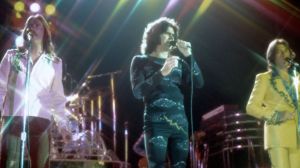
Photo by Michael Ochs Archives/Getty Images -
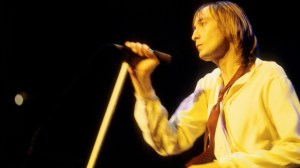
UNITED STATES – JANUARY 01: Photo of Nick GILDER (Photo by Richard E. Aaron/Redferns) -
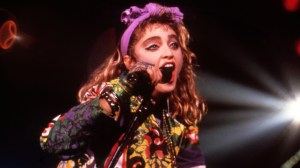
Madonna, who had one of the biggest hit songs of 1985