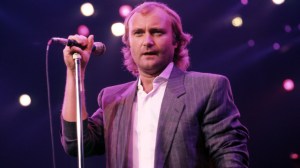
When Nirvana frontman Kurt Cobain passed away on April 5, 1994, music changed forever. Many say that’s also the day grunge officially died. Cobain’s loss sent shock waves around the globe, from casual music fans to the most ardent rock followers.
Here below, we wanted to highlight three artists who helped to pick up the pieces following Cobain’s untimely passing. Indeed, these are three rockers from 1995 who succeeded post-grunge.
Videos by American Songwriter
Alanis Morissette
With Kurt Cobain’s passing in 1994, rock music needed a new center stage star. And in stepped Alanis Morissette. A former child actor (from shows like You Can’t Do That On Television), Morissette released her self-titled debut LP in 1991. But it was in 1995 when she became one of the faces of rock after releasing her third album, the seminal Jagged Little Pill. You couldn’t walk down the street without hearing one of her songs, from “All I Really Want” to “You Oughta Know” to “Hand In My Pocket” to “Ironic”.
The Smashing Pumpkins
When talking about grunge, about Kurt Cobain, and about 1990s rock, it’s hard not to mention The Smashing Pumpkins. In many ways, the two groups were the pinnacle of alternative during the decade. But it was after Cobain’s death that Billy Corgan and company released their signature double album, Mellon Collie And The Infinite Sadness. That release, with its many hit tracks, from “Bullet With Butterfly Wings” to “Tonight, Tonight”, helped to fill the void with the loss of Nirvana and Cobain.
Radiohead
Though it can be difficult to take sometimes, every musical genre needs to shift, change, and evolve. Certainly, grunge music of the early 1990s sounded a lot different compared to the early rock songs of Buddy Holly or The Beatles. Similarly, rock shifted again in the mid-1990s after Cobain’s passing, thanks, in part, to the British-born artist Thom Yorke. His band’s sophomore release, The Bends, showed artists and fans alike that rock music could be elevated, almost like a computer program. The songs were deft, brilliant, and advanced. That’s what Radiohead brought to the table in the mid-1990s and what they continue to do, even today.
Photo by Gilbert Flores/Penske Media via Getty Images
More The List
-
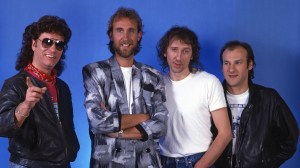
1986: British pop rock group Mike and the Mechanics (Paul Carrack, Adrian Lee, Mike Rutherford, Peter van Hooke, Paul Young) (Photo by BSR Agency/Gentle Look via Getty Images) -
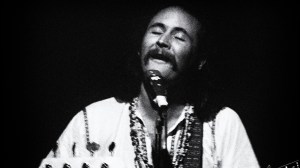
David Crosby of rock band “The Byrds” smiling as he performs in a club in a frontal, waist-high view, eyes half closed, with a mic, circa 1967 in Los Angeles, California. (Photo by Sulfiati Magnuson/Getty Images) -
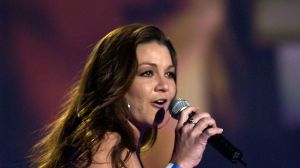
Gretchen Wilson at rehearsals for the 39th Annual Academy of Country Music Awards at the Mandalay Bay Resort in Las Vegas (Photo by Ron Wolfson/WireImage for Bragman Nyman Cafarelli) -
Photo by David Tan/Shinko Music/Getty Images -
LONG BEACH, CALIFORNIA – MAY 09 : Kenny Rogers performs in concert, May 9, 1986 at Long Beach Arena in Long Beach, California. (Photo by Getty Images/Bob Riha, Jr.) -
English musician, singer, songwriter, and composer Paul McCartney records the Lennon-McCartney composition 'Thingumybob' with the Black Dyke Mills Band in Saltaire, City of Bradford, West Yorkshire, 30th June 1968. (Photo by Tony Evans/Timelapse Library Ltd./Getty Images) -
LOS ANGELES – SEPTEMBER 1: The country group Dixie Chicks (L-R Martie Maguire, Natalie Maines and Emily Robison) pose for a photo session on September 1, 2002 in Los Angeles, California. (Photo by Harry Langdon/Getty Images)