On this day (April 22) in 1972, Deep Purple topped the UK Albums Chart with Machine Head. The album spent a total of three weeks at No. 1 in their home country. It also topped charts in Germany, France, Australia, Canada, Finland, Denmark, and the Netherlands. More importantly, the album contains a pair of classic songs in “Smoke on the Water” and “Highway Star,” and laid the groundwork for early heavy metal.
The band’s previous albums, Deep Purple in Rock and Fireball, had performed well. However, the band wanted to do something different with their 1972 release. They wanted to get away from the sterile studio sound and capture the energy of their concerts. After an arduous recording process that was derailed by a fire and local law enforcement, they did what they set out to do.
Videos by American Songwriter
They released the album in late March 1972 and forever changed the music world. The energy, riffs, and musical chemistry captured on Machine Head still influence budding musicians and bands around the world more than five decades later.
Deep Purple Told the Story of Making the Album with “Smoke on the Water”
“Smoke on the Water” isn’t just the best-known Deep Purple song. It is also one of the most recognizable songs in the history of rock music. There’s also a good chance that a young guitarist is learning to play the song’s main riff as you read this. In short, the song is nothing short of iconic. It’s also a true story.
The band went to Montreux, Switzerland, to record at the Montreux Casino, located on Lake Geneva. However, the night before they were set to record, a fan attending a Frank Zappa and the Mothers of Invention concert fired a flare gun into the venue’s ceiling. It was smoking rubble by the end of the night. The song’s first verse lays this out.
They mention “Funky Claude” in the second verse. That’s Claude Nobs. He was a friend of the band, a local volunteer fireman, and the organizer of the Montreux Jazz Festival. Nobs was there that night and helped pull several concertgoers out of the building. He also helped the band find another place to record.
According to Songfacts, Nobs found them a second place to record. The Pavilion was an abandoned theater near his home. Nearby residents quickly complained about the noise, and the police came and kicked Deep Purple out of the venue. This part isn’t discussed in the song.
Finally, the band moved their recording sessions to the Grand Hotel on the edge of Montreux. It was closed for the winter, and Deep Purple had the place to themselves. After some minor alterations, including lining the walls of a hallway with mattresses and swapping some of the hotel’s lights for red bulbs, they were able to get to work. This is all documented in the third verse.
The Story Almost Didn’t Make the Album
Today, “Smoke on the Water” is viewed as a heavy metal classic. However, the band almost didn’t include it on the album. Much like Black Sabbath’s “Paranoid,” this was a last-minute filler song.
“When we went to write the lyrics, because we were short on material, we thought it was an add-on track. It was just a last-minute panic,” Deep Purple vocalist Ian Gillian recalled.
He added that the band had recorded the song’s backing track as a soundcheck at the Pavilion. It was the only thing they were able to record before the police ousted them. So, they were, fortunately, halfway to having a song to fill space on the LP.
“The engineer told us on the last day, ‘Man, we’re several minutes short for an album.’ So, we dug it out, and Roger [Glover] and I wrote a biographical account of the making of the record,” he revealed.
Featured Image by Jorgen Angel/Redferns
-
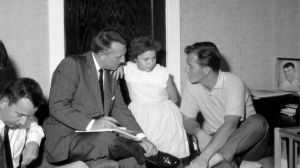
Country singer songwriter and producer Owen Bradley takes notes while collaborating with child country singing superstar Brenda Lee and Pat Boone circa 1960 in Nashville, Tennessee. (Photo by Bob Grannis/Getty Images) -
Photo by Michael Ochs Archives/Getty Images -
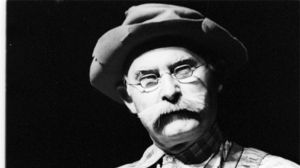
UNSPECIFIED – CIRCA 1950: Photo of Grandpa Jones Photo by Tom Copi/Michael Ochs Archives/Getty Images