Your cart is currently empty!



A Q&A with Session Three 2026 Lyric Contest Winner Jeff Drayton
“Nowhere Tonight“
Written by Jeff Drayton
Interview by American Songwriter
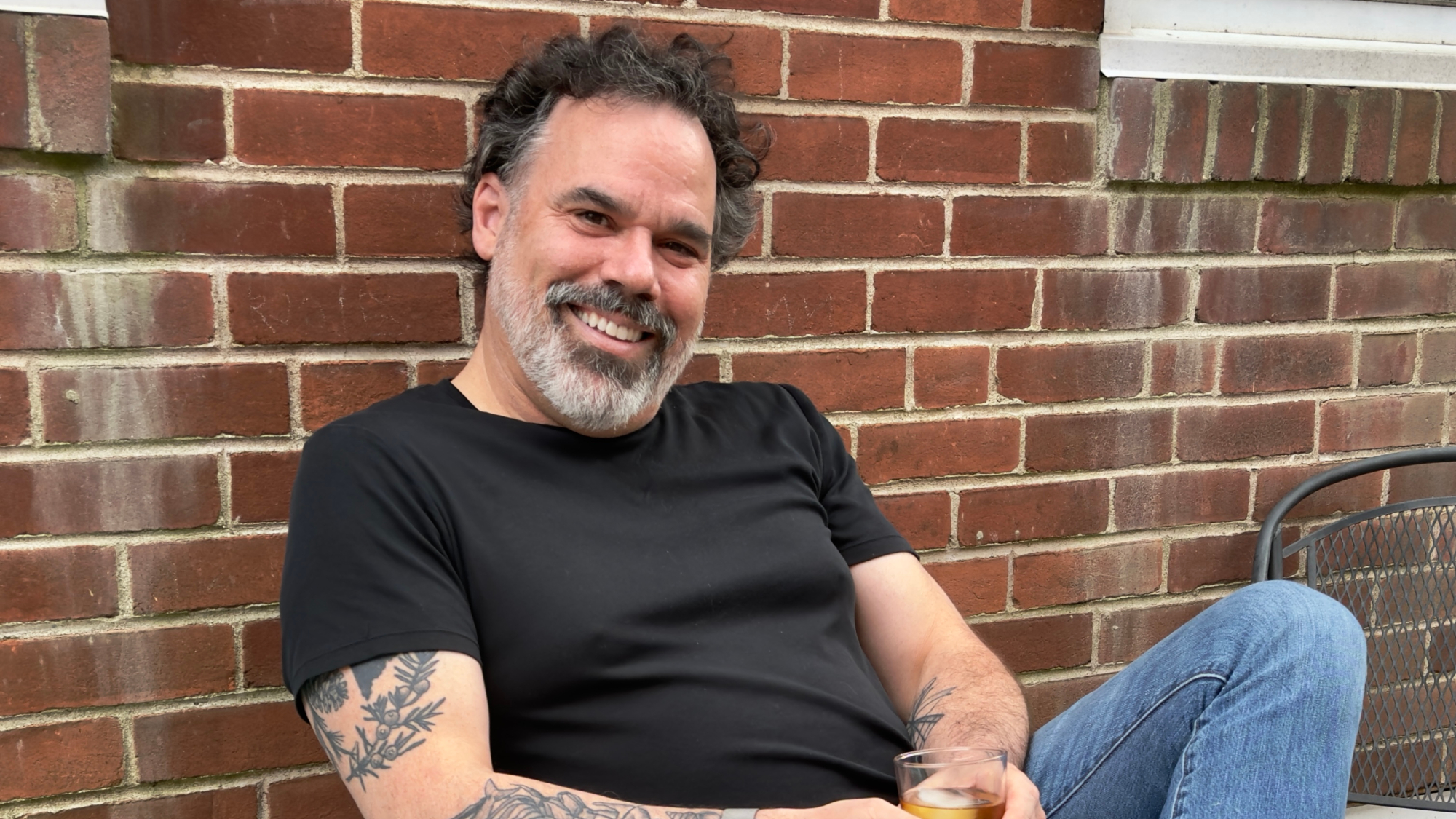
Jeff Drayton scored 1st place in the Session Three 2026 American Songwriter Lyric Contest for his song “Nowhere Tonight.” American Songwriter caught up with him to get the scoop on the inspiration behind his lyrics and other musings.
What made you decide to enter the American Songwriter’s Lyric Contest?
I’d been writing songs on and off for most of my life, but I’d never really put my lyrics out there. When I was in my twenties I could write with abandon — pages of the stuff, late at night, not worrying too much about whether it was any good. Earlier this year I dug out some of those old songs and was surprised by how easily the lyrics had come. They had a looseness and a confidence I wasn’t sure I could reach again. I watched a Bob Dylan interview where he talked about his early work and said he didn’t know how he wrote those songs — that they were “almost magically written” — and that he couldn’t do it again. Now, I can’t pretend to know what goes on in Bob Dylan’s head, but I recognised that feeling immediately. I think anyone who steps away from writing for a long time knows it: the worry that whatever was once there might not come back.
I regret not writing more in the intervening years. Work and family were the important commitments — and the right ones — but looking back, I wish I’d kept the pen moving alongside everything else. The Lyric Contest felt like the right way back in. It strips everything down to the words on the page. No production to hide behind, no arrangement to flatter a weak line. Just the words, naked on the page. It was very much a “better late than never” decision — and I’m grateful I made it.
How did you feel when you learned you won?
Thrilled. Genuinely, properly thrilled. I knew the calibre of entries would be high, and I’d seen the quality of past winners — people who’ve been writing seriously for decades. I believed the lyric had merit, but believing something has merit and believing it will win a competition are very different feelings. So when it happened, it was less about winning and more a quiet confirmation that the craft is real — that the hours of work actually produce something that connects. That meant a great deal to me.
What was the inspiration for your submission? Why did you want to write it?
I’d been reading Pablo Neruda — his imagery, the way he makes the physical world carry enormous emotional weight — and an image formed in my mind of a secluded lake house, still and grey, full of the residue of someone who wasn’t there anymore. It wasn’t a concept or a theme. It was a place. So I started writing toward that image, and the story found me along the way.
That’s usually how it works for me. I don’t sit down and decide to write a song about grief or loss. I follow a specific image and let the objects carry what I’m too careful to say directly. Neil Finn has talked about rarely setting out to write about a specific subject — he lets something surface on its own and then figures out what it’s telling him. That’s very close to my own experience. You start with a sense of place and the song tells you what it’s about.
What’s the story behind “Nowhere Tonight”?
It’s a slow meditation on absence. A man alone in a lakeside house where every room holds the presence of someone who’s gone. The house remembers what he can’t forget. And as the song progresses, you realise it’s not really about her disappearing — it’s about him disappearing. The rooms are more present than the man walking through them. That reversal is the emotional core of the song, and it arrived late in the writing. Sometimes the song knows better than you do what it’s trying to say. You just have to get out of its way.
Have you written music for this lyric? If so, how would you describe it?
I have. It’s a steady, reflective mid-tempo with acoustic guitar at its centre — gentle and persistent, with a time-lapse quality to it. The vocal is breathy and intimate, almost conversational. Piano and ambient textures fill out the space during the choruses, and there are faint strings in the background that make the sound feel vast yet empty. The goal was always to let the music serve the lyric, not decorate it.
How long have you been writing lyrics?
I wrote a little in my teens — mostly at the back of maths class, which felt like the most productive use of the time. I wrote more frequently in my twenties and then put it aside for many years. Not deliberately — life just filled the space where the writing used to be, and one year without a song became ten. It’s only in the last twelve months that I’ve picked it up again with any real discipline.
Steve Kilbey said something that resonated with me: that it took him years of writing song after song before he understood what he was actually good at. There’s enormous comfort in that for anyone who comes to this later in life. The years away weren’t wasted. You were living, accumulating the material that the songs would eventually need. I think the craft is what you learn by doing it, but the content — the emotional truth — that needed the years.
Since 1984, American Songwriter’s Lyric Contest has helped aspiring songwriters get noticed and have fun. Enter the 2026 Lyric Contest today before the deadline:
What keeps you motivated as a songwriter?
For me, songwriting is lapidary work. You’re chipping away at a rough block of language to reveal the smallest form that holds the most weight — fewest words, sharpest image, exact stress in the right place. The pleasure is in the cut.
I take quite a technical approach — word selection, syllable counts, stress patterns, the way one sound bumps up against the next. I enjoy words that do double duty, that carry more than one meaning without announcing it. Those micro-decisions are where the craft lives, and for me, that’s where the real stimulation is. Jimmy Webb still describes himself as someone who simply fell in love with writing songs and never got over it. I understand that feeling completely.
Who are your all-time favourite songwriters, and why?
Jimmy Webb, because he proved that a pop song could be architecturally ambitious without losing its emotional centre. He saw a man on a telephone pole and wondered who he was talking to — and that was enough. That’s the method I aspire to — natural curiosity meeting a vivid picture. His philosophy that “the song’s the thing” is something I come back to constantly.
Neil Finn, because my process is close to his, but his results are light-years ahead. He starts with a sense of place, works and reworks with enormous patience, and produces songs that feel like empathy set to music — intensely personal and completely universal at the same time. He’s talked about how unforgiving the process is — you’re staring at nothing until suddenly you’re not, and there’s no shortcut through that emptiness. That captures the terror and the thrill of it perfectly.
Karla Bonoff, because her songs sound like someone simply telling you the truth, and that emotional directness is deceptively hard to achieve. There’s a reason her songs kept finding their way to Linda Ronstadt and Bonnie Raitt — the writing is so intimate and so precise that other artists couldn’t leave it alone. That’s the test of a lyric, really: does someone else want to sing it? She’s taught me that vulnerability on the page isn’t a risk, it’s the whole point.
Don Walker, because he writes with the kind of compression I’m always chasing. Every line earns its place. That economy is something I try to bring to my own work, though I suspect I’m still more inclined to reach for the metaphor than he’d ever allow himself.
And McCartney, because his best lyrics achieve something I’m still trying to understand — how the simplest words can hit the hardest. My instinct is to furnish every room. McCartney would leave the room empty and break your heart anyway.
Beyond those, I owe debts to Joe Jackson for sharp intelligence in a pop framework, Alex Chilton for beauty that doesn’t announce itself, and Nick Drake for proving that quietness can be the loudest thing in the room.
What’s next for you?
I’d like to write more frequently and more fearlessly. This has given me the confidence to take my writing seriously — not as a hobby, but as a craft worth pursuing with discipline. I have a lot of music without lyrics and a lot of lyrics that need finishing, so this has emboldened me to get those over the line. I’m also interested in pushing toward greater simplicity — trusting the song to carry the feeling without me overloading it. That’s the next frontier: learning when to stop chipping.
What would you tell other songwriters who are considering entering the Lyric Contest?
Do it. The process alone is worth it — it sharpens you in ways you don’t expect. Knowing that your words will be read by professionals who’ve heard everything forces you to interrogate every line. You become a better writer just by preparing the submission.
Songwriting is deeply personal, and putting it in front of strangers takes courage. But if the thought of entering makes you nervous, that’s probably the clearest sign you should. I never thought I’d be writing these words for American Songwriter, and if you don’t think you’ll be writing them either, then that’s exactly why you should give it a shot.







Leave a Reply
Only members can comment. Become a member. Already a member? Log in.