Your cart is currently empty!



This Track From David Bowie’s ‘Scary Monsters’ Took a Jab at Gary Numan
“So it’s late morning, and I’m thinking, ‘New song and a fresh approach. I know. I’m going to do a Ronnie Spector. Oh yes, I am ersatz just for one day,’” David Bowie said of one of his Scary Monsters (and Super Creeps) deep cuts. “And I did, and here it is.”
Videos by American Songwriter
Clocking in at nearly seven minutes, and the longest track on Scary Monsters, “Teenage Wildlife” was Bowie’s lengthiest composition since “Station to Station” in 1976, which was later surpassed in length by “Bring Me the Disco King” in 2013 and one of his final songs, “Blackstar” in 2016.
“Teenage Wildlife” also remained a longtime favorite of Bowie’s, who said he would gladly trade one of his biggest ’80s hits for it two times over. “Bless,” said Bowie. “I’m still very enamored of this song and would give you two ‘Modern Loves’ for it anytime.”
‘One of the new wave boys’
When written, Bowie’s cryptic lyrics allegedly expressed his disdain for some of the young New Wave artists emerging and took a jab at his imitators—Same old thing in brand new drag comes sweeping into view. In the song, there was one particular artist Bowie had allegedly targeted, referencing a broken-nosed mogul and one of the new wave boys.
So you train by shadow boxing, search for the truth
But it’s all, but it’s all used up
Break open your million-dollar weapon
And push your luck, still you push, still you push your luck
A broken-nosed mogul, are you one of the new wave boys?
Same old thing in brand new drag comes sweeping into view
As ugly as a teenage millionaire pretending it’s a whizz kid world
You’ll take me aside and say
“Well, David, what shall I do? They wait for me in the hallway.”
I’ll say, “Don’t ask me, I don’t know any hallways.”
But they move in numbers, and they’ve got me in a corner
I feel like a group of one, no, no they can’t do this to me
I’m not some piece of teenage wildlife
At the time, former Tubeway Army frontman Gary Numan had also emerged as a solo artist with his 1979 debut, The Pleasure Principle, and follow-up Telekon in 1980. Topped in bleached blonde hair and taking on a more gaunt and alien-like persona, Numan could have easily been considered a Bowie clone. During an interview around the release of “Teenage Wildlife,” Bowie also shared some harsh criticism of Numan’s music. “What Numan did, he did excellently, but in repetition, in the same information coming over again and again—once you’ve heard one piece,” said Bowie.
That year, Numan, a longtime fan of Bowie’s, was invited to watch him perform on The Kenny Everett Christmas Show, which felt like an honor. “I was like, f–king hell, dream come true,” recalled Numan on the I’m ADHD! No, You’re Not podcast in 2026.
Everything was hunky dory until Bowie also allegedly had Numan removed from the studio and the bill. “[Director] David Mallet came in and said ‘Bowie’s seen you here and he don’t want you here. You’ve gotta get out,’” remembered Numan. “I got thrown out. Then I got taken off the program. I wasn’t on the special, he was.”
Numan said the event destroyed any form of idol worship he may have had before then. “It took away all that hero‑worship thing,” said Numan. “It made me realise he was human. If you’re human, you’re just like me, so it’s not as special as I thought.”
[RELATED: Gary Numan Probes More Earthly Matters on ‘Intruder’]
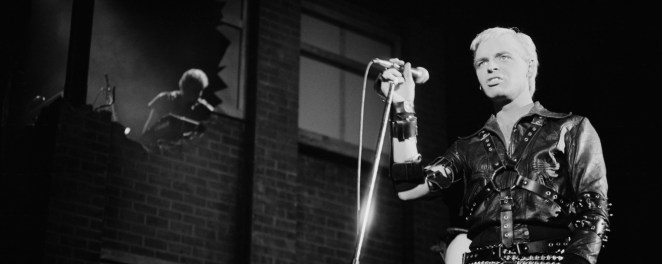
When asked if he thought Bowie saw him as a “threat,” Numan said it may have been more of a reaction to his career in 1980. “I don’t think you could ever be a threat to Bowie — he was Bowie,” said Numan. “But maybe there was a level of insecurity. His career wasn’t what it had been, and he was probably panicking. I was the talk of the town for the moment, and he reacted badly.”
Bowie never linked Numan to “Teenage Wildlife” but once described the song as a message to his”latter-day adolescent self” or a “mythical teenage brother,” and even likened it to John Lennon’s 1970 song “God,” as “a bloody denial of past selves.”
“Ironically, the lyric is something about taking a short view of life, not looking too far ahead and not predicting the oncoming hard knocks,” said Bowie in 2008. Describing “Teenage Wildlife” decades earlier, Bowie said, “I guess it would be addressed to a mythical teenage brother if I had one, or maybe my latter-day adolescent self, trying to correct those things one thinks one’s done wrong.”
In later years, Bowie was less dismissive of Numan and said he had written “two of the finest songs in British chart history,” likely referring to Tubeway Army’s “Are ‘Friends Electric?” and Numan’s 1979 solo hit “Cars.”
“As the years have gone by, I understood far more the way he saw things then,” said Numan. “He was still a young man, with ups and downs in his own career, and I think he saw people like me as little upstarts. But later he said some nice things about me, so that made the whole thing better.”
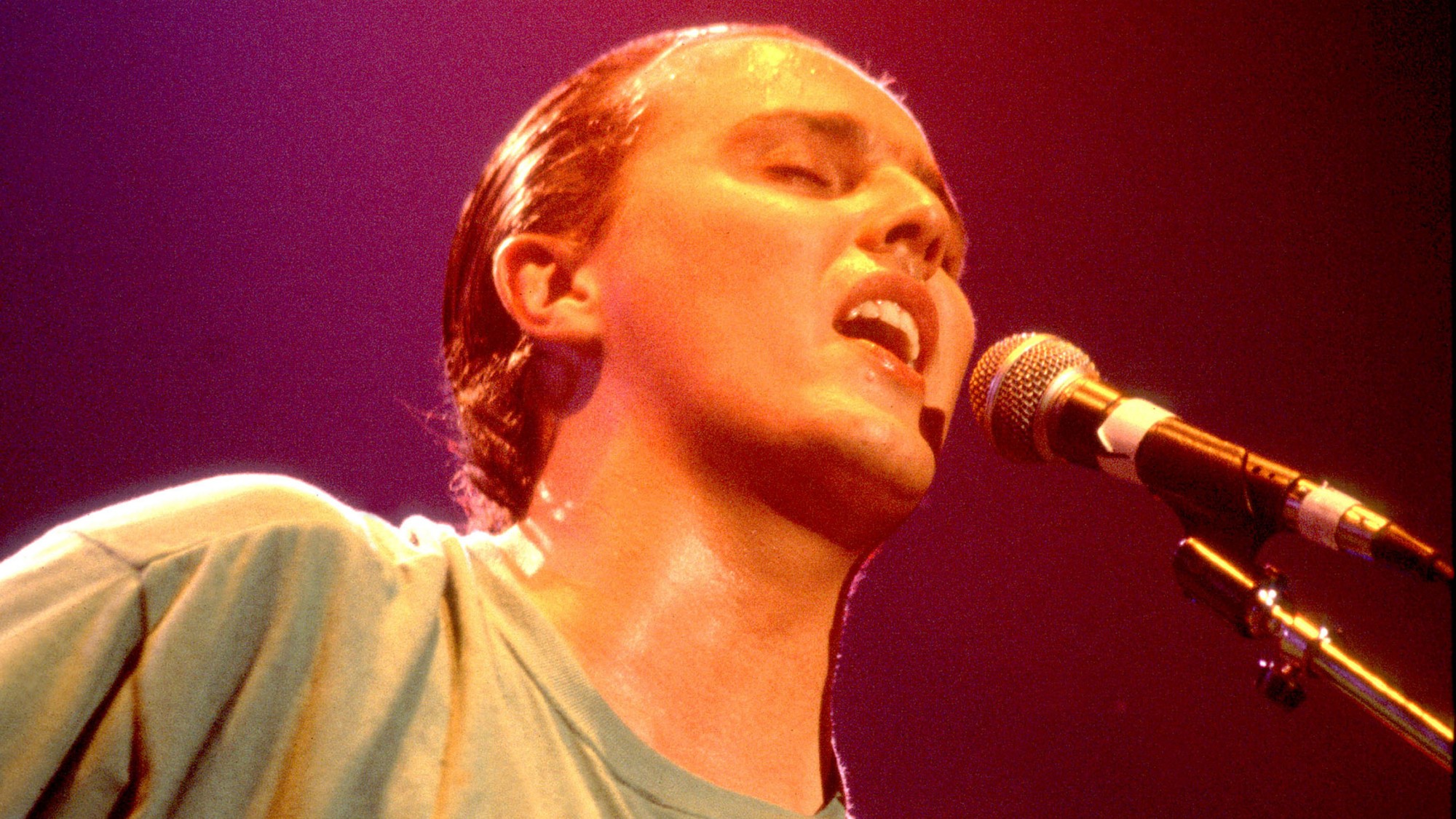
Photo: Larry Hulst/Michael Ochs Archives/Getty Images

Leave a Reply
Only members can comment. Become a member. Already a member? Log in.