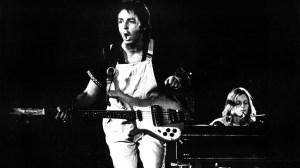
Fame and fortune often taint the original purity of rock bands. Now, some bands have avoided the detrimental consequences of fame and fortune. Though many have fallen victim to it, and one band that certainly did is Fleetwood Mac. The evolution of Fleetwood Mac throughout the years is arguably one of the most convoluted in music history. The internal turmoil that brewed inside the group seemingly derived from relationships, affairs, drugs, commerce, and possibly also pride. Needless to say, when all those things come together, a bomb will likely explode, and for them, it did.
We need not remind you of the evolution of Fleetwood Mac and just how many times they’ve stopped and started together again. And those ups and downs and constant recreations should tell you that the nurturing of their relationship wasn’t easy.
Videos by American Songwriter
While there is no definitive way to pinpoint the moment these internal complications arose, as there rarely ever is, Lindsey Buckingham once stated that once Stevie Nicks became the band’s centerpiece, things started to go a little south.
Managers, Lawyers, and Not Enough Music: The Curve in Fleetwood Mac’s Arc
In the midst of Lindsey Buckingham’s absence from Fleetwood Mac, he sat down for a very transparent interview with Rolling Stone and discussed what exactly led to the band’s internal turmoil. He told RS, “There were five very different personalities, and I suppose that made it great for a while. Obviously, having two couples – and soon enough, ex-couples – added a lot more tension and some great subject matter to the mix.”
“The problems really kicked in when you started adding five managers and five lawyers to the equation. […] Once Stevie was singled out and selected as the star of the band, the machinery of the rock business clicked in, and things really got stupid.”
“By the time of Tango, you could hardly fit all these people in one room for a band meeting… It was a heartbreaking thing to watch, until it became almost comical,” added Buckingham.
Buckingham’s comments don’t necessarily come as an enormous surprise. After all, how many bands have become overcomplicated due to external factors, such as the ones Buckingham mentioned? In essence, when one child in a family is deemed the favorite, how can the rest of the family move on without harboring resentment? It’s possible, but needless to say, it’s incredibly difficult, and that paradigm is seemingly what put the curve in Fleetwood Mac’s arc.
Photo by Fin Costello/Redferns/Getty Images
More Features
-
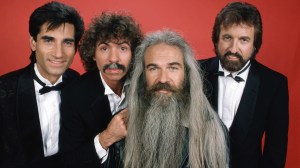
Portrait of American country and gospel music singers The Oak Ridge Boys (L-R: Richard Sterban, Joe Bonsall, William Lee Golden and Duane Allen), 1986. (Photo by CBS Photo Archive/Getty Images) -
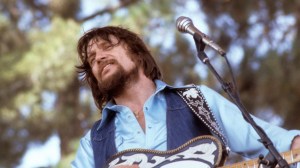
Waylon Jennings, who had a major hit with a Ray Pennington song -

Musician, singer, songwriter and composer Billy Joel is shown performing on stage during a live concert appearance on February 2, 1987 in Hartford, Connecticut. (Photo by John Atashian/Getty Images) -

American vocal duo The Carpenters, brother and sister Richard and Karen Carpenter, at their hotel in London before a live concert at the Royal Festival Hall, 8th February 1974. (Photo by Roger Jackson/Central Press/Hulton Archive/Getty Images) -

AUSTIN, TEXAS – Texas Country singer Dale Watson and his Lone Stars perform during the Lynyrd Skynyrd concert at the Cedar Park Center. (Photo by Suzanne Cordeiro/Corbis via Getty Images) -
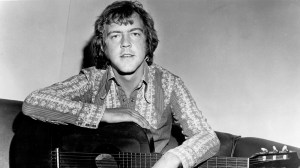
UNSPECIFIED – CIRCA 1970: Photo of Michael Johnson Photo by Michael Ochs Archives/Getty Images -

UNITED STATES – OCTOBER 01: NEW HAVEN Photo of Christine McVIE and Stevie NICKS and FLEETWOOD MAC, Stevie Nicks (holding dog) & Christine McVie in the recording studio (Photo by Fin Costello/Redferns)