
The meanings of songs generally change depending on the listener. That is the beauty of music, literature, poetry, and art in general. However, sometimes, people pull a meaning out of a song that is just seemingly not there in the slightest. But, hey, who are we to tell one that they are wrong in a completely subjective context? And that goes for Stevie Nicks when it comes to her iconic single “Edge Of Seventeen”.
Stevie Nicks’ 1981 single is a song that tells a tale about grief, loss, and the process of understanding such feelings. Famously, the inspiration for this song comes from two things: the death of Nicks’ uncle and the death of John Lennon.
Videos by American Songwriter
Concerning the latter inspiration, Nicks said, “This was written right after John Lennon was assassinated. That was a very scary and sad moment for all of us in the rock and roll business…That was so unacceptable to all of us in our community. So the white dove was John Lennon, and peace,” per Entertainment Weekly.
While the underlying meaning of death stayed true in Nicks’ interpretation of her own song, as the years rolled by, she started to think of some different stories within the story. Stories of war…
Why Stevie Nicks’ “Edge of Seventeen” Has Become a Military Lamentation
In that interview with Entertainment Weekly in 2009, Nick divulged how and why “Edge Of Seventeen” took on a new meaning for her. Again, the themes of grief, loss, and death remained. However, the vehicle for them, at least in Nicks’ head, had changed entirely.
Concerning the interpretive change, Nicks divulged, “Now, for me, it has taken on something else. I feel like I hear war, because I go to visit soldiers in Bethesda and at Walter Reed [Army Medical Center], and when I hear their stories.”
“We can’t even imagine what they’re going through, the violence. So when I sing, “Flood of tears that no one ever really heard fall at all / Oh I went searching for an answer, up the stairs and down the hall.” The “call of the nightbird” is death, and I think of them in the desert, coming around corners, the fear, waiting to be ambushed. It’s very foreboding, ominous,” added Nicks.
The intriguing element of this story is, of course, how Nicks’ life changed the meaning of this tale. This change is a testament to the fact that no piece of art is stagnant. Rather, all pieces of art are fluid, ever-changing, and appropriately adapt to the times.
Photo by Pete Still/Redferns
More Behind The Song
-

NEW YORK: Janis Ian performs live on stage in New York in 1975 (Photo by Richard E. Aaron/Redferns) -
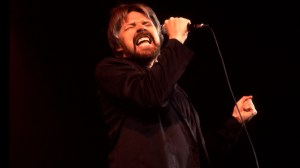
Musician Bob Seger performs at the Poplar Creek Music Theater, Hoffman Estates, Illinois, August 13, 1986. (Photo by Paul Natkin/Getty Images) -

American vocalist, musician, songwriter, producer, actress and narrator Rickie Lee Jones performing live, circa 1979. (Photo by Gus Stewart/Getty Images) -
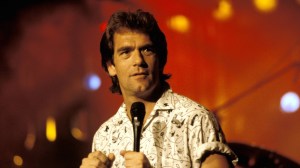
UNSPECIFIED – JANUARY 01: Photo of Huey LEWIS & The News; (Photo by David Redfern/Redferns) -
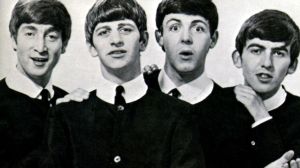
Photo by Fireshot/Universal Images Group via Getty Images -
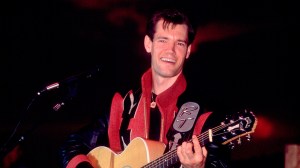
American Country musician Randy Travis plays guitar as he performs onstage at the Wisconsin State Fair, Milwaukee, Wisconsin, July 15, 1988. (Photo by Paul Natkin/Getty Images) -
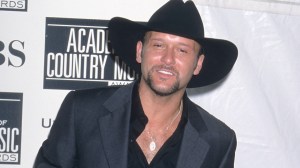
UNIVERSAL CITY, CA – MAY 3: Singer Tim McGrawl attends the 35th Annual Academy of Country Music Awards on May 3, 2000 at the Universal Amphitheatre in Universal City, California. (Photo by Ron Galella, Ltd./Ron Galella Collection via Getty Images) -

American country and western music singer Collin Raye performs at the Rialto Theater in Joliet, Illinois, November 25, 1996. (Photo by Paul Natkin/Getty Images)