“Darling Nikki” is a hard rock song from Prince’s legendary album Purple Rain. The song wasn’t released as a single and was instead tucked away on the album. Unfortunately, the daughter of soon-to-be Vice President Al Gore, Karenna, was caught listening to the song in 1985 by her mother, Tipper Gore. And the domino effect that followed was wild. It led to parental advisory stickers getting slapped on just about every physical record with naughty words or sexual references out there. It was quite a scandal, and a lot of musicians tried to fight back against what was considered egregious censorship.
It’s crazy to think that what started it all was a raunchy deep cut from a Prince album.
Videos by American Songwriter
“Darling Nikki” by Prince Ruffled the Wrong Feathers and Led To Parental Advisory Stickers
Tipper Gore famously pointed out that “Darling Nikki” was extremely sexual in nature. Particularly the lyrics “The lights went out / And Nikki started to grind,” which apparently references m*sturbation. It is a pretty horny song about a woman who seduces Prince in his “rock opera” of sorts. But what came next was a series of events that led many musicians and fans alike to think that Gore was overstepping.
After catching her 11-year-old daughter listening to the song, Gore responded by founding the Parents Music Resource Center (PMRC) in 1985. The group published something called the “Filthy Fifteen.” That was a list of 15 popular songs at the time that were deemed too explicit for children to listen to. A few other hits on that list include “We’re Not Gonna Take It” by Twisted Sister (allegedly “violent”) and “Into The Cover” by Mercyful Fate (for referencing the “occult,” apparently).
The list caused some outrage among musicians. Twisted Sister’s Dee Snider was strongly against it, and publicly defended his song as an anthem for youths. He spoke out about the PMRC’s attempt to censor music.
“The full responsibility for defending my children falls on the shoulders of my wife and I, because there is no one else capable of making these judgments for us,” said Snider.
Prince allegedly never commented on the controversy nor testified at the 1985 Senate hearings to force album labels.
Eventually, the PMRC would lead to the use of the Parental Advisory sticker on album covers. That move would launch in 1985 after an agreement was reached with the RIAA. Some argue in retrospect that this only caused a “forbidden fruit” effect. Children became more interested in albums when they saw the sticker on them. And it’s still wild to think it all started with Prince.
Photo by Peter Stone/Mirrorpix/Getty Images
More Behind The Song
-
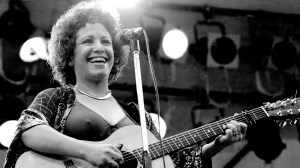
NEW YORK: Janis Ian performs live on stage in New York in 1975 (Photo by Richard E. Aaron/Redferns) -
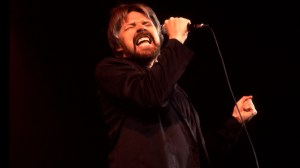
Musician Bob Seger performs at the Poplar Creek Music Theater, Hoffman Estates, Illinois, August 13, 1986. (Photo by Paul Natkin/Getty Images) -
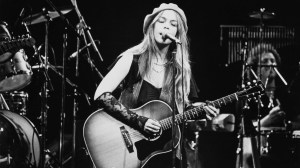
American vocalist, musician, songwriter, producer, actress and narrator Rickie Lee Jones performing live, circa 1979. (Photo by Gus Stewart/Getty Images) -
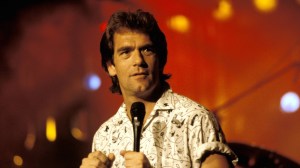
UNSPECIFIED – JANUARY 01: Photo of Huey LEWIS & The News; (Photo by David Redfern/Redferns) -
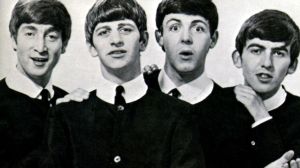
Photo by Fireshot/Universal Images Group via Getty Images -
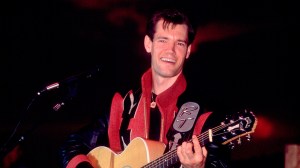
American Country musician Randy Travis plays guitar as he performs onstage at the Wisconsin State Fair, Milwaukee, Wisconsin, July 15, 1988. (Photo by Paul Natkin/Getty Images) -
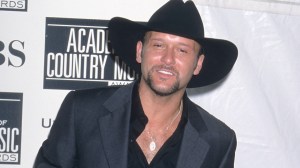
UNIVERSAL CITY, CA – MAY 3: Singer Tim McGrawl attends the 35th Annual Academy of Country Music Awards on May 3, 2000 at the Universal Amphitheatre in Universal City, California. (Photo by Ron Galella, Ltd./Ron Galella Collection via Getty Images) -
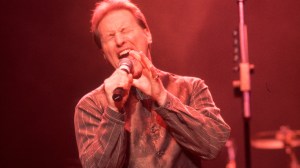
American country and western music singer Collin Raye performs at the Rialto Theater in Joliet, Illinois, November 25, 1996. (Photo by Paul Natkin/Getty Images)