When it comes to home recording, a killer interface can’t do all the work on its own. What goes into it counts just as much, and as a vocalist especially, I can’t stress enough how important it can be to the creative process just to hear your own voice sounding its best from the get-go. Starting with a good microphone is the best way to ensure the signal you’re putting in is worthy of the final product you hope to achieve.
Universal Audio’s SD-1 Dynamic Microphone, on the surface, is a classic dynamic mic—similar to the industry-standard cardioid dynamic Shure SM7B microphone. But while it looks a lot like the SM7B and shares some similar specs, it’s got a few key differences. That’s because, with the SD-1, you get way more than just a classic dynamic microphone. The SD-1 comes optimized for UAD’s Hemisphere Mic Modeling Plugin, which allows you to access the sounds of five classic vintage microphones that are used in world-class recording studios.
I’m a singer/songwriter with over 20 years of experience playing guitar, singing, and songwriting under my belt. I’m not a professional producer or recording engineer—just a guy who loves singing and playing guitar and recording demos at home for songwriting purposes. I’m not here to harp on technical specs, the science of sound, and so on. My goal is simply to share my experiences in the interest of helping other people like me build a great-sounding and easy-to-use home recording setup.
The team at Universal Audio sent me an SD-1 to test out along with my Volt 476P interface and a whole mess of plug-ins. In this review, I’ll share my experiences recording and producing vocals and guitars with the SD-1 in tandem with Hemisphere Mic Modeling (and maybe a bit of Topline Vocal Suite, another awesome UA plug-in for producing vocals, for good measure) and my trusty new Volt 476P.
Quick Overview
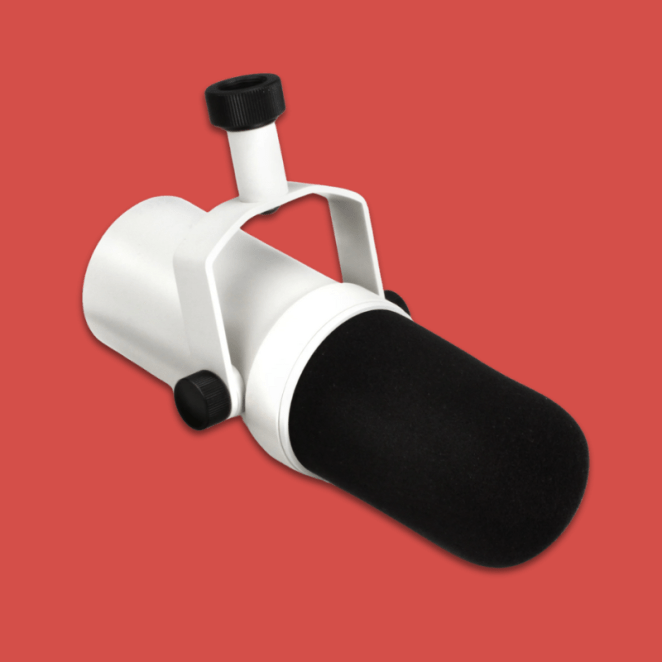


SPECS:
- Microphone Type: Dynamic
- Polar Pattern: Cardioid
- Frequency Range: 50Hz-16kHz
- Output Impedance: 200 ohms
- Low Cut Filter: 200Hz
- Features: 3-5kHz Articulation Boost Switch, Detachable Windscreen
- Color: White
- Connector: XLR
- Dimensions: 7.68" x 2.36"
- Weight: 1.6 lbs
Overview
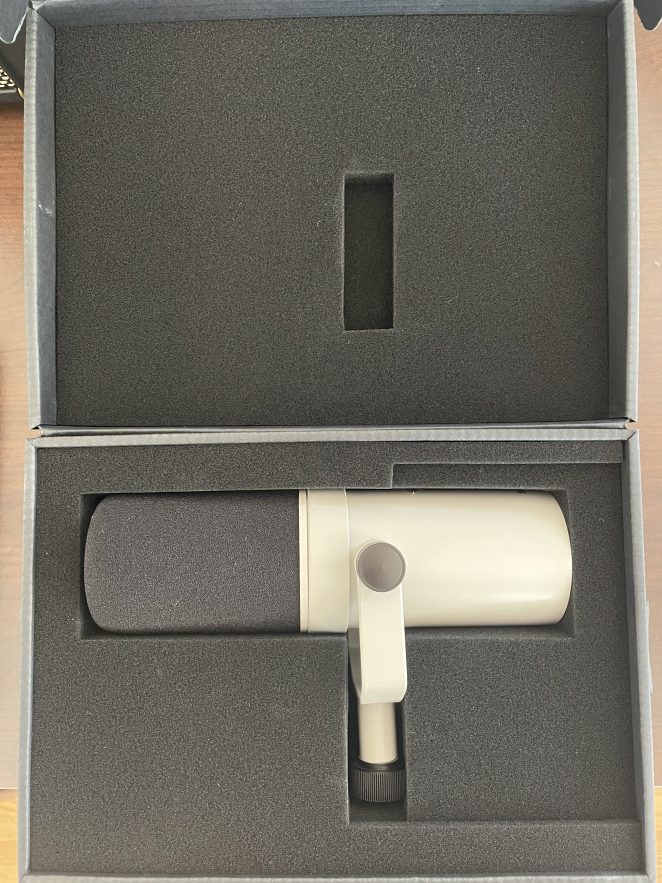
Upon unboxing, I was taken right away with the SD-1’s hefty, sturdy construction. It weighs about a pound and a half and is constructed of solid metal, with a white satin finish. It also comes equipped with a windscreen. Not only does the mic have a nice feel, the packaging is really nice as well—if that kind of thing matters to you (it does to me)! It’s a heavy-duty matte black cardboard affair with a ribbon handle that’s definitely substantial enough (and attractive enough) to serve as the mic’s case for life, which is a nice bonus for a mic at this price point.

The mic itself is light on onboard gizmos and gadgets (which is how a mic should be, in my opinion), with a threaded mount (albeit with a built-in internal shock mount) and the standard XLR output jack. There are, though, two filter switches on the underside of the mic, allowing you to reduce low-frequency rumbles (apartment dweller here—yes, please) and add presence to any source (I’m a relentless button-pusher—add presence to my vocals? Don’t mind if I do).
Plus, the SD-1 has a cardioid polar pattern that makes it ideal for recording vocals and instruments without picking up background noise, so you can get a clean take even if your kids/roommates/band next door won’t keep it down. That combined with the filter switches makes this a really great option for anyone doing home recording—that is, anyone not living in a fully soundproofed domicile.
Testing, 1… 2…
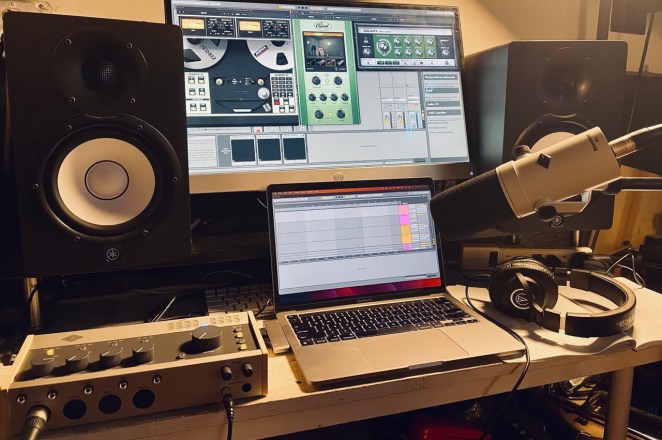
For my test, I mounted my SD-1 to an old-school upright floor stand, which I use for pretty much all my recording purposes (due to my “booth,” aka closet, being about 4’x4’. Other, more fortunate users with such luxuries as a proper desk, might want to look into purchasing a desktop stand, which is not included).
Connecting via the XLR jack is easy enough, although you do have to reach all the way around the back where you can’t see—so be careful not to bash up the panel where the dip switches reside. I hooked up to my Volt 476P interface, which was connected via USB to my Macbook Pro, and I was off. (I admit, despite some curiosity, that I hadn’t yet gotten around to learning the ropes of UAD’s Luna DAW at the time of testing, so I used Ableton).
The SD-1's flat frequency response is to my ear, as flat as they come. When compared to other mics in my arsenal (especially looking at the SM7B), the SD-1 with none of the dip switches activated is about as natural-sounding as it gets. If this seems less than ideal for vocalists in search of a little special sauce, don't worry—it's actually all part of the plan: as little coloration as possible = maximum versatility, which is what you want from a modeling mic (more about the SD-1’s modeling capabilities in the next section).
Now, everyone’s voice is different, so your results may vary, but as I said before—I love pushing buttons, and that combined with a healthy (I think?) insecurity about the sound of my own voice means I preferred the sound of both switches activated. The high-pass filter allowed just the right amount of low end to keep things sounding robust, but it also allowed me to (mostly) avoid capturing the sound of city buses whizzing by outside. And the high-end boost lends your signal a nice crispness and a bit of air that just makes it sound that teensy bit more hi-fi and, dare I say, professional.
I also tested the SD-1 on some acoustic guitar strumming, which sounded killer. I found I preferred the sound without the high-end boost for guitar—the flat frequency response serves a good-sounding guitar wonderfully.
Hemisphere Mic Modeling & Topline Vocal Suite
So, I’ve already established that the SD-1 sounds fantastic in its own right—a classic dynamic mic, with a flat frequency response—perfect as-is for vocals, speech, or acoustic instruments. But the SD-1 really gets fun to use when you sync it up with UA’s Hemisphere Mic modeling plug-in, which comes included with the microphone.
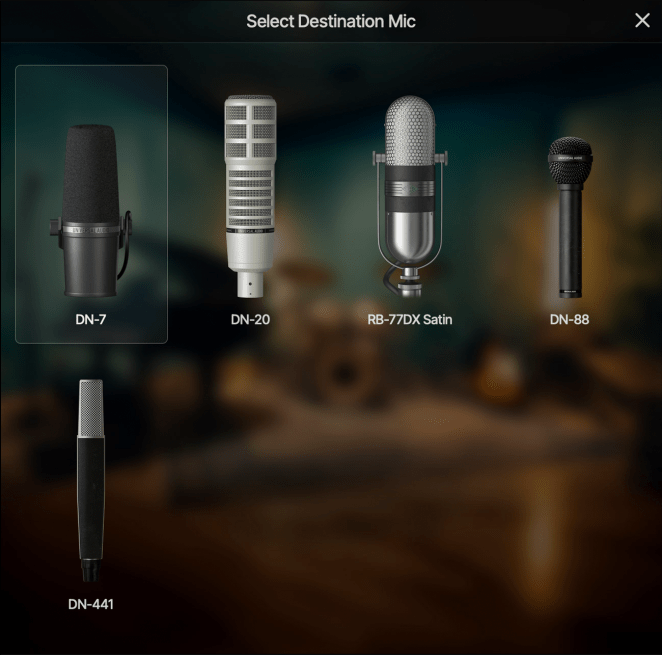
There are five classic mics to choose from, each with its own virtues (UA provides a handy info blurb on each one so you know what applications they’re best suited for). There’s the DN-7 (a classic cardioid best known for recording Michael Jackson’s “Thriller” vocals), the DN-20 (broadcast mic good for vocals and drums), the RB-77DX Satin (Bing Crosby, Elvis Presley, sign me up), the DN-88 (used by Phil Collins for vocals, and by everyone else for guitar amps and drums), and the DN-441 (Fleetwood Mac, Tom Petty), a large-diaphragm supercardioid with a balanced, natural sound.
I guess I am the suggestible type, but I really appreciate the pointers from UA—otherwise, I wouldn’t know for sure which settings are supposed to sound “best” for what. But really what I recommend doing is mixing and matching to find which sound you like best for your voice and for the sound/aesthetic you’re going for.
Add to that the Topline Vocal Suite plug-in and you've got everything you need to dial in some seriously impressive studio sounds. After setting my SD-1 to the RB-77DX Satin, I bypassed Topline's tuner section (don’t @ me) and moved straight to the dynamics and EQ section. I switched the preamp to the “tube” setting, and dialed up the color and saturation a bit to get juuust a touch of cool peaky vintage distortion. More compression (on top of the built-in from the Volt) to account for dynamics, check. I also dialed up the Air knob, which I found adds a really nice intimacy in lighter-vocalized passages.
On the next screen, you’ve got your modulation, delay and reverb. The modulation options (chorus, doubler, flanger, widener, wow and flutter) are classic analog effects that you can dial in to your heart’s content (I skipped, not really a fan of modulation in general, personally). The delay section, though, is more my style, with Studio Tape, Cassette, and Digital delays. You can adjust the time, the modulation, and the width to get your perfect delay sound. I love classic Sun Records-style slapback, so I used “Studio Tape” with a 1/16 delay for my initial experiment.
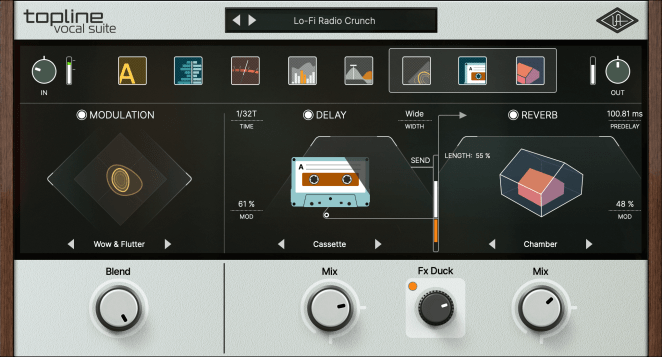
Finally, you get a choice of Plate, Room, Ambience, Chamber, and Hall reverbs. I like the sound of an old-school reverb chamber, like Capitol’s (which UA does have its own plug-in of) so that was what I used to top off my signal chain. The result was a perfectly vintage vocal sound—in my headphone monitors, belting with my eyes closed, I was transported to Capitol Records’ Studio A, 1962 (again, I was actually in my closet).
Alternatives to the UA SD-1
Shure SM7B
I’ve already spilled a fair share of ink comparing the SD-1 to the famous Shure SM7B, but it bears repeating: specs-wise, the SD-1 stands up to the SM7B in just about every way, plus it will save you about $100. Add to that the modeling software and other UAD plug-ins and you've got a killer value. That being said, maybe go with the SM7B if you're just interested in podcasting, or, I dunno, prefer a black microphone to a white one? It is still the industry standard, after all.

Rode PodMic
For those in search of a more budget-friendly option, but one that's designed more with podcasters and content creators in mind, there's the Rode PodMic. This cardioid dynamic mic will only set you back about $100, and is purported to have a warm, clear sound and a solid build quality. It definitely loses out in the aesthetics department, though, in my opinion.

The Verdict
For aspiring home recording enthusiasts shopping for a first microphone, you can't do much better than to get your hands on a Universal Audio SD-1. Podcasters and those with other needs may have their reasons to look elsewhere, but for my money, musicians—singers and guitarists especially—will love the control and versatility of the SD-1, especially when paired with UAD's industry-leading Hemisphere Mic Modeling and other plug-ins.